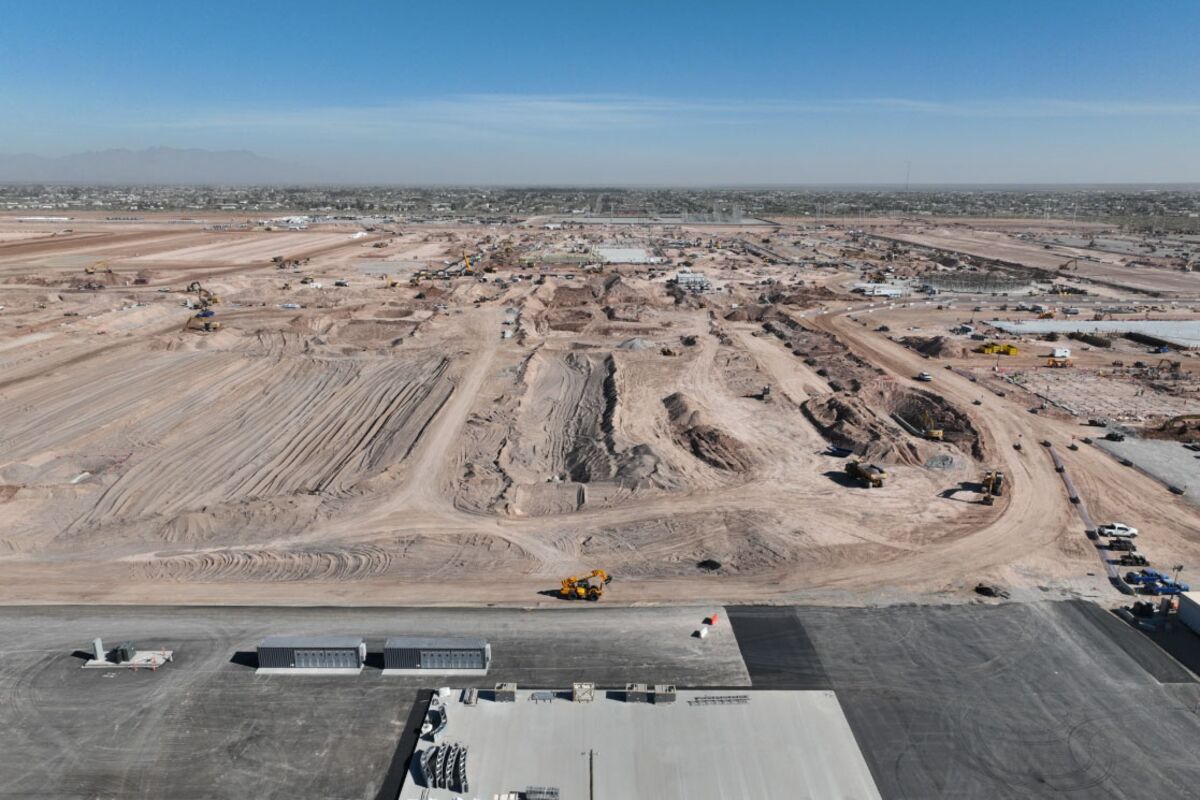
Meta will increase investment in a gigawatt-scale El Paso, Texas data center to more than $10.0 billion (up from an initial $1.5 billion commitment). The facility is expected to come online in 2028 and support over 300 on-site jobs, aimed at expanding Meta's AI infrastructure capacity. The move signals continued heavy capex for AI compute, which supports long-term growth prospects but could weigh on near-term free cash flow.
This level of hyperscaler buildout reshapes upstream procurement: hyperscale sites shift demand from spot colocation and third‑party integrators toward long, large volume contracts for GPUs, NICs and power‑distribution kit. Expect meaningful orderbook concentration for accelerator suppliers and system OEMs over the next 6–24 months — a single multi‑hundred‑MW campus can absorb tens of thousands of accelerators over its deployment window, creating asymmetric revenue swings for NVDA/AMD/SMCI versus fragmented incumbents.
Second‑order supply impacts will show up in power markets, construction and labor. Large, multi‑year PPAs and substation upgrades raise bids for renewables and transformers, while skilled data‑center construction crews and specialized HVAC/cooling equipment will bid up labor and component prices regionally within 12–36 months, pressuring margin assumptions in smaller contractors and local utilities.
Key downside catalysts are efficiency gains in model architectures and on‑chip innovation that lower accelerator demand intensity, plus permitting or transmission delays that push out utilization schedules by 1–3 years. Also monitor GPU roadmap shifts (in‑house accelerators or CXL disaggregation) that could truncate third‑party hardware TAM; those are binary events that can re‑rate beneficiaries within quarters.
Consensus frames this as purely positive for hyperscalers and nearby real‑estate; it underestimates the financing and grid execution risk and overweights short‑term demand vs long‑run model efficiency. That makes a concentrated, option‑size exposure to hardware winners more attractive than outright multi‑year equity bets on the cloud customers themselves.
AI-powered research, real-time alerts, and portfolio analytics for institutional investors.
Overall Sentiment
mildly positive
Sentiment Score
0.35
Ticker Sentiment
