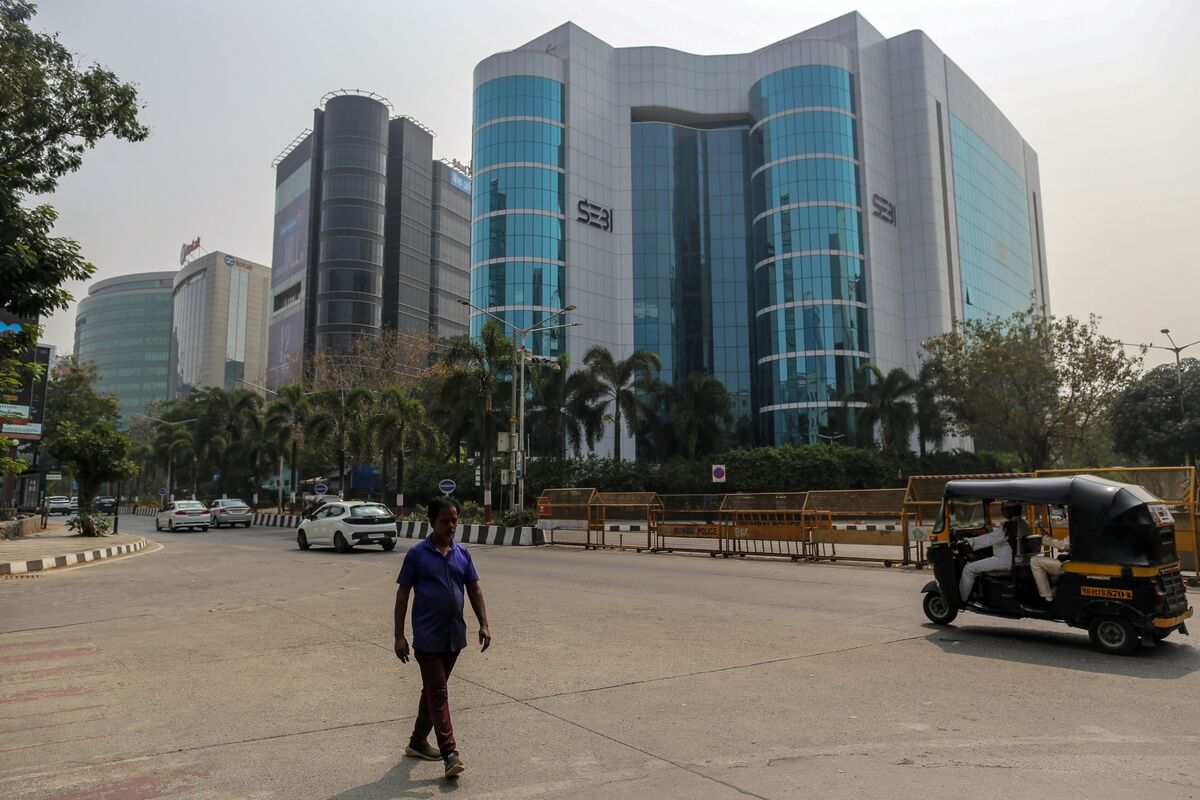
SEBI will allow foreign investors to net-settle same-day equity trades, permitting global funds to offset buys and sells instead of settling each transaction individually. The change should reduce operational and cash burdens for foreign participants, likely boosting foreign flows and intraday liquidity in Indian equity markets. This is a constructive, market-friendly regulatory tweak that may modestly improve market participation and settlement efficiency.
For active offshore allocators, the immediate mechanical benefit will be meaningful working-capital relief: for funds with roughly balanced intraday buys and sells we estimate required intraday cash/collateral lines can fall by ~20–40%, freeing up capital that was historically tied to settlement float. That incremental free cash tends to get redeployed into higher-turnover strategies (algo/arbitrage, ETF arbitrage, index tracking) where marginal returns exceed buy-and-hold; expect intraday turnover to rise within weeks and quoted spreads on large caps to compress by 10–30bps over the next 1–3 months.
A less-obvious transmission is through FX and short-term funding markets. Lower conversion needs reduce intraday INR flow into NDF and spot FX trading — we model a 10–25% drop in intraday INR volumes, which will pressure banks’ FX trading revenues and shrink short-dated INR liquidity premia. Over 6–12 months this can shave 15–35bps off the cost of capital for large, liquid issuers as more passive flows and lower transaction frictions bid up index-linked assets.
Key implementation risks are operational and concentration-driven: clearing mismatches or custodian integration bugs could spike settlement fails and temporarily widen spreads (days–weeks). A macro stress event (sharp INR move or sudden global risk-off) would likely pause flow improvement and could prompt a regulator to claw back or narrow eligibility — reversal risk is real in the first 3–6 months.
The consensus bullishness on incremental flows misses a distributional effect: narrower spreads and higher ETF/arbitrage participation reduce cross-sectional dispersion, compressing active manager alpha and elevating counterparty concentration in a handful of prime brokers — a structural liquidity risk that amplifies in drawdowns.
AI-powered research, real-time alerts, and portfolio analytics for institutional investors.
Request DemoOverall Sentiment
mildly positive
Sentiment Score
0.25
