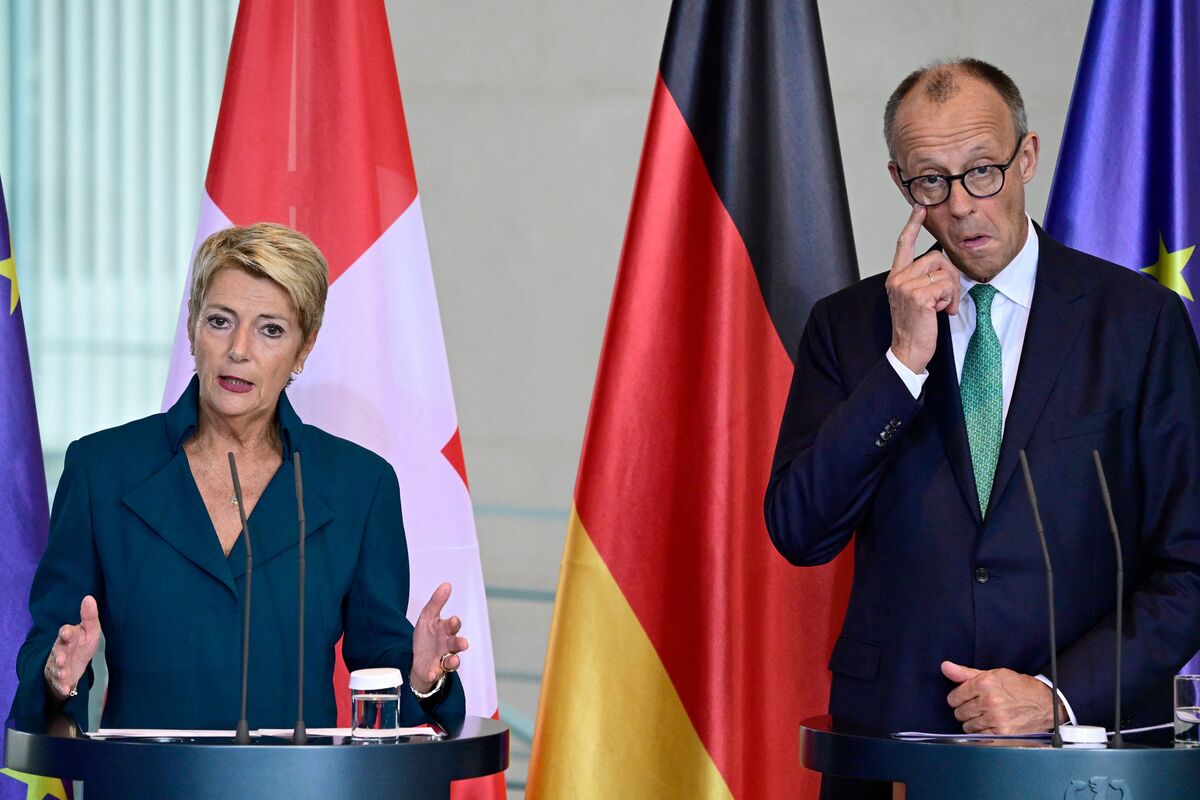
German Chancellor Friedrich Merz has offered support to Switzerland in its efforts to reduce the 39% trade tariff imposed by the US, which is the highest levied on any developed nation. Switzerland, an export-dependent economy, is actively negotiating with the US administration to secure an agreement by October, underscoring persistent global trade tensions and their potential impact on national economies.
The imposition of a 39% trade tariff on Switzerland by the U.S. administration represents a significant and targeted escalation in trade protectionism, directly impacting the nation's export-dependent economy. The levy, noted as the highest for any developed country, creates substantial headwinds for Swiss industries and introduces a high degree of uncertainty, reflected in the strongly negative sentiment score (-0.7). Germany's offer of support, articulated by Chancellor Friedrich Merz, signals a potential broadening of the dispute from a bilateral issue to a wider U.S.-European trade confrontation. The upcoming October deadline for a revised Swiss offer serves as a critical near-term catalyst, with the outcome poised to heavily influence market stability and investor confidence in the region. This event underscores the persistent geopolitical risks tied to trade policy and their direct economic consequences.
AI-powered research, real-time alerts, and portfolio analytics for institutional investors.
Request DemoOverall Sentiment
strongly negative
Sentiment Score
-0.70
