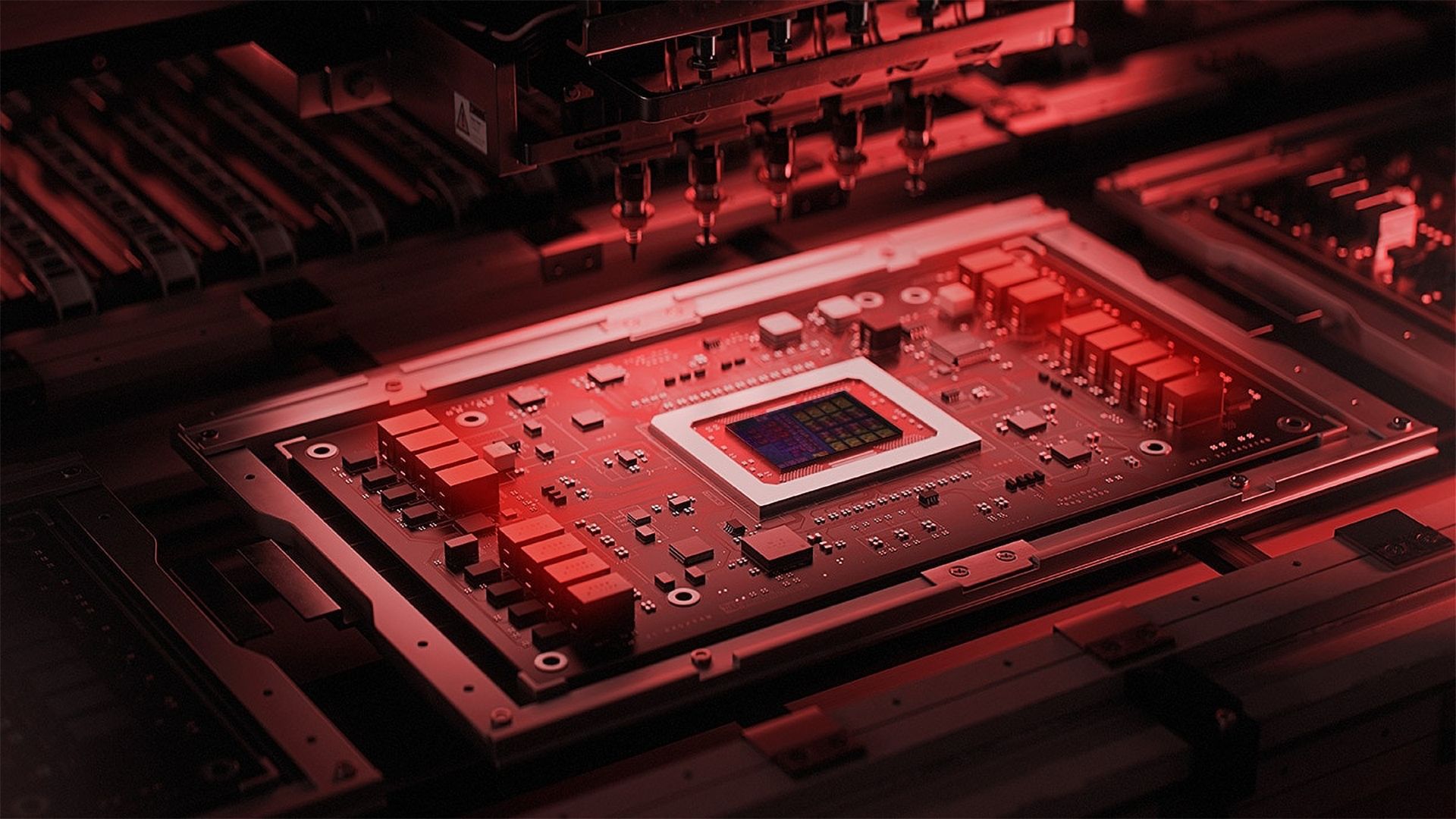
AMD will hold a premiere for its next-generation graphics stack, FSR Redstone, on Dec. 10, with SVP Jack Huynh confirming the technology will initially be restricted to RX 9000‑series GPUs; Redstone, first shown at Computex 2025 and debuting in Call of Duty: Black Ops 7, builds on FSR4’s ML upscaling and frame generation and adds neural radiance caching and ML‑based ray regeneration to accelerate path‑traced scenes, directly targeting features in NVIDIA’s DLSS 4. While reports suggest Redstone could be implemented vendor‑agnostically via ROCm and shader‑core code, AMD’s promotional material signals initial exclusivity, which could limit near‑term adoption despite the potential for wider support later. Market participants should watch the Dec. 10 briefing for implementation details, game support, and whether Redstone supersedes FSR4, as those answers will determine its competitive and commercial impact.
AMD announced a premiere for its next-generation graphics stack, FSR Redstone, on December 10 via SVP Jack Huynh and confirmed initial support will be limited to RX 9000-series GPUs. Redstone extends FSR4’s ML-based upscaling and frame generation by adding neural radiance caching and ML-based ray regeneration, technologies intended to accelerate path-tracing and address ray-traced artifacts; the tech already debuted in Call of Duty: Black Ops 7.
Reports indicate Redstone could be implemented vendor-agnostically via a ROCm shader-core approach enabling potential Nvidia and Intel support, but AMD’s teaser emphasized RX 9000 exclusivity, mirroring FSR4’s official RDNA4 focus despite technical backward compatibility. This divergence between technical portability and initial exclusivity will constrain near-term adoption and developer uptake unless AMD signals broader support at the premiere.
Market signals show mildly positive sentiment (0.22) and modest market impact (0.25) with per-ticker sentiment favoring AMD (0.4) and a slight negative read for NVDA (-0.1), implying investor interest but limited immediate disruption. Critical near-term catalysts are Dec. 10 disclosures on whether Redstone replaces FSR4, a broader game-support roadmap, ROCm/open-source rollout, and independent benchmark verification of parity with NVIDIA’s DLSS4; failure on these fronts would materially limit commercial upside.
AI-powered research, real-time alerts, and portfolio analytics for institutional investors.
Request DemoOverall Sentiment
mildly positive
Sentiment Score
0.22
Ticker Sentiment
