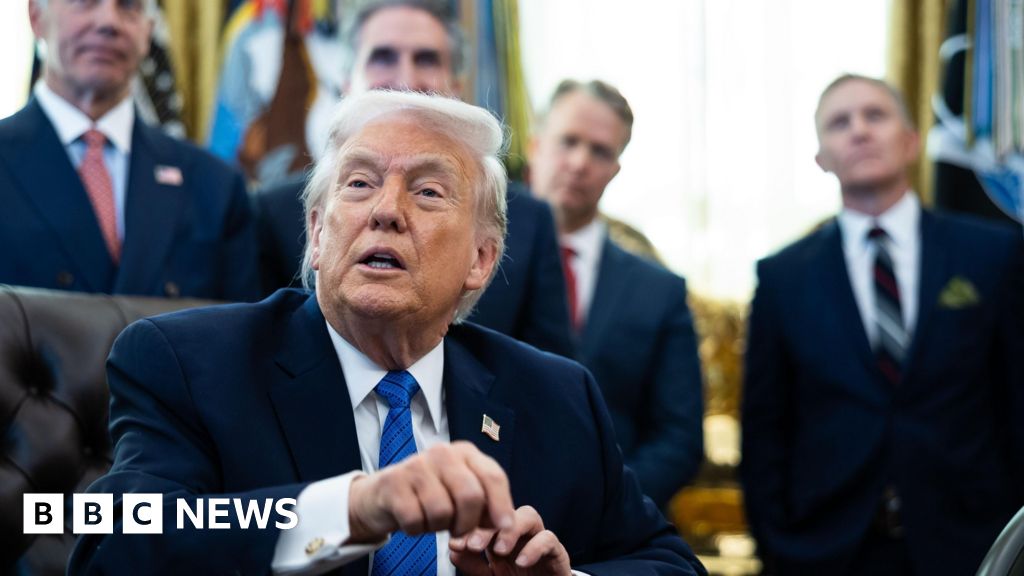
US President Trump signalled Iran prefers to negotiate rather than face US military action as a large US naval force massed in the Gulf, while Tehran insists its missile and defence systems are non‑negotiable and says no talks with the US are currently planned. The story highlights heightened geopolitical risk—meetings between Iranian and Russian officials were reported—and severe domestic unrest in Iran with conflicting casualty estimates (HRANA reporting over 6,300 confirmed deaths and IHR warning the toll could exceed 25,000), underscoring potential volatility for regional assets, defense names and energy markets if tensions escalate or sanctions/further intervention follow.
Market structure: Near-term winners are defense & ISR contractors (Lockheed Martin LMT, Raytheon RTX, L3Harris LHX), energy producers (XOM, CVX) and safe-havens (gold/GLD); losers include airlines (DAL, AAL), regional EM equities (EEM) and shipping/insurance-exposed names. A credible supply shock (Strait of Hormuz disruption of 2–4 mbpd) would reprice oil/energy margins and raise input costs across global supply chains, shifting pricing power to upstream producers and specialty insurers.
Risk assessment: Tail risks include a full maritime blockade or strikes on Gulf infrastructure driving Brent to $120–150 within weeks (low probability, high impact) or rapid diplomatic de-escalation that knocks 20–30% off any oil spike. Immediate horizon (days–weeks) expects VIX and oil volatility spikes; short-term (1–3 months) sees earnings revisions for airlines and higher defense backlog visibility; long-term (quarters–years) implies sustained higher defense budgets and selective CAPEX reallocation in energy services.
Trade implications: Priority tactical plays are short-duration oil volatility and targeted defense exposure rather than broad cyclicals: buy 3-month Brent call spreads if Brent > $85, establish 2–3% core longs in LMT/RTX for 6–12 months, and short 1–2% airline exposure (DAL/AAL) via puts. Cross-asset: increase 1–2% gold/GLD as tail-hedge and consider short EEM (1–2%) on widening EM spreads; use explicit triggers (Brent > $95 or VIX >25) to scale.
Contrarian angles: Consensus overweights big-cap defense; underappreciated winners are ISR/satcom (MAXR), cybersecurity (PANW) and energy-service names (SLB, HAL) if sanctions reroute demand to non-Iran supply—these can outperform during protracted tensions. Historical parallels (2019 tanker incidents) show oil spikes can be short-lived; size positions with discipline (use 5–10% trailing stops or options with defined loss) to avoid rapid mean-reversion losses.
AI-powered research, real-time alerts, and portfolio analytics for institutional investors.
Request DemoOverall Sentiment
moderately negative
Sentiment Score
-0.60
