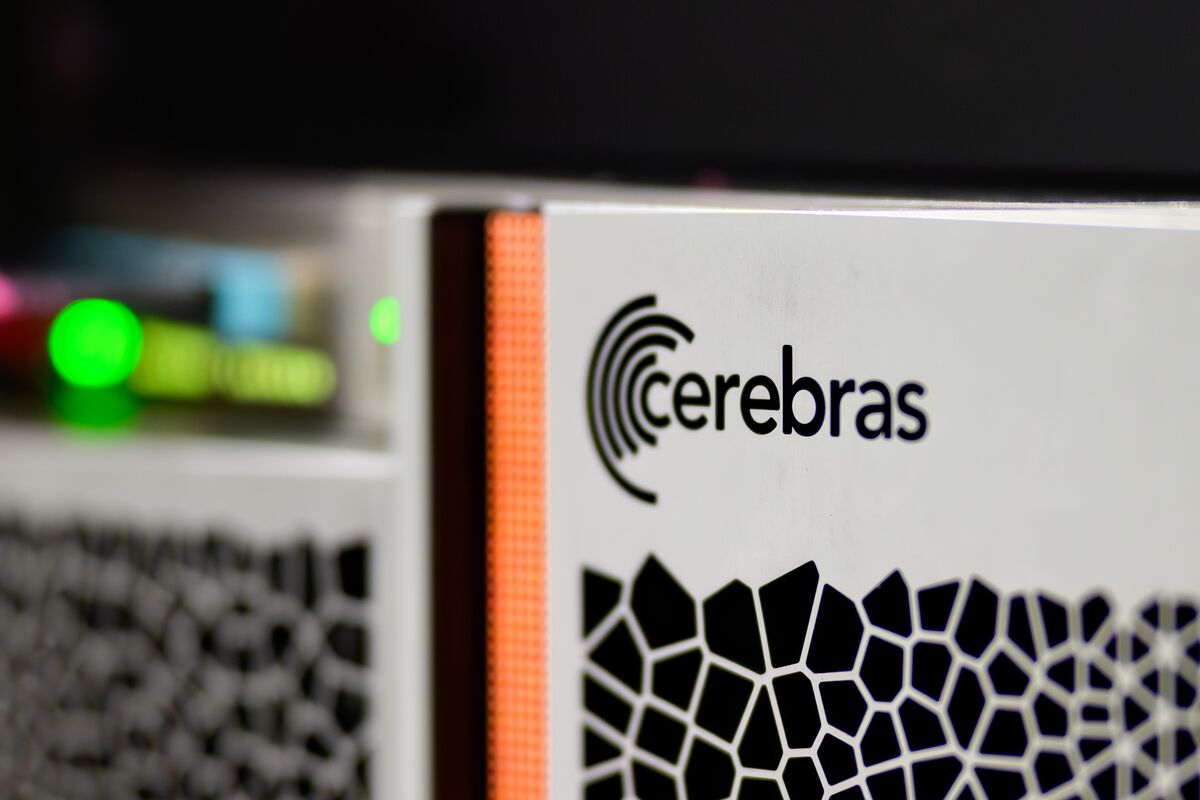
Cerebras Systems is seeking to raise up to $3.5 billion in a U.S. IPO, offering 28 million shares at $115 to $125 each. The AI chipmaker and data center operator’s filing confirms an earlier report and follows a prior withdrawn registration, underscoring renewed financing plans in the hot AI sector. The deal could draw attention across AI semis and IPO markets, though the article is primarily a capital-raising update rather than a fundamentals surprise.
A successful pricing would not just validate one company; it would re-open the IPO window for capital-intensive AI infrastructure names that have been forced to live on private marks. The second-order winner is the private market ecosystem—late-stage holders, crossover funds, and venture portfolios can finally test exits at public comps, which may catalyze a broader re-rating of unlisted AI compute plays over the next 1-2 quarters. The most important read-through is that investors are willing to underwrite AI demand beyond the obvious leader set, but only if the story includes differentiated throughput and a credible path to scale.
For public equities, the near-term read-through is mixed for NVDA. The stock is likely to face marginal multiple pressure if the market starts assigning more value to alternative architectures and if an IPO provides a fresh benchmark for “non-GPU AI compute” economics. That said, the more likely medium-term effect is actually supportive for the entire AI capex complex: a new public comp tends to increase budget visibility and keeps hyperscaler spending psychologically anchored, which can extend the AI infrastructure buildout cycle by 6-12 months.
The contrarian risk is that this becomes a liquidity event rather than a growth event. If the market prices the deal aggressively but post-IPO orders disappoint, it could reset expectations for private AI names and remind investors that training/inference demand is still concentrated in a few platforms. The bigger macro tell is whether this listing draws incremental capital from public AI winners or simply reallocates existing risk appetite; if the latter, the trade is less about beta and more about relative valuation dispersion.
The setup also argues for watching supply-chain beneficiaries that are not obvious headline names: advanced packaging, high-bandwidth memory, and data-center power/cooling vendors can benefit whether the winner is GPUs or custom silicon. If the market starts rewarding differentiated AI infrastructure stories, the next leg could favor picks-and-shovels over the headline chip names.
AI-powered research, real-time alerts, and portfolio analytics for institutional investors.
Request DemoOverall Sentiment
mildly positive
Sentiment Score
0.30
Ticker Sentiment
