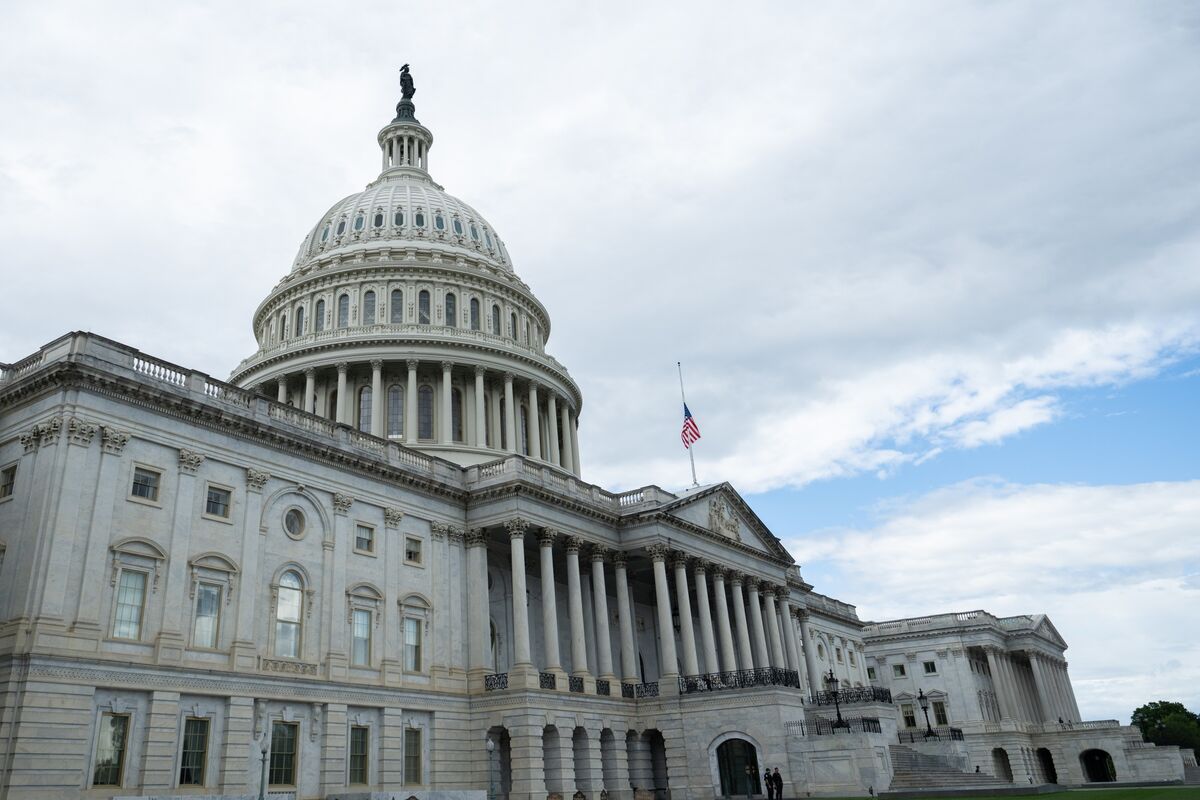
The Senate's plan to revise President Trump's tax bill, which includes an increase to the U.S. debt limit, raises the possibility of a near-term U.S. payment default. By attaching the debt limit increase to the tax bill, Republican leaders have increased the stakes, making debt ceiling passage contingent on navigating the complex legislative process required for the tax package.
The probability of a US payment default is escalating due to the Senate's anticipated time-intensive revisions to President Trump's extensive tax and spending legislation. Republican congressional leadership has strategically linked an increase in the US legal debt limit to this signature economic bill. While this maneuver intensifies the urgency for the bill's enactment, it concurrently places the critical task of averting a default at the mercy of a complex and potentially protracted legislative process. The situation is characterized by a 'strongly negative' sentiment (score of -0.7) and a high 'market_impact_score' (0.85), reflecting significant investor concern and potential for market disruption amid an 'uncertain' legislative outlook. This development touches upon critical themes including Fiscal Policy & Budget, Tax & Tariffs, Regulation & Legislation, Elections & Domestic Politics, and Sovereign Debt & Ratings, highlighting its broad macroeconomic implications.
AI-powered research, real-time alerts, and portfolio analytics for institutional investors.
Request DemoOverall Sentiment
strongly negative
Sentiment Score
-0.70
