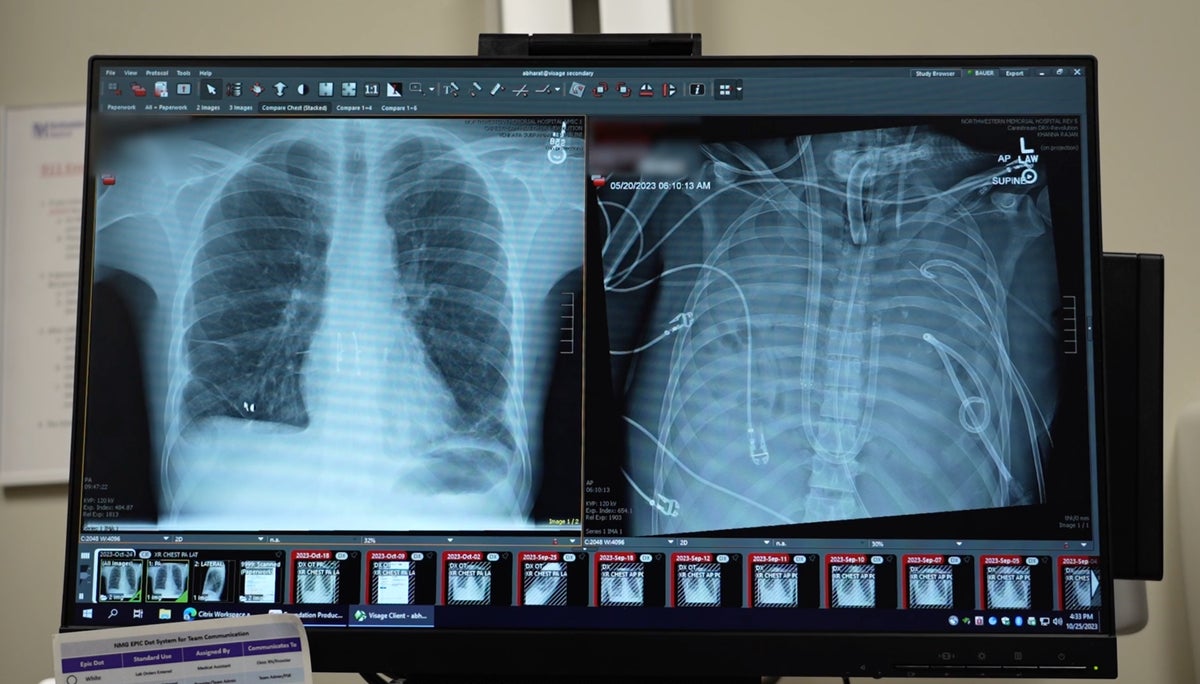
Thoracic surgeon Ankit Bharat and colleagues developed a novel extracorporeal 'artificial lung' system that bridged right-to-left cardiac circulation and oxygenated blood, keeping a critically ill 33-year-old influenza patient alive for two days until a double-lung transplant in 2023; their method and practical configurations are described in a paper published in Med. Bharat stresses the approach is nonproprietary and replicable, positioning it as a potential 'nuclear option' for transplant centers and a candidate for wider clinical adoption or device development in critical-care respiratory support.
Market structure: Immediate winners are specialized med‑tech firms that supply ECMO/oxygenator circuits and academic transplant centers that can operationalize novel “artificial lung” bridges; smaller community hospitals and payers are potential losers because of higher acute costs and limited expertise. Pricing power will accrue to niche device suppliers and centers of excellence—expect 10–30% device margin expansion vs. commodity respiratory products if adoption rises across 50–100 high‑acuity centers in 2–3 years. Cross‑asset: expect modest tightening of credit spreads for top-tier hospital issuers (−10–30bps) and relative underperformance of rural hospital bonds; FX/commodities impact is immaterial.
Risk assessment: Tail risks include regulatory denial or adverse safety signals (low‑probability, high‑impact) and malpractice/litigation that could impair adoption; model a 10–25% downside for pure‑play small caps on an adverse regulatory outcome. Time horizons: academic/press attention is immediate (days–weeks), pilots and device procurement decisions play out in 3–12 months, and broad commercialization/reimbursement will take 18–36 months. Hidden dependencies include trained perfusionists, ICU bed availability and disposable supply chains which can bottleneck rollouts.
Trade implications: Direct plays: small, concentrated exposure to ALGS (ALung Technologies) as a binary clinical/regulatory catalyst—limit to 1–2% NAV; thematic ETFs IHI (medical devices) and XLV (healthcare) as 2–3% tactical overweights for diversified exposure. Options: consider a 3‑month IHI call spread (buy ATM, sell 8–12% OTM) sized to 0.5–1% NAV to capture adoption news while capping premium decay; overweight tertiary hospital operators such as HCA (1–2%) for revenue from high‑acuity cases.
Contrarian angles: The market may be underpricing adoption friction—expect slower uptake (18–36 months), meaning early enthusiasm could be overdone and create buying opportunities on pullbacks of 20–40%. Conversely, a strong multi‑center case series or a CMS reimbursement code within 12 months would be a significant catalyst (potential +30–50% re‑rating for small caps). Keep positions small and event‑driven to manage binary regulatory/clinical outcomes.
AI-powered research, real-time alerts, and portfolio analytics for institutional investors.
Request DemoOverall Sentiment
mildly positive
Sentiment Score
0.25
