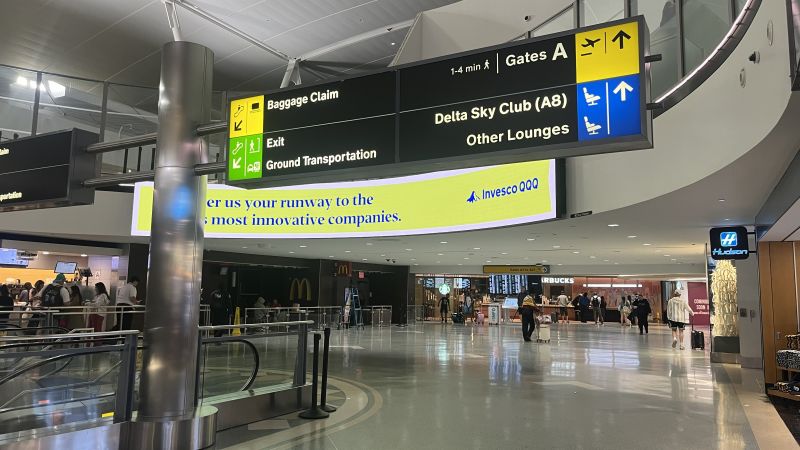
Major airlines, hotel chains and online travel agencies have launched Black Friday/Cyber Monday promotions that cover flights, package deals and hotel stays across 2026 travel windows, potentially boosting near-term bookings and consumer travel spend. Notable offers include American Airlines domestic fares under $100 one-way (travel in Jan–Feb 2026) and tiered package discounts via AA Vacations, Delta’s $250 SkyMiles flight+hotel credit (Dec 1–May 31, 2026), JetBlue package discounts up to $1,000, Spirit one-way fares from $25–$30, and a range of international sales from Qatar (20% off), Qantas (LAX–SYD from $834), Fiji Airways (RT from $698) and others; hotel deals include Hyatt up to 30% off (book by Dec 11) and Marriott app-only 25% savings (Nov 25–Dec 2). Ancillary promotions (Priority Pass discounts) and credit-card recommendations (Chase Sapphire Reserve/Preferred, Freedom Unlimited, Capital One Venture X, AmEx Gold) underscore potential incremental revenue for travel-fintech and loyalty partners while having limited direct market-moving implications.
Market structure: Black Friday travel discounts amplify demand in shoulder months (Jan–Mar 2026) while pressuring yields for price-sensitive routes. Winners are OTA/packaging engines and card issuers that capture ancillaries and booking fees (EXPE, AXP); legacy and LCC carriers face divergent outcomes — carriers with strong network density and partnerships retain pricing power, low-costs risk margin erosion. Expect incremental share gains for OTAs of ~100–200bps in packaged bookings over next 6–12 months if airlines continue tiered package promotions.
Risk assessment: Tail risks include a Spirit-style Chapter 11 contagion (low probability, high impact), fuel spikes >$85/barrel, or a U.S. GDP quarter <0.5% that could compress leisure demand by 10–20%. Immediate impact (days) is booking velocity and revenue recognition; short-term (weeks–months) affects Q4 bookings and holiday cancellations; long-term (quarters) shifts loyalty economics and receivables for AXP. Hidden dependency: travel-card signups and co-brand renewals (AXP/AAL partnerships) drive stickier spend and fee income — a reversal in card activation trends would hit AXP disproportionately.
Trade implications: Tactical longs: EXPE (capture OTA commissions, 3–6 month horizon) and AXP (2–4% position to benefit from higher card spend and cross-sell). Tactical shorts/relative: relative short AAL vs long EXPE as a pair (expect OTAs to capture margin if airlines promote packages aggressively); size pair 1–2% net market exposure, rebalancing after Cyber Monday. Options: buy EXPE 6-month 25–40% OTM call spread to leverage upside if bookings rise >15% vs prior-year; hedge with AAL short-dated covered calls if long exposure exists.
AI-powered research, real-time alerts, and portfolio analytics for institutional investors.
Request DemoOverall Sentiment
mildly positive
Sentiment Score
0.25
Ticker Sentiment
Contrarian angles: Consensus downplays bankruptcy contagion and overestimates uniform recovery — watch for selective overcapacity in routes with deep Black Friday cuts. Market may be underpricing AXP upside from renewed travel-card activations; conversely EXPE upside could be capped if hotel chains push direct-booking incentives. Historical parallel: 2021–22 post-pandemic rebound saw OTAs initially outperform then normalize; similar mean reversion could occur in 12–18 months if margins compress. Monitor oil >$85, daily booking trend delta >+10% week-over-week, and Spirit/Chapter-11 milestones within 30 days as catalysts to re-rate positions.
