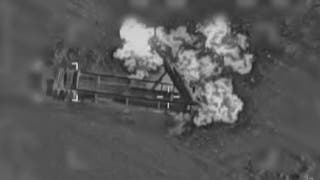
Iran has accused the U.S. of being accountable for Israeli strikes against Tehran's military and nuclear facilities, with Iranian officials threatening retaliation against U.S. bases in the Middle East, where approximately 40,000 U.S. service members are stationed. These threats come ahead of planned U.S.-Iran nuclear negotiations in Oman and prompted a partial U.S. embassy evacuation in Iraq. Analysts suggest Iran's threats aim to exploit the U.S.'s desire for de-escalation and to distance the U.S. from Israel.
Geopolitical tensions in the Middle East have escalated significantly following Israeli strikes against Iranian targets, including nuclear and military facilities, resulting in the deaths of military commanders, an official involved in nuclear talks, and nuclear scientists. Iran has publicly blamed the U.S., as Israel's 'backer,' threatening retaliation against U.S. bases in the region, where approximately 40,000 service members are stationed across at least 19 sites. This rhetoric, including specific threats from Iranian Defense Minister Aziz Nasirzadeh to target U.S. bases if Israel strikes Iran again, casts a shadow over planned U.S.-Iran nuclear negotiations in Oman. In response to the heightened risk, the U.S. has initiated a partial evacuation of its embassy in Iraq and authorized military dependents to leave certain Middle Eastern locations, a decision President Trump attributed to 'an abundance of caution' amid fears of military escalation. While Iran demonstrated capability to strike U.S. bases in January 2020, its lack of immediate defensive response to the recent Israeli actions raises questions about its current capacity or willingness to engage in a multi-front conflict. Analysts suggest Iran's threats may be a political maneuver aimed at exploiting the U.S.'s desire for de-escalation, seeking to create distance between Washington and Jerusalem and position the U.S. as an observer rather than an active ally of Israel. The situation is marked by a strongly negative sentiment (-0.7) and a high market impact score (0.8), reflecting significant uncertainty and potential for market volatility stemming from these geopolitical developments.
AI-powered research, real-time alerts, and portfolio analytics for institutional investors.
Overall Sentiment
strongly negative
Sentiment Score
-0.70
