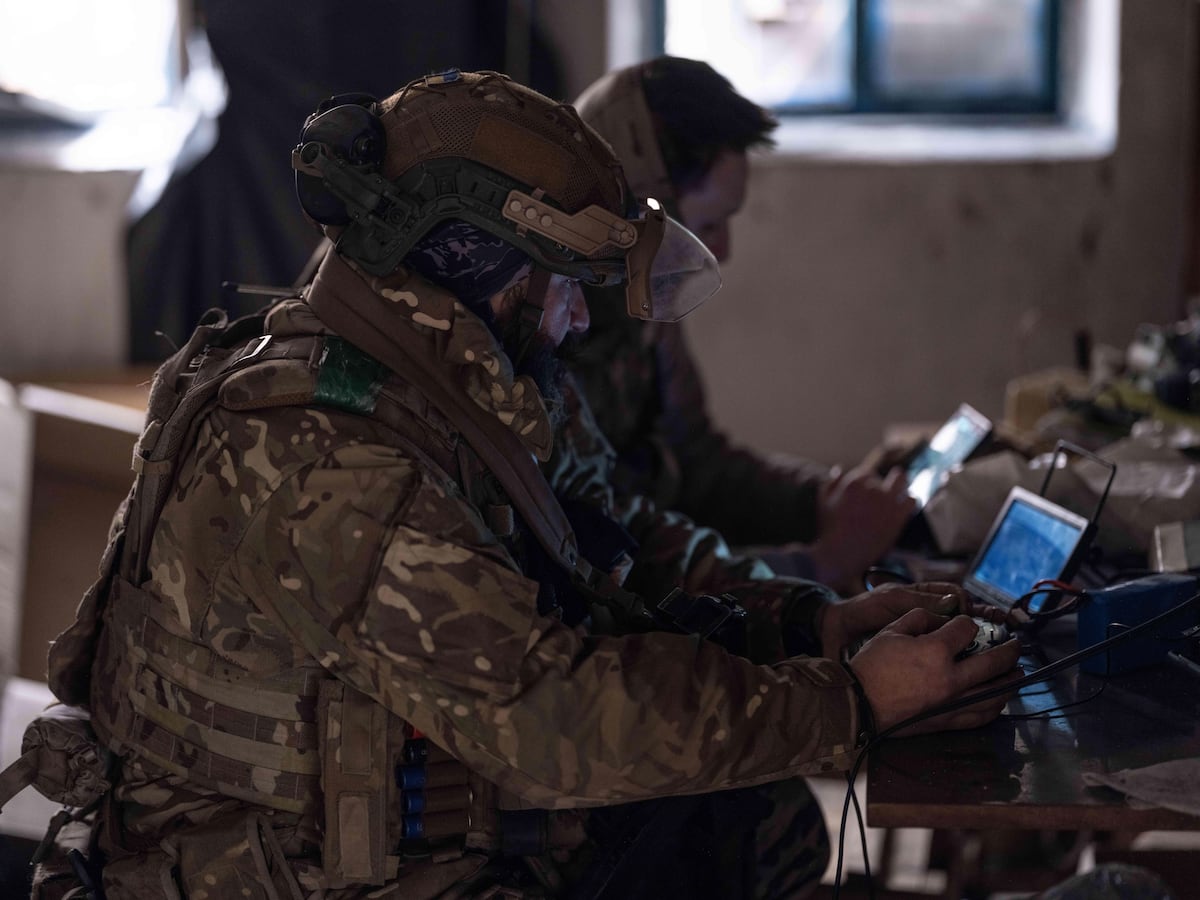
Ukraine is facing a severe manpower crisis — frontline brigades often operate at 50%–60% of authorized strength (some as low as 30%), the average frontline soldier is 43–45 years old, roughly 200,000 troops are AWOL and around 2 million men are evading mobilization, with an estimated overall shortfall of ~300,000 personnel. To compensate, Ukraine has institutionalized unmanned warfare (Unmanned Systems Forces established 2024), shifted large shares of strikes to drones (69% of strikes in 2024, >80% by end-2025 with 819,737 video-confirmed hits), cut drone delivery times from months to days, and is building doctrine and logistics (including a planned 15 km “Drone Line”), even as winter weather and Russian electronic warfare pose operational challenges.
Market structure: The rapid substitution of infantry with drones, robotics, EO/IR sensors and batteries reallocates defense spending away from heavy tracked platforms toward avionics, small munitions, autonomy software and power systems; expect outsized revenue growth (20%+ y/y possible) for niche drone/EO suppliers and electronic-warfare (EW) firms over 12–36 months while traditional heavy-vehicle OEMs face margin pressure. Competitive dynamics favor agile, software-enabled firms (Elbit/ESLT-style, Kratos/KTOS-style) and vertically integrated suppliers of powertrains and imaging; barriers to entry rise for commodity makers but fall for software integrators using COTS airframes. Supply/demand: near-term demand shock for FPV airframes, Li-ion cells and gimbals will tighten supply (order-to-delivery shrank to 10 days in Ukraine), pushing component price resilience into H1–H2 2026 until capacity scales.
Risk assessment: Tail risks include kinetic escalation (Russian strategic mobilization or wider NATO involvement) or major EW breakthroughs that neutralize drone advantage—both could swing valuations 30–60% within weeks. Immediate risk (days): headline-driven spikes in defense ETFs; short-term (weeks–months): procurement awards and battery winter performance data; long-term (quarters–years): doctrinal adoption that permanently shifts CAPEX. Hidden dependencies: drone effectiveness hinges on batteries (-20C performance), secure supply chains (semiconductors, GPS/OCX), and Western political funding cycles; a U.S. export-control shock could pause growth. Catalysts: U.S./EU aid packages, major procurement contracts, and breakthroughs in cold-weather battery chemistry.
Trade implications: Go long prime integrators and small-cap autonomy/EW names and suppliers of power and optics: consider ITA (ETF) and selective names: ESLT, KTOS, AVAV (small size). Use call spreads to express asymmetric upside while limiting premium erosion; overweight semi/battery names (LIT or ALB) with 6–18 month horizons to capture increased cell demand. Pair trades: long ESLT (drone systems) / short OSK (OSK) or other heavy ground-platform exposure (5:1 notional skew) as a 12–36 month rotation. Rotate capital from commercial aviation cyclical exposure into defense and sensors over next 3–12 months.
Contrarian angles: Consensus assumes perpetual cost-asymmetry favoring drones; miss is logistics and manpower realities—occupation/holding phases still need armored movement and engineers, creating cyclical rebounds for certain platform suppliers. The market may be underpricing EW winners and overpricing low-quality munitions makers; expect consolidation (10–25% M&A uplifts) in small drone builders within 12–24 months. Historical parallels: artillery/airpower revolutions (WWI/WWII) created temporary dislocations followed by hybrid force structures; expect a multi-year co-existence, not outright obsolescence of heavy platforms.
AI-powered research, real-time alerts, and portfolio analytics for institutional investors.
Request DemoOverall Sentiment
moderately negative
Sentiment Score
-0.30
