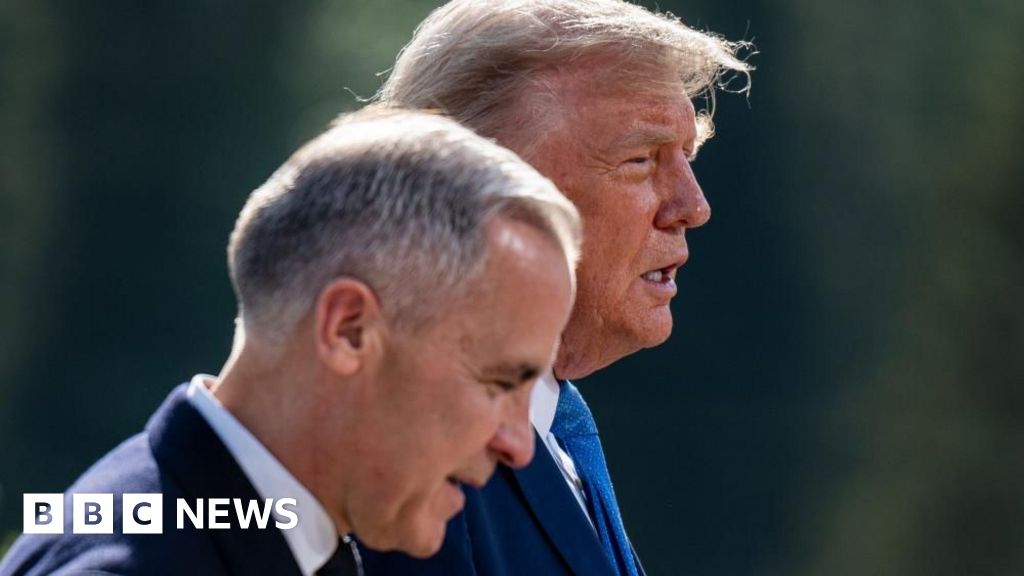
US-Canada trade negotiations missed a self-imposed deadline, with a quick, tariff-free deal remaining elusive despite ongoing discussions and a six-month tariff war. While US tariffs on steel, aluminum, and autos are impacting Canadian sectors and prompted C$60bn in counter-tariffs, the existing CUSMA/USMCA agreement provides a significant buffer, allowing approximately 90% of Canadian exports to remain duty-free. Talks are expected to continue, with potential pressure from tariff-affected US businesses playing to Canada's advantage as Canadian firms increasingly diversify supply chains, signaling a broader strategic shift away from US trade dependence.
The failure to secure a new US-Canada trade agreement by the self-imposed deadline extends a six-month tariff war, yet the immediate economic impact is significantly mitigated by existing frameworks. While headline US tariffs on steel, aluminum, and autos are in place, alongside C$60bn in Canadian counter-tariffs, the Canada-United States-Mexico Agreement (CUSMA) provides a critical buffer. This agreement allows approximately 90% of Canadian exports to enter the US duty-free, contingent on firms completing the necessary paperwork, placing Canada in a more favorable position than other US trading partners like the EU or Japan. Canadian negotiators are deliberately prioritizing a quality agreement over a rushed one, leveraging this buffer and waiting for political pressure to mount on US leaders from American businesses impacted by tariffs. This strategy is supported by Canadian firms actively de-risking their operations; nearly 40% of goods exporters have already diversified suppliers away from the US, and 28% have diversified their buyer base. This signals a structural economic shift, though investors should note that the CUSMA framework itself faces a critical review next year, introducing a significant future variable.
AI-powered research, real-time alerts, and portfolio analytics for institutional investors.
Overall Sentiment
mixed
Sentiment Score
-0.15
