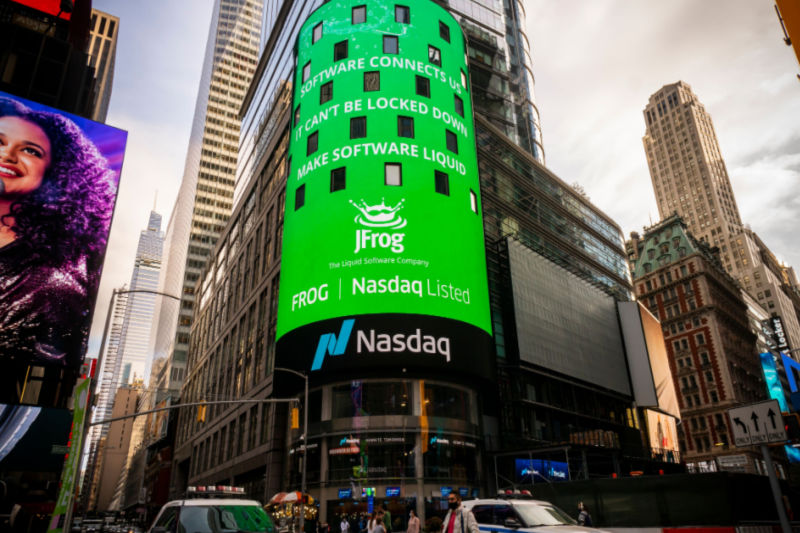
KeyBanc set a $79 price target on JFrog (FROG), implying substantial upside from the $46.93 share price and projecting Q1 revenue $5–6M above the $147M Street estimate (implying ~24–25% YoY growth vs consensus 20.3%). The firm raised its Q1 cloud growth forecast to 36% (from 32%) with upside toward 40%, citing recent supply-chain attacks (LiteLLM, axios) driving demand for JFrog’s Security Core; gross margin is strong at 76.79% and analysts expect profitability this year. Multiple broker notes reinforced the bullish view (Truist $70 PT, TD Cowen $80, Guggenheim $60, UBS upgraded to Buy with $60 PT), underscoring security-driven upside and AI-driven development tailwinds.
JFrog is positioned to capture follow-on demand as enterprises move from ad-hoc artifact storage to security-first software supply chain controls; higher-minimum commitments and attach rates for a Security offering can convert previously low-monetization registry users into multi-year, sticky ARR within 6–12 months, materially improving FCF conversion and gross retention. Second-order beneficiaries include SIEMs and cloud logging vendors (better telemetry for attestation) and professional services/SIs that will sell audits and remediation—expect incremental deal TCVs to rise as SBOM and attestation requirements become procurement gatekeepers.
The main competitive threat is commoditization from cloud-native registries and platform vendors bundling basic provenance features for free or low cost; that dynamic can pressure new-customer ARPU over 12–24 months, forcing differentiation through advanced runtime attestation, vulnerability scoring, and SSO/entitlements integrations. Conversely, tighter regulatory or procurement mandates (public sector and large enterprises) would accelerate premium security spend and increase barriers for low-cost alternatives, creating a bifurcated market where incumbents with enterprise controls command 20–40% price premiums.
Near-term catalysts are earnings and any fresh supply-chain incidents that re-prioritize board-level security budgets (days–months). Tail risks include rapid ecosystem fixes (package signing defaults, registry hardening) or a major cloud provider launching a free “good enough” registry, which could compress net-new growth; monitor top-10 customer concentration and multi-year commitment mix as early warning signals. A contrarian read: current sentiment prices in recurring upside from security incidents but under-weights the appetite of hyperscalers to absorb commoditizable registry revenue, so size positions to reflect asymmetric event risk over 3–18 months.
AI-powered research, real-time alerts, and portfolio analytics for institutional investors.
Request DemoOverall Sentiment
moderately positive
Sentiment Score
0.45
Ticker Sentiment
