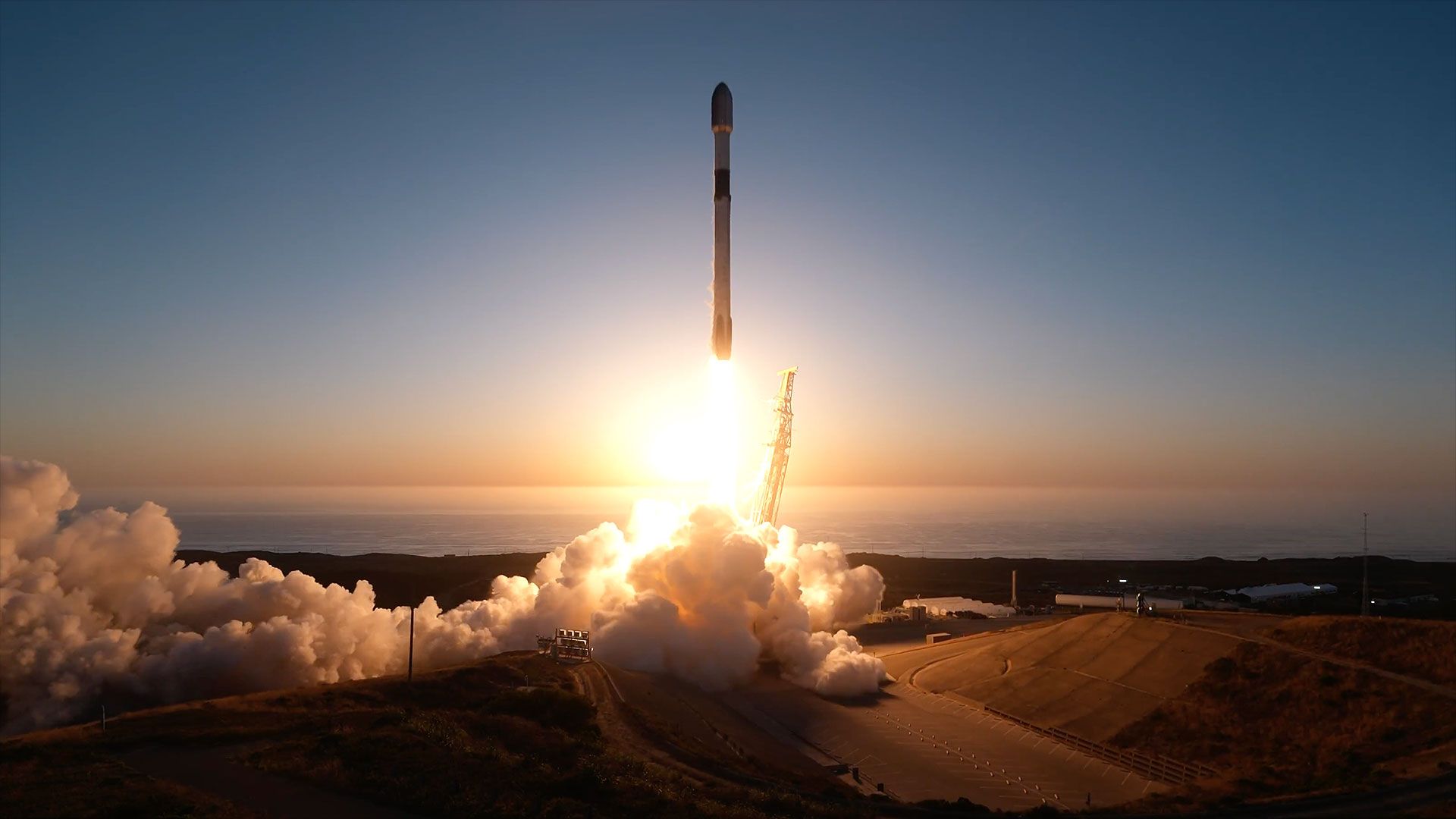
SpaceX successfully launched 24 Starlink satellites on a Falcon 9 from Vandenberg Space Force Base at 10:46 p.m. EDT, expanding the constellation to just under 10,500 working units. The mission marked the Falcon 9 booster’s first reuse and SpaceX’s 58th launch of the year, reinforcing launch cadence and Starlink deployment momentum. The update is operationally positive but likely limited in immediate market impact.
SpaceX’s cadence matters more than this single launch: the signaling value is that launch throughput, not payload novelty, is becoming the moat. That tends to compress the window for any would-be LEO competitor because the real competitive advantage is launch frequency plus reuse economics, which lowers marginal deployment cost and accelerates constellation densification faster than rivals can finance or insure their own networks.
The second-order winner is the broader defense-adjacent ecosystem that relies on proliferated LEO architecture: resilient comms, ISR backhaul, and distributed battlefield networking. Even without a direct ticker here, this reinforces the market’s willingness to pay for companies enabling ground segment, antennas, optical terminals, and launch infrastructure; the demand curve is shifting from experimental budgets to recurring network-expansion budgets over the next 12-24 months.
Contrarian angle: the market often treats high launch counts as linear good news, but the incremental return on each additional satellite can diminish if utilization, spectrum congestion, or pricing pressure becomes the bottleneck. The real watch item is whether SpaceX can monetize subscriber growth and enterprise/defense ARPU fast enough to justify continued capex intensity; if not, the value capture migrates from the constellation owner to the picks-and-shovels suppliers.
Catalyst risk runs in two directions: near-term, launch cadence can be interrupted by a single anomaly or regulatory delay, but the bigger multi-quarter risk is competition from alternative LEO/MEO constellations and terrestrial fixed wireless substitutes. If network economics remain strong, the market should continue to re-rate adjacent infrastructure names; if not, the enthusiasm around space infrastructure can fade quickly despite operational success.
AI-powered research, real-time alerts, and portfolio analytics for institutional investors.
Request DemoOverall Sentiment
mildly positive
Sentiment Score
0.20
