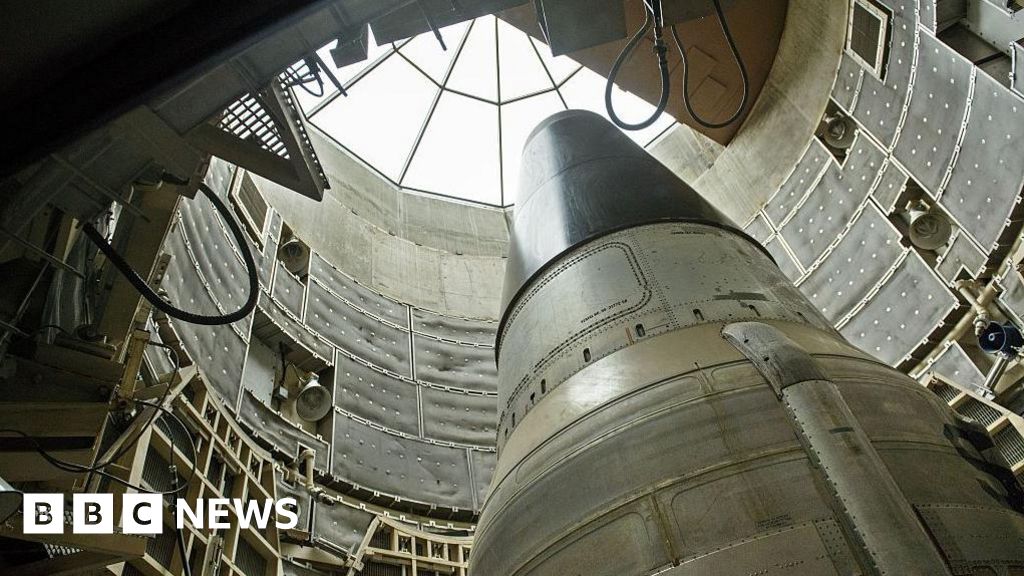
The US-Russia New START treaty is expiring, removing limits that capped deployed strategic nuclear warheads at 1,550 and ending key transparency measures such as data exchanges, notifications and on-site inspections. Its lapse — coming after the collapse of other arms-control pacts — coincides with both sides modernising arsenals and the deployment of novel systems (Russia's Poseidon and Burevestnik, and hypersonic programs by the US, Russia and China), raising the prospect of a renewed arms race and elevated geopolitical tail risk. For investors, this increases uncertainty, tilts policy and procurement risk toward defence suppliers, and supports safe-haven positioning until new arms-control frameworks or negotiations reduce escalation risk.
Market structure: Expiry of New START structurally favors defense primes (Lockheed LMT, Northrop NOC, Raytheon RTX, General Dynamics GD) and specialized materials/shipbuilders (BWXT, HII, MP Materials MP) via multi-year backlog growth and pricing power; expect 100–200bps potential margin expansion over 12–36 months as procurement shifts from discretionary to prioritized. Supply/demand will tighten for hypersonic/rare-earth inputs (MP) and submarine components, pressuring suppliers with limited capacity and giving OEMs leverage to pass costs through. Cross-asset: immediate risk-off should push gold +3–5% and 10y T-note yields down ~10–30bps in days, but a sustained arms race implies higher fiscal issuance and upward pressure on yields over years; RUB and Russian equities (RSX) are high-conviction downside in a sanctions scenario.
Risk assessment: Tail risks include a low‑probability nuclear incident (catastrophic market dislocation) and broad sanctions that shutter supply chains; assign <1% probability to full-scale strategic strike but model scenario losses across equities (-30%+) and energy shocks (+10–30%). Time horizons: days — volatility and safe‑haven flows; weeks–months — defense contract awards and Congressional budget votes; years — capex-led inflation/increased deficits. Hidden dependencies: rare‑earth processing concentration in China, shipyard labor bottlenecks, and export‑control cascade on dual‑use tech could delay deliveries. Catalysts: fast-moving — public negotiations or major defense contract wins; slow-moving — FY budget passes, China/US nuclear posture shifts.
Trade implications: Direct plays — initiate 1–3% long positions in LMT/NOC and 0.5–1% in BWXT/HII for backlog capture, targeting 12–24 month re-rates of 10–25%; pair trade long LMT vs short airline ETF JETS to hedge cyclical drawdown. Options — buy 3‑6 month VIX call spreads (allocate 0.5–1%) and 9–18 month LEAP calls on RTX/LMT to play structural rerating; consider GLD (1–2%) as risk hedge. Entry/exit: scale into defense longs over 2–6 weeks, take profits on 20–30% gains, set hard stops at 12–15%.
Contrarian angles: The market may overprice immediate procurement upside — many programs have multi-year lead times so near-term defensives could pull back; favor mid‑tier specialized suppliers (MP, BWXT) where capacity constraints and pricing power are underappreciated. Historical parallels (post‑Cold War treaty lapses) show temporary volatility followed by gradual budget-driven upside — don’t treat this as a one‑week trade. Unintended risk: sustained fiscal expansion for defense can lift real yields and hit growth/style leaders; reduce long-duration growth exposure if 10y >150bps above current levels.
AI-powered research, real-time alerts, and portfolio analytics for institutional investors.
Request DemoOverall Sentiment
strongly negative
Sentiment Score
-0.60
Ticker Sentiment
