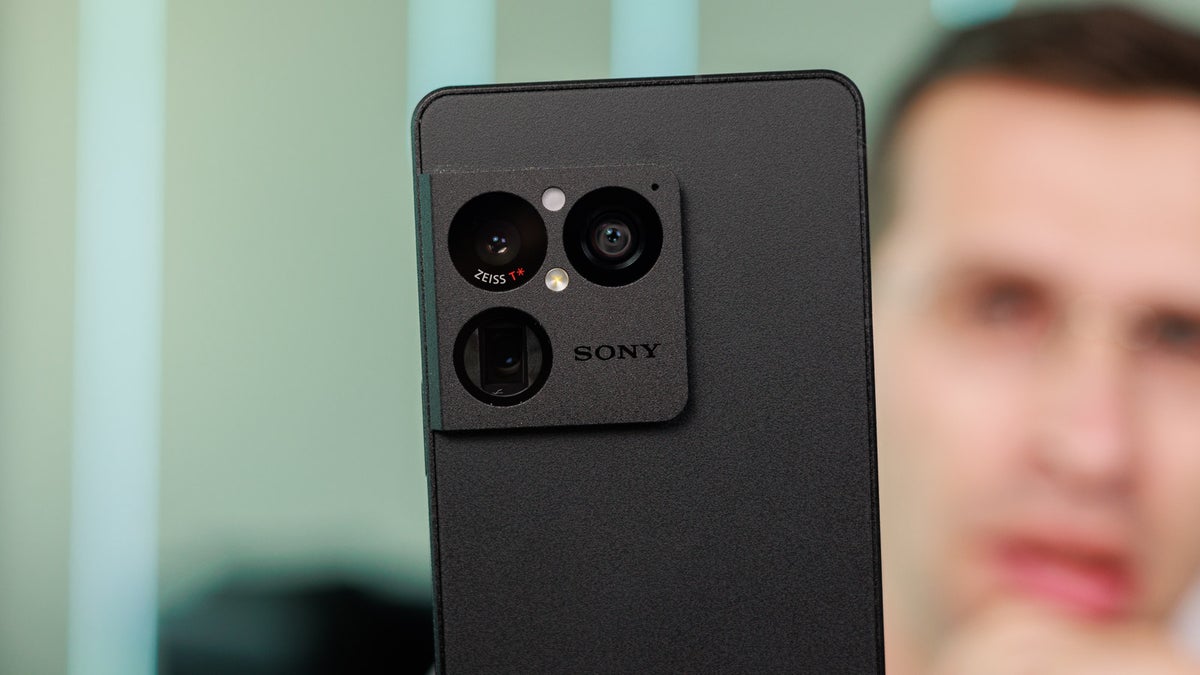
Sony’s new Xperia 1 VIII is drawing backlash because its AI Camera Assistant appears to make photos look worse, not better, with brighter, flatter images and washed-out colors versus the originals. The piece frames this as part of a broader smartphone trend toward over-processed, artificial-looking photos, while also noting Google’s new Smart Enhance feature shows similar AI-driven image flattening. The story is mainly opinionated product commentary and is unlikely to have a meaningful market-wide impact.
This reads less like a one-off product issue and more like a signal that mobile imaging differentiation is collapsing into a same-side-of-the-distribution optimization problem: cleaner, brighter, less polarizing images that are easier to market but harder to defend as “best-in-class.” That creates a structural headwind for premium OEMs because camera quality has been one of the last few features that justified upgrade urgency; when output converges, replacement cycles can stretch and attach rates for premium-tier SKUs weaken. For SONY specifically, the risk is not only handset sentiment but brand spillover into its broader imaging ecosystem. If the flagship phone is perceived as having weak computational photography, the consumer may infer that Sony’s AI stack and tuning philosophy are behind the curve versus peers, which matters for licensing, sensors narrative, and adjacent creator products. The second-order effect is that aggressive AI post-processing can become a margin trap: it is cheap to deploy, but if it degrades perceived quality, it raises CAC and forces deeper promo spending to move units. GOOGL is less exposed on direct revenue but more exposed on the credibility of its Android ecosystem pitch. The company is effectively encouraging OEMs to adopt a homogenized aesthetic, which may be good for platform consistency but bad for differentiation; over time, that lowers the value of “stock Android + camera AI” as a premium selling point. The near-term catalyst window is 1-2 quarters as reviewers and early adopters shape the narrative, while the longer-term risk is that competitors with a more opinionated visual style capture enthusiast share even if their output is technically less “accurate.” The contrarian read is that this backlash may be a feature, not a bug: mainstream buyers often prefer brighter, safer photos even if enthusiasts hate them. If that proves true, the market may be overestimating the revenue hit to SONY and underestimating the degree to which AI-enhanced imaging becomes table stakes across Android. The key question is whether Sony’s implementation is merely tone-deaf marketing or a genuine product miss; if review scores stabilize after firmware updates, the current selloff risk is likely too aggressive.
AI-powered research, real-time alerts, and portfolio analytics for institutional investors.
Request DemoOverall Sentiment
mildly negative
Sentiment Score
-0.20
Ticker Sentiment
