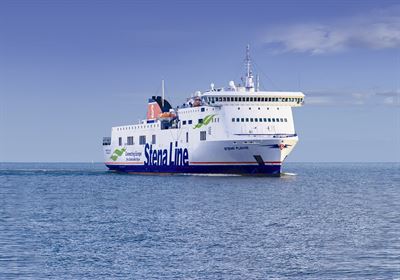
Stena Line has completed its acquisition of Terrabalt, the terminal operator in Liepaja, Latvia, and taken over RoRo, bulk and general cargo operations, rebranding the site as Stena Line Ports Liepajas SEZ; all competition and governmental approvals are in place. The company says it will gradually modernise the terminal (while maintaining current operations) and notes a parallel berth 46 rebuild by the Liepaja Special Economic Zone Authority scheduled for completion by 31 December 2027; the deal strengthens Stena Line’s Baltic network alongside its Ventspils and Karlskrona operations and the Liepaja–Travemünde ferry route.
Market structure: Stena Line’s acquisition of Terrabalt consolidates a vertically integrated RoRo/bulk/terminal operator in a strategically located Baltic hub, raising effective capacity and control over scheduling on Liepaja–Travemünde. Near-term route-level pricing power increases modestly (low-single-digit lifting of yields possible) because captive volumes and improved berth management reduce idle time and demurrage for Stena; incumbents on overlapping lanes (notably DFDS) face incremental competitive pressure. Expansion timelines (berth rebuild to 31‑Dec‑2027) imply capacity growth is phased, so supply-side shock is gradual rather than immediate.
Risk assessment: Key tail risks are geopolitical (Russia/Belarus spillovers disrupting Baltic transits), cost overruns on terminal modernization (>€20–50m) and labour/union disputes during integration that could erode projected EBITDA by 10–30%. Immediate operational risk is low (approvals cleared), short-term risk centers on integration execution over 6–24 months, long-term risks hinge on trade volumes—if Baltic throughput falls >5% YoY sustained, utilization economics break. Hidden dependencies include reliance on EU trade policy and regional feeder trucking/rail capacity; catalysts include quarterly Baltic throughput releases and berth reconstruction milestones.
Trade implications: Tactical plays: favor listed port and global terminal consolidators (DP World DPW.L, A.P. Moller‑Maersk MAERSK‑B) that benefit from scale and rising transshipment; defend by trimming ferry operators with Baltic exposure (DFDS.CO). Use 3–12 month option structures to express views: buy DPW 12‑month call spreads and buy DFDS 3–6 month put spreads to limit capital at risk. Rebalance as integration milestones are met or missed; key triggers are traffic growth >5% YoY or cost overrun announcements >€20m.
Contrarian angles: Consensus likely overstates near-term margin wins — integration historically compresses margins 6–12 months post-acquisition (see Maersk port integrations 2015–2018). If Stena’s investments drive higher throughput and more efficient hubbing, regional freight rates could soften, hurting smaller feeders and truckers — an underpriced negative for Baltic-focused logistics names. Conversely, underappreciated upside is modal shift risk: superior terminal service could capture >10% of current non-RoRo volumes within 2–4 years, supporting mid-single-digit annual EBITDA accretion for asset owners.
AI-powered research, real-time alerts, and portfolio analytics for institutional investors.
Request DemoOverall Sentiment
moderately positive
Sentiment Score
0.40
