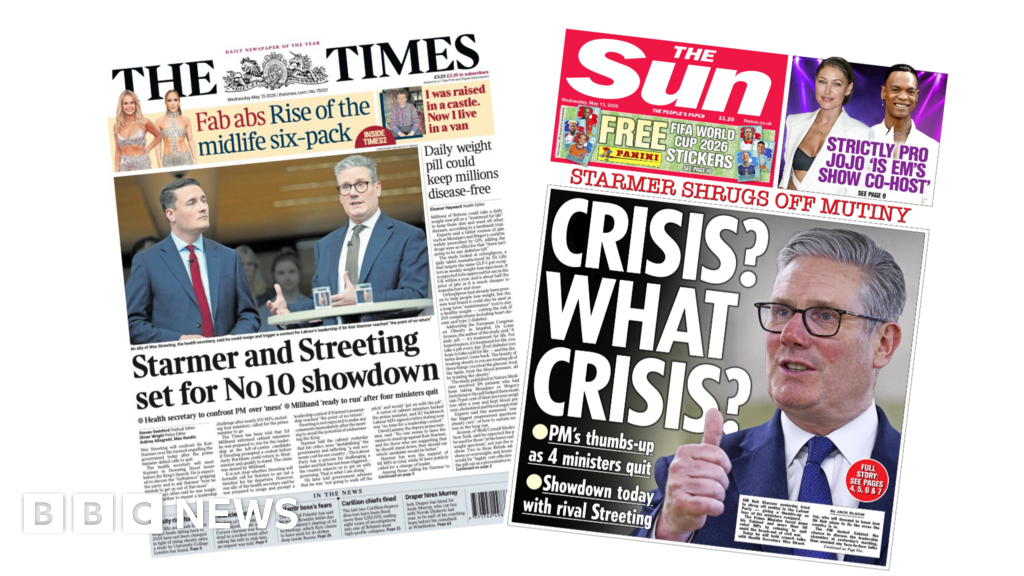
Sir Keir Starmer faces a leadership crisis after four ministerial resignations and a failed immediate challenge from Health Secretary Wes Streeting, with a key No 10 meeting scheduled before the King's Speech. UK long-term borrowing costs have risen to their highest level since 1998 as markets react to the political turmoil. The situation increases uncertainty around Labour's leadership and could overshadow the government's legislative agenda.
The market-relevant issue is not the personalities, it’s the widening probability that UK fiscal policy becomes hostage to intra-party bargaining while gilt supply remains heavy and growth remains soft. That combination is toxic for duration: even a modest rise in perceived leadership fragility can keep the term premium elevated, especially at the long end where foreign real-money buyers demand political stability before extending duration. If this persists for days to weeks, the signal to watch is not headline noise but whether primary dealers and liability-driven investors step back from incremental buying, forcing yields higher on technicals.
Second-order, a leadership crisis inside a governing party usually tightens credit conditions before it hits equities. Banks and domestically exposed cyclicals may initially underperform as higher sovereign yields feed through to mortgage rates, corporate refinancing costs, and consumer confidence; the lag is months, not days. The more important transmission is from politics to the GBP: persistent instability tends to weaken sterling, which is mildly supportive for FTSE multinationals but negative for import-heavy retailers and anything with US-dollar input costs.
The contrarian read is that the immediate move in gilts may be close to a crowded consensus trade if everyone is already positioned for dysfunction. If the PM survives the current pressure, there is room for a sharp mean reversion in short-sterling volatility and a tactical gilt rally as shorts cover. The key reversal catalyst is not a policy shift but a credible attempt to re-anchor fiscal messaging before the next supply window and rating-agency review cycle.
AI-powered research, real-time alerts, and portfolio analytics for institutional investors.
Overall Sentiment
moderately negative
Sentiment Score
-0.35
Ticker Sentiment
