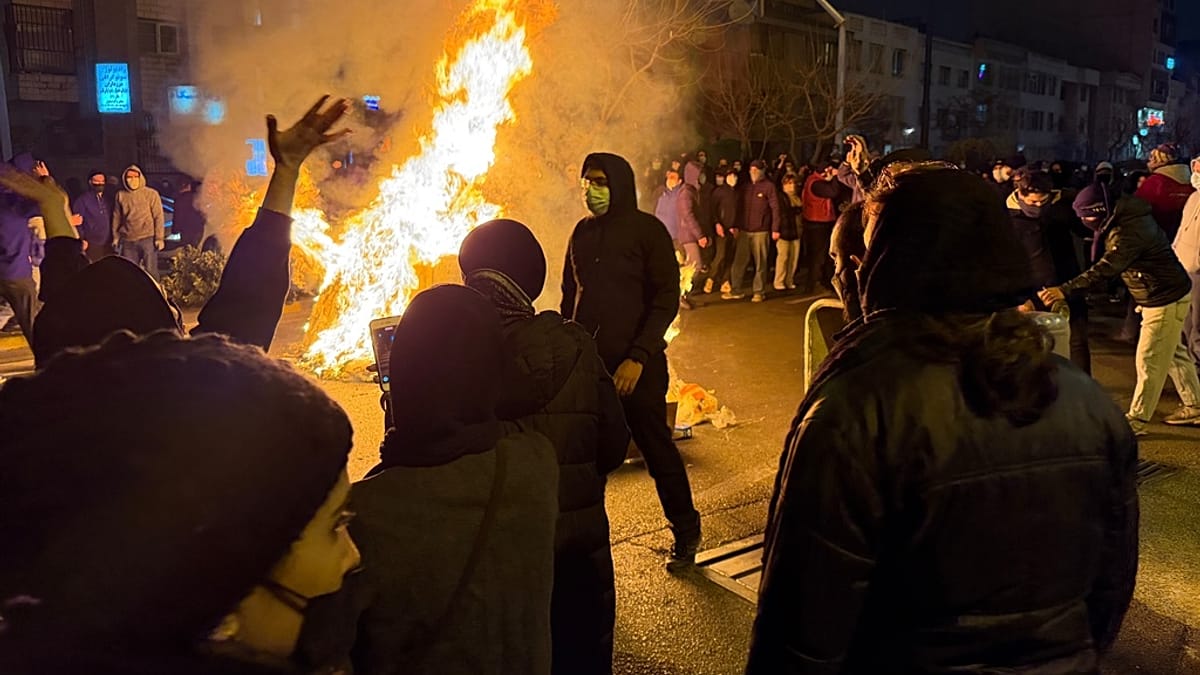
Widespread unrest in Iran has reportedly led to a catastrophic toll with an activist claiming more than 15,000 deaths amid a nationwide internet blackout exceeding 112 hours, leaving most external reporting dependent on Starlink connections. Authorities are said to be using RF detectors, jamming GPS and Starlink signals and conducting house-to-house interrogations; hospitals report mass eye injuries (one hospital >300 cases) and witnesses describe security forces employing underage fighters. The disruption to communications and escalation of state violence heighten geopolitical risk and operational uncertainty for investors with Iran exposure or regional supply-chain linkages, while potential further crackdowns could amplify market volatility for emerging-market and energy-related assets.
Market structure: Immediate winners include defense primes (RTX, NOC, LHX) and cybersecurity/satellite services (IRDM, MAXR, VSAT) as risk premia and procurement talk increase; losers are Iran-linked assets, regional airlines/tourism, and EM equities (EEM) as capital flees. Oil markets show a measurable risk premium—with limited OPEC+ spare capacity (~1–3 mb/d), a 5–10% spot move in Brent within 2–6 weeks is plausible if shipping/Strait incidents escalate—supporting short-term energy volatility and higher freight/insurance costs. FX/bonds: expect USD and gold (GLD) bids, JPY/CHF safe-haven demand, widening EM sovereign spreads and TLT outperforming during risk-off spikes.
Risk assessment: Tail risks include a regional military escalation causing >$20/bbl oil shock and global risk-off (equities -10–20%) within 1–3 months, or cyber retaliation against Western assets that disrupts supply chains. Immediate (days) risks are information blackouts and shipping insurance repricing; short-term (weeks–months) are sanctions, strikes, and supply interruptions; long-term (12–24 months) are sustained reallocation to defense/cyber budgets. Hidden dependencies: tanker AIS darkening, insurance (P&I/Lloyd’s) repricing, and satellite-provider access (Starlink alternatives) could amplify moves.
Trade implications: Tactical trades should be asymmetric and size-limited. Favor 1–3% portfolio hedges: long GLD and TLT as immediate certainties, selective long defense/cyber equity exposure for 6–18 months, and tactical energy exposure if Brent rises >5% in 7–14 days. Use options to cap downside—buy puts on EEM (3-month) and call spreads on XLE/CL for defined risk.
Contrarian angles: Consensus may overestimate sustained oil upside—Saudi/Russia response and demand destruction could cap rallies; defense/cyber rerating may be front-loaded and fade once headlines subside. EM sell-offs can overshoot; a disciplined mean-reversion trade (buy EM on 8–12% drawdown or CDS widening >150bp) could capture alpha. Watch tanker flows, CDS moves, and confirmed sanctions timelines as higher-probability catalysts for follow-through.
AI-powered research, real-time alerts, and portfolio analytics for institutional investors.
Request DemoOverall Sentiment
strongly negative
Sentiment Score
-0.70
