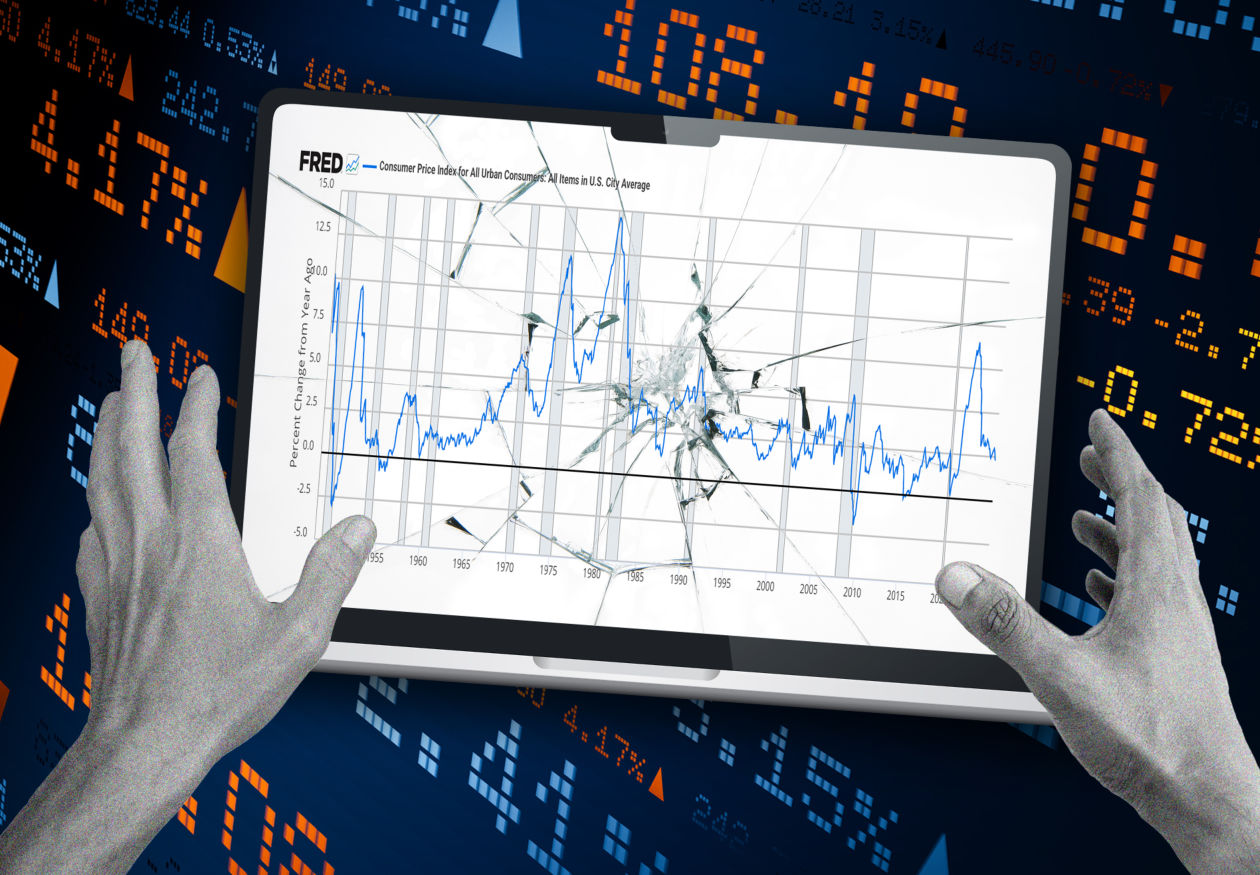
Concerns are rising about the reliability of U.S. economic data, particularly inflation and labor market figures, due to collection cutbacks at the Bureau of Labor Statistics and methodological inconsistencies. These issues, highlighted by analysts at Standard Chartered and Bancreek Capital Advisors, could complicate the Federal Reserve's policy decisions and potentially lead to policy mistakes, especially as the Fed relies on this data for its dual mandate. With investors already navigating a hazy economic outlook, doubts about data accuracy, as noted by Compound Planning's CIO, Steve Dean, add further uncertainty to market assessments of inflation and employment, potentially impacting the timing and magnitude of future rate cuts.
Growing concerns regarding the reliability of U.S. economic data, particularly inflation and labor market figures, present an increasing risk for investors as they await Federal Reserve monetary policy adjustments. The Bureau of Labor Statistics (BLS) has acknowledged cutbacks in regional data collection for the Consumer Price Index (CPI) due to resource constraints, which, while not officially expected to alter headline figures, may introduce volatility into detailed components. This issue is compounded by observed inconsistencies in labor market reporting, such as discrepancies between monthly payroll data and more comprehensive quarterly employment readings, highlighted by Steven Englander of Standard Chartered, and significant downward revisions, exemplified by the U.S. economy reportedly adding 818,000 fewer jobs than previously stated between spring 2023 and spring 2024. These data quality issues, also emphasized by analysts from Bancreek Capital Advisors, complicate the Federal Reserve's decision-making process, potentially heightening the risk of policy errors as the central bank relies on this information for its dual mandate of managing inflation and employment. The timing is particularly challenging, as noted by Compound Planning's CIO Steve Dean, given existing economic uncertainties such as potential tariff impacts. This problem of data accuracy is not confined to the U.S., with similar issues reported in the U.K., underscoring a broader challenge for effective policymaking and market analysis. Despite these underlying data integrity concerns, U.S. equity markets recently recorded strong closes, with the S&P 500 finishing above 6,000 for the first time since February.
AI-powered research, real-time alerts, and portfolio analytics for institutional investors.
Request DemoOverall Sentiment
strongly negative
Sentiment Score
-0.70
