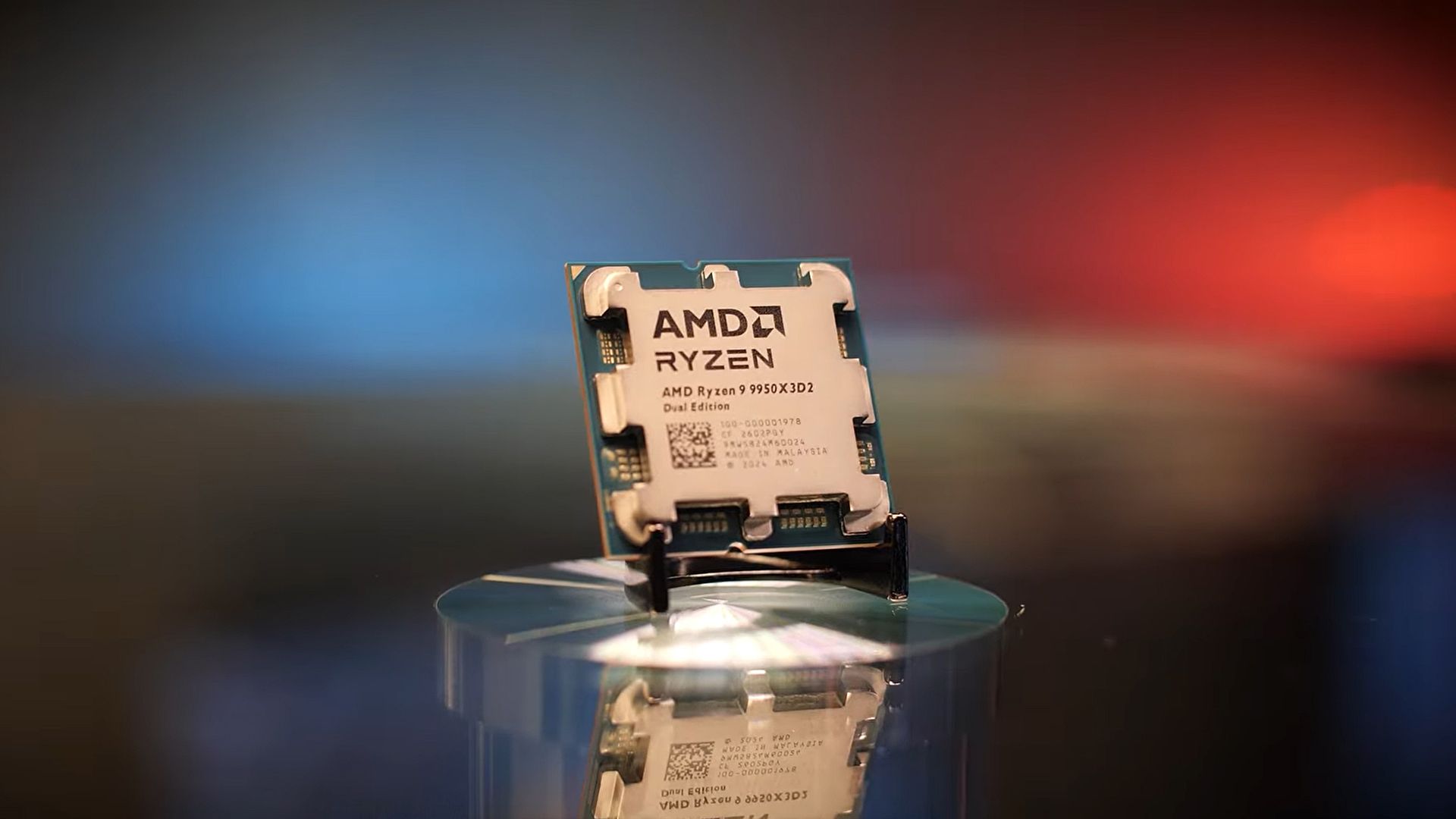
AMD announced the Ryzen 9 9950X3D2, available April 22, featuring 208MB total cache (16MB L2 + 192MB L3), 16 cores/32 threads, 5.6GHz boost clock and a 200W TDP. AMD claims modest performance uplifts versus the 9950X3D of roughly 5–10% overall (5–7% rendering/content creation, up to 7% gaming, ~13% AI/simulation); MSRP is TBA. The higher 200W TDP may require stronger cooling and could affect positioning/pricing of existing halo X3D SKUs, so expect a modest stock reaction driven by competitive positioning rather than a near-term financial catalyst.
This SKU deepens AMD’s halo at the high end and creates a two-speed demand dynamic: incremental performance buyers (enthusiasts, prosumers with cache-sensitive workloads) vs. the broad-market upgrade cycle that’s largely indifferent. The immediate supply-side lever to watch is yield/packaging cadence for double-stacked V‑Cache; constrained initial volume would sustain ASPs and margin upside even if unit sales are modest, whereas ample inventory would force discounts and compress near-term gross margins.
Second-order beneficiaries include high-margin peripheral suppliers (premium cooling, power delivery, and boutique system integrators) and channel partners that can package the halo SKU into higher-ticket builds; motherboard vendors with robust VRM/thermal designs capture share versus commodity boards. Conversely, Intel faces renewed pricing and feature pressure at the halo segment — if AMD converts enthusiast mindshare into outsized ASPs, Intel will need either aggressive price cuts or feature-led counters, pressuring their margins in the next 2–4 quarters.
Key catalysts and risks: independent benchmarks over the next few weeks are binary — confirmation of workload-specific gains (>5–7% in productivity/AI sims) will likely trigger a short, sharp re-rating of AMD’s premium narrative; disappointing real-world gains or thermal/scheduler issues that persist will cap upside and accelerate cannibalization discussions. Monitor retail pricing relative to the outgoing halo SKU and channel sell-through over 30–90 days — those two datapoints will tell whether this is a profitable halo or an inventory-driven markdown in waiting.
AI-powered research, real-time alerts, and portfolio analytics for institutional investors.
Request DemoOverall Sentiment
mildly positive
Sentiment Score
0.12
Ticker Sentiment
