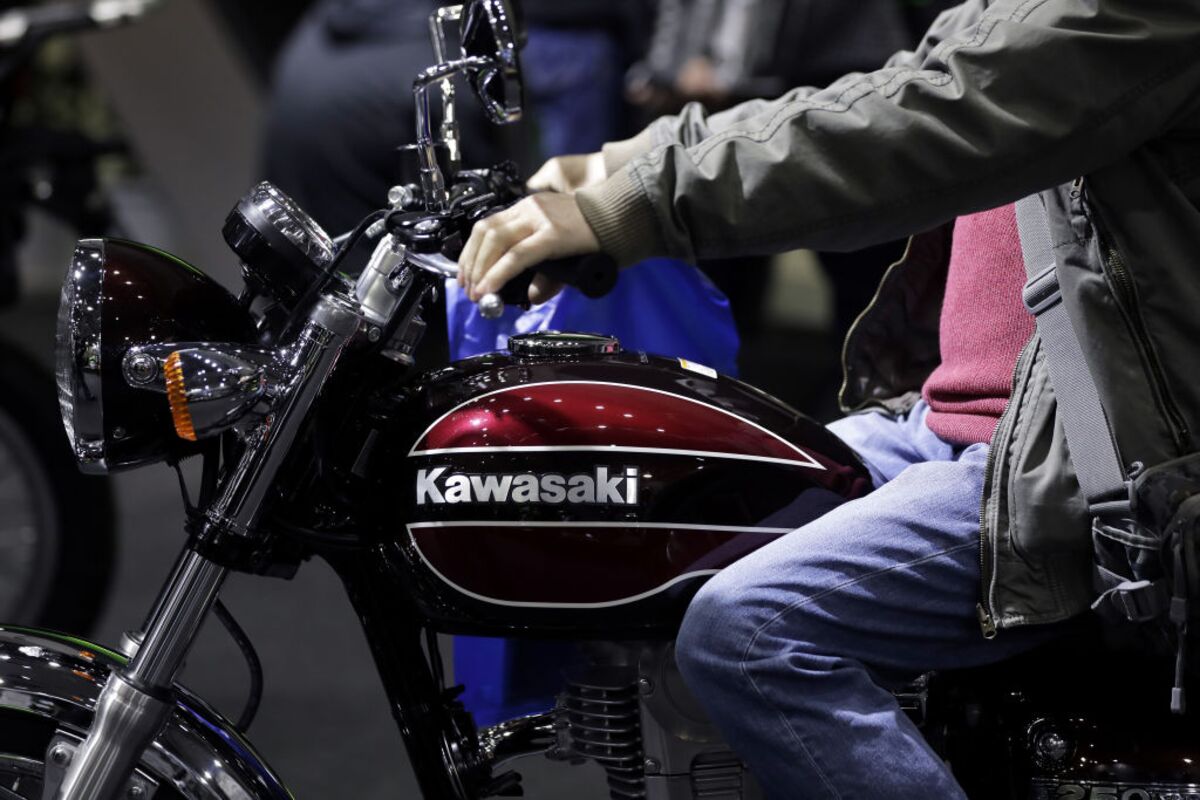
Kawasaki Heavy Industries said it will need to raise prices on its high‑end motorcycles to offset US import tariffs on engines and components shipped from Japan, CEO Yoshinori Kanehana told Bloomberg TV. The tariffs also threaten Kawasaki's plan to hire roughly 4,000 workers in Nebraska, implying potential margin pressure and a reevaluation of US expansion and pricing strategy that could weigh on demand for premium models.
Market structure: Tariffs that force Kawasaki Heavy Industries (7012.T) to raise high-end motorcycle prices shift margin pressure from Japanese OEMs to US consumers and dealers; winners are US-assembled producers (Harley-Davidson HOG) and domestic parts suppliers who avoid import duty, losers are Japanese OEMs with high Japan-origin content (Kawasaki, Yamaha). Expect 3–8% achievable price increases in premium segments over 3–12 months, compressing volumes 2–6% if demand is elastic; downstream dealer inventory build could mute immediate supply tightness. Cross-asset: modestly higher PPI expectations could widen 2s10s breakevens by ~5–10bp and support USD/JPY appreciation in the near term as trade tensions reprice FX and equity risk premia for affected names rise implied vols.
Risk assessment: Tail risks include broadening tariffs to full motorcycle imports (10–25% shock), retaliatory measures, or supply-chain decoupling that forces multi-quarter production disruption; probability ~10–20% but high impact on earnings. Immediate (days): knee-jerk equity moves and vol spikes; short-term (1–3 months): margin prints and price pass-through visible in earnings releases; long-term (6–24 months): capex reallocation and reshoring altering competitive footprints. Hidden dependencies: rules-of-origin, existing dealer contracts, and USD/JPY swings can materially offset tariff effects; catalysts include formal US tariff announcement, Kawasaki price-change communications, and Nebraska hiring decisions.
Trade implications: Establish a tactical short on Kawasaki (7012.T) equivalent to 1–2% net portfolio notional via 3–6 month puts or put spreads if available, targeting >15% downside on confirmed margin hit; pair trade long HOG (1–2% position) vs short 7012.T to capture relative winners, with stop-loss at 8–10%. Options: buy 3–6 month HOG call spreads if implied vol <30% or buy 7012.T puts if implied vol spikes above historical; consider small long TIPS (2–3% portfolio) if tariff cascade increases breakeven inflation by >10bp. Rotate overweight to US autos & aftermarket (HOG, AAP) and underweight Japan small/mid cyclical autos until Q3 earnings confirm pass-through.
Contrarian angles: Consensus assumes tariffs are permanent; history (2018 steel tariffs) shows partial pass-through and delayed reshoring—Kawasaki can absorb up to ~50% of duty for 6–12 months before margin erosion forces price hikes. Demand for premium bikes is relatively inelastic at the top end; a price rise could compress new-unit volumes but boost margins and used-market prices, creating arbitrage in motorcycle aftermarket and used-vehicle sectors. Unintended consequence: accelerated local sourcing investment could create multi-year winners among US suppliers, so avoid long-term blanket shorts on all Japanese OEMs.
AI-powered research, real-time alerts, and portfolio analytics for institutional investors.
Request DemoOverall Sentiment
moderately negative
Sentiment Score
-0.40
