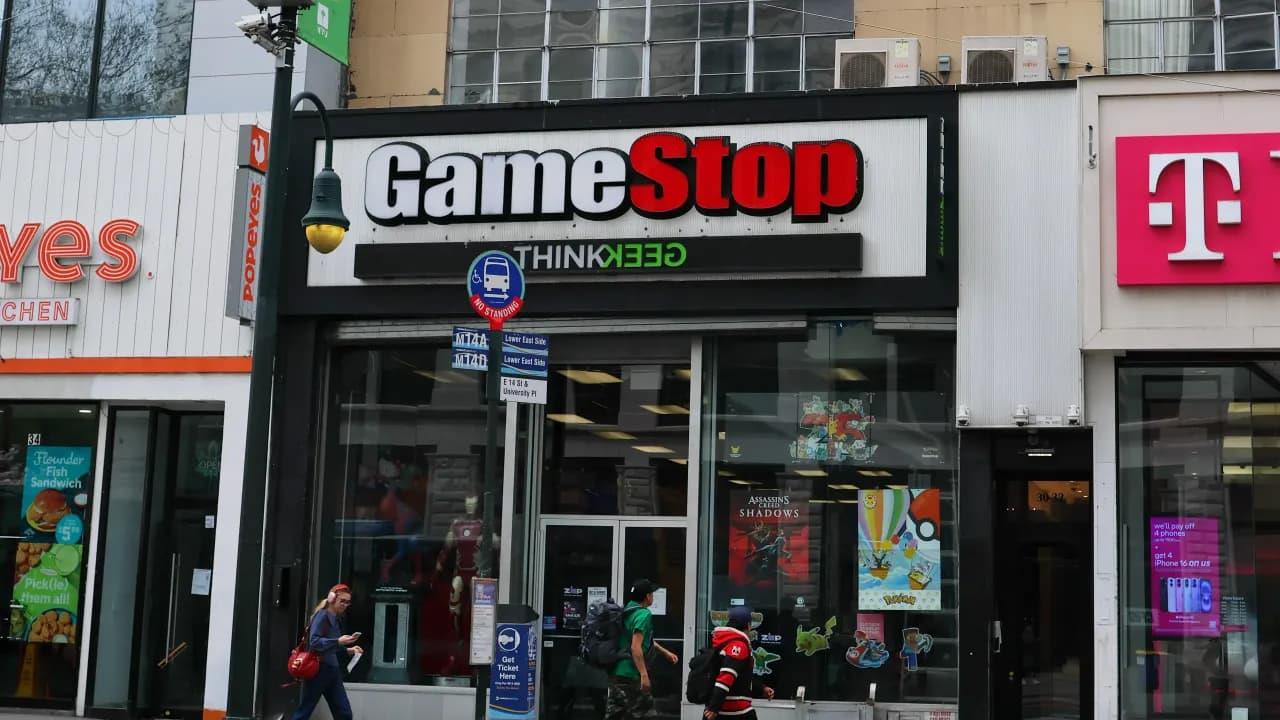
GameStop CEO Ryan Cohen is actively pursuing a “big” acquisition—likely in consumer or retail—potentially deploying the company’s sizable cash reserve (reported around $9B and including nearly 5,000 BTC) to pivot away from a shrinking brick-and-mortar footprint. Cohen, who now owns over 9% of GME and whose compensation was recently restructured to include roughly $35B in potential stock awards tied to milestones, has backing from investor Michael Burry; the stock fell 36% in 2025 but is up ~14% in January, making a large acquisition a high-impact, high-risk catalyst for the turnaround story.
Market structure: Cohen’s $9B cash plus ~5,000 BTC gives GME real firepower to buy a $5–15B consumer/retail asset without immediate hostile financing; winners would be target-company shareholders (takeout premium), PE shops that can partner on carve-outs, and e‑commerce/merchandise suppliers. Losers include mall landlords, small single-category physical retailers and short sellers if a friendly deal bids the stock up; expect temporary upward pressure on GME equity and call IV with limited immediate secular change to broad retail pricing power.
Risk assessment: Tail risks include a dilutive equity-financed deal, a failed integration triggering goodwill write-downs, or a sharp BTC drawdown that erodes the balance sheet—each could compress GME by 50%+ in a stress scenario. Timeline: days = rumor-driven volatility and IV spikes; weeks–months = due diligence, 8‑K/13D activity and financing chatter; quarters = real operating impact and integration risk. Hidden dependency: Cohen’s compensation tied to stock milestones incentivizes aggressive, time-sensitive transactions that may prioritize short-term share price over fundamentals.
Trade implications: Direct plays: idiosyncratic directional exposure to GME with hedges — small equity exposure plus defined-risk options — is preferred over naked leverage. Pair trades: long GME versus short retail ETF XRT (size ~2:1 notional) to isolate corporate-event upside; options: buy 6–9 month call spreads (debit) or calendar spreads to exploit event timing while capping downside. Sector rotation: trim small-cap physical retail exposure and rotate into digitally native consumer names with stronger unit economics (CHWY-type profiles) over 3–12 months.
Contrarian angles: Consensus oscillates between “genius” and “foolish” but underestimates governance/dilution risk — a large acquisition funded by stock could wipe out upside for long holders if revenue synergies don’t materialize. Historical parallels (activist-led roll-ups) show high failure rates; mispricing exists when IV and narrative chase each other — good entries often come on 20–40% pullbacks or after concrete filings (13D/8‑K) that clarify deal structure. Unintended consequence: a haste-driven acquisition could invite regulatory scrutiny or shareholder litigation, materially shifting expected payoff.
AI-powered research, real-time alerts, and portfolio analytics for institutional investors.
Request DemoOverall Sentiment
mixed
Sentiment Score
0.08
Ticker Sentiment
