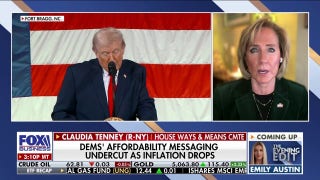
The piece argues that recent macro releases point to a strengthening U.S. economy: a three‑month annualized wage×hours proxy rose 5.6%, CPI increased 2.4% over the same period implying ~3.2% real wage growth, and unit labor costs rose only 1.1%. The author credits deregulation (citing >$1tn at EPA), 100% immediate depreciation, tariff-driven trade policy and a pickup in factory construction for boosting productivity, corporate profitability and consumer affordability, and links these developments to improved market confidence and a favorable outlook for Republicans in upcoming midterms.
Market structure: Energy producers (XOM, CVX, COP) and fossil-fuel services (SLB, HAL) are direct beneficiaries of EPA rollbacks and tariff-driven reshoring; industrials and capital-goods names (CAT, DE, LRCX) should capture 100% expensing-driven capex demand. Losers include renewable/utility cost-basis names (NEE, DUK) and import-dependent consumer durables that face higher input tariffs. Expect margin expansion in manufacturing in the next 3–12 months as unit labor costs stay subdued (<2% rise reported) while wage-hours proxy rises ~5% annualized.
Competitive dynamics & supply/demand: Short-term energy supply expansion should put downward pressure on natural gas/oil prices (3–9 months), improving industrial margins and lowering consumer energy bills; medium-term metals and semiconductor equipment demand will rise as firms accelerate replacement and capacity (6–18 months), tightening supply and lifting prices. Cross-asset: higher growth + uncertain inflation trajectory implies upward pressure on real yields — be short-duration (<5y) into Fed reaction function; USD likely to strengthen on growth divergence, pressuring EM and commodity FX. Options market: implied vols remain compressed; selling premium in select large-cap industrials makes sense.
Risk assessment & time horizons: Tail risks include court reversals of deregulation, aggressive foreign-retaliatory tariffs, or a sudden inflation re-acceleration (>3.5% YoY CPI) forcing a hawkish Fed — each would spike yields and compress multiples within days–weeks. Hidden dependencies: capex benefits lag by 6–12 months; catalytic announcements (CPI prints, Fed minutes, high-frequency capex orders) in next 30–90 days will accelerate rotations. Monitor order books and weekly oil inventories as early signals.
Contrarian angles: Consensus extrapolates current soft CPI into permanent low inflation — miss is that wage-hours growth (5%+) plus fiscal/tax incentives can lift core services inflation in 6–12 months, pressuring multiples. The market may be underpricing duration risk; a 75–150bp move up in 10y yields would hit growth/style stocks hardest and rotate into cyclicals and commodity-linked equities. Historic parallel: 2003–2006 capex-driven commodity squeeze — act early on industrials and hedged energy exposure.
AI-powered research, real-time alerts, and portfolio analytics for institutional investors.
Request DemoOverall Sentiment
strongly positive
Sentiment Score
0.68
