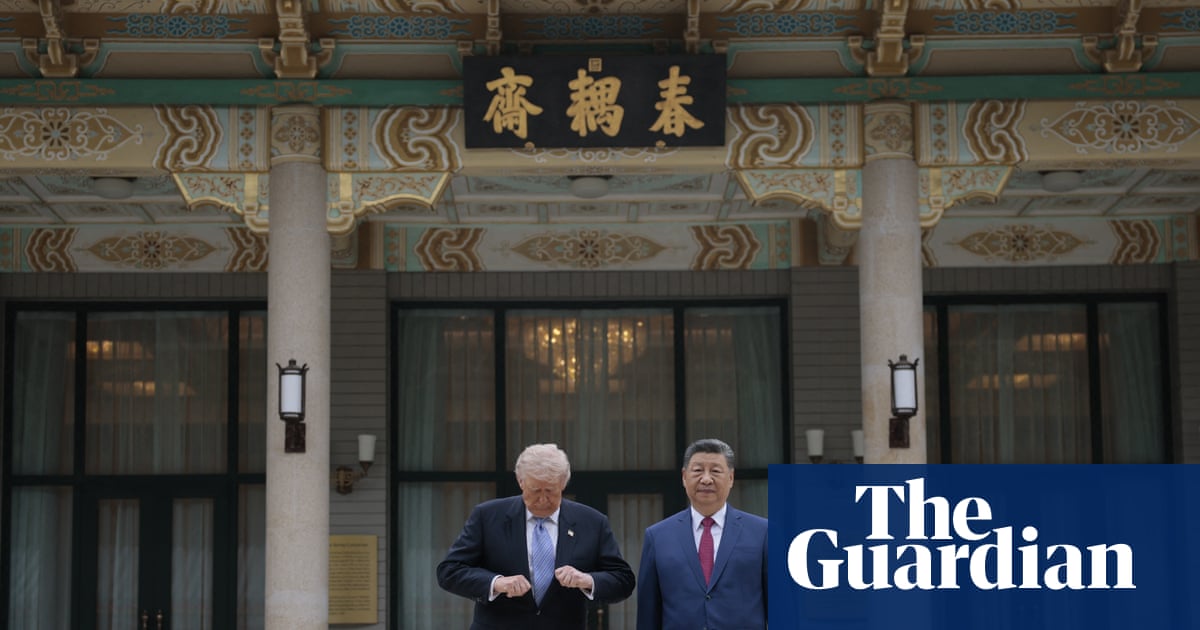
Trump and Xi said they want the Strait of Hormuz to remain open, with both sides signaling support for de-escalation in Iran but offering no concrete breakthrough. The White House said the leaders agreed the strait must stay open for energy flows, while China again called for a ceasefire and reopening 'as soon as possible.' The article highlights potential spillovers for global oil supply, Chinese crude imports, and broader recession risk, making it a market-wide geopolitical risk event.
The market implication is less about a near-term Iran resolution than about Washington signaling it may outsource coercion to Beijing without committing U.S. resources. That lowers the probability of an immediate kinetic shock but raises the odds of a longer, messier diplomatic standoff in which shipping risk premiums stay sticky rather than spiking and collapsing. In that regime, energy vol is likely to remain bid while outright oil direction becomes hostage to headline risk and inventory draws. The second-order effect is on China’s cost of capital and policy flexibility: Beijing is being nudged into defending an open Hormuz while simultaneously protecting its own demand for discounted Iranian barrels. If China leans in, it risks appearing compliant with U.S. pressure; if it leans back, it invites a more explicit U.S. trade and sanction response. Either outcome is marginally negative for Chinese industrial exporters because a prolonged Middle East shock would hit external demand before it hits domestic supply. For aerospace, the cleaner read is on Boeing rather than the headline geopolitics. Any U.S.-China thaw that includes large aircraft purchases would be incremental positive for BA, but the bigger signal is that Beijing is willing to use selective commercial concessions to buy strategic room on unrelated issues. That means BA can outperform on order-book optionality even if the broader relationship stays structurally adversarial; the risk is that delivery timing, not headline orders, remains the binding constraint. The contrarian view is that the market may be overpricing immediate de-escalation and underpricing the chance of a manufactured stalemate. That is usually the worst setup for defensives and the best setup for volatility sellers who can own convexity cheaply on one side and energy spreads on the other. The most important catalyst is not a peace announcement, but any sign that shipping lanes remain open without a formal Iran concession, which would likely compress the geopolitical premium faster than consensus expects.
AI-powered research, real-time alerts, and portfolio analytics for institutional investors.
Request DemoOverall Sentiment
neutral
Sentiment Score
-0.05
Ticker Sentiment
