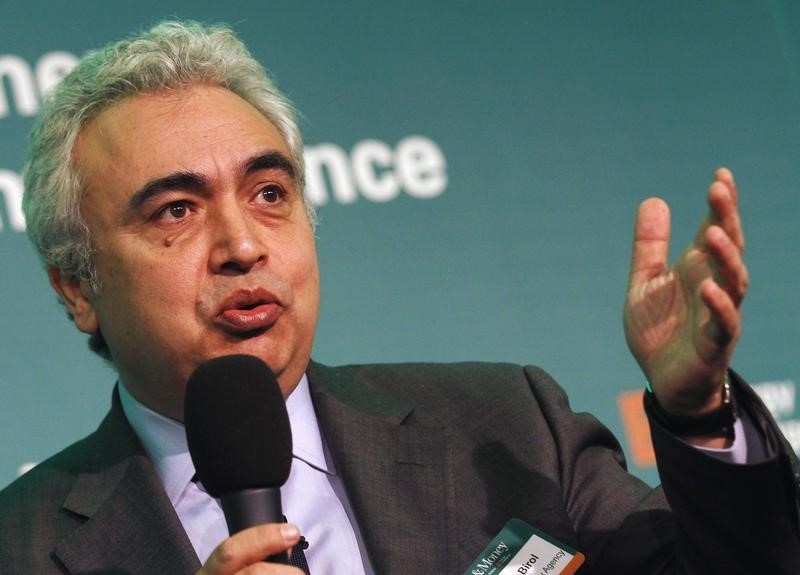
IEA says Iran's near-total blockade of the Strait of Hormuz — through which ~20% of global oil and gas normally passes — is a supply disruption "more serious" than 1973, 1979 and 2022 combined. Brent rose 0.2% to $110.01/bbl and WTI rose 0.3% to $112.75 as President Trump threatened strikes on Iranian infrastructure; IEA member strategic reserve releases are already underway. The shock risks broad acceleration in inflation and higher food costs, hitting developing countries hardest and creating a market-wide risk-off environment.
A sustained energy-cost shock will magnify already-fragile margin dynamics across capital-intensive tech (hyperscalers, datacenters) and commodity-importing EMs. If oil stays north of $100 for 3+ months we should model an incremental 30–70bp lift to global core inflation and a 25–75bp extension of terminal policy rates vs base case over 6–12 months, compressing growth multiples and delaying discretionary capex cycles.
Supply-chain frictions will be non-linear: longer voyage times and higher bunker/insurance costs add a fixed per-server logistics surcharge and increase lead times for specialized substrates and test services by 4–12 weeks. That favors vendors with routing control, onshore manufacturing, or high gross margins who can absorb pass-through timing — and it penalizes smaller contract manufacturers and EM-dependent consumer supply chains.
Sector winners are those that either capture higher commodity rents (select energy exporters, LNG infrastructure) or have pricing power and sticky revenue (certain enterprise hardware vendors and defense contractors). Short-term losers are EM consumer cyclicals, discretionary retailers, and airlines exposed to fuel-cost pass-throughs; their cash flows deteriorate within 1–3 quarters. The biggest catalyst set to reverse this regime is a rapid de-escalation or coordinated policy (SPR-like releases plus diplomatic deal) within weeks — absent that, expect the macro tightening to persist for multiple quarters.
Key tail risks: a localized kinetic strike on energy infrastructure would create a shock that is non-linear and could reorder transport routes and insurance markets for >12 months; conversely, a demand shock in China could knock $15–30 off Brent within 3 months and abruptly re-rate cyclical pain trades.
AI-powered research, real-time alerts, and portfolio analytics for institutional investors.
Request DemoOverall Sentiment
strongly negative
Sentiment Score
-0.70
Ticker Sentiment
