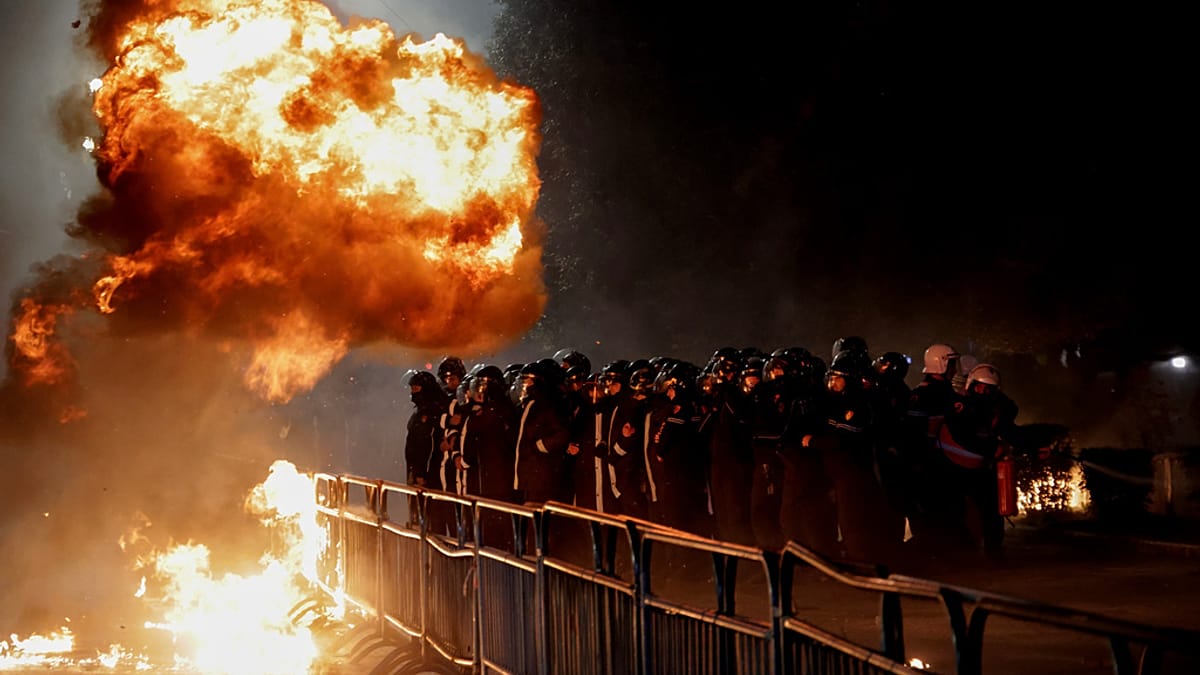
Mass protests in Tirana led by opposition leader and former prime minister Sali Berisha drew thousands and turned violent as protesters threw Molotov cocktails and clashed with police, who used teargas and water cannon; police reported at least 10 officers with minor injuries and Berisha said 25 protesters were arrested. The demonstrations center on corruption allegations against Prime Minister Edi Rama and his allies — notably the suspension (and temporary Constitutional Court reinstatement) of deputy PM and infrastructure minister Belinda Balluku pending a graft probe — with a parliamentary committee due to consider lifting her immunity next Wednesday. The unrest and high-profile legal actions against senior officials elevate political and policy risk in Albania, creating downside pressure on investor confidence and potential sovereign or political-risk premia for exposures to the country.
Market structure: Domestic winners in a short-volatility sense are cash and non-Albanian counterparties (USD lenders, external contractors) as onshore risk premiums rise; losers are Albanian sovereign and local-currency assets, domestic banks, construction and public‑procurement-dependent contractors because political paralysis raises default and project‑delay probability. Competitive dynamics shift procurement advantage to larger international bidders and to firms with hard‑currency funding; smaller local players face higher funding costs and possible market exits within 3–12 months.
Risk assessment: Tail risks include a full political breakdown with capital controls or EU/US sanctions (low probability, high impact) that could widen Albanian sovereign spreads by 300–1,000bps and depreciate the lek 5–15% in weeks. Near‑term (days) volatility will spike around the parliamentary committee vote (scheduled within ~7 days); medium term (months) the outcome of corruption cases and potential early elections will set policy direction and banking sector NPL trajectories for 6–18 months. Hidden dependencies: bank liquidity runs driven by retail FX conversions and contingent liabilities from suspended infrastructure contracts can amplify stress; catalysts include the immunity vote, court rulings, and any external IMF/ECB commentary.
Trade implications: Tactical defensive posture favored—increase USD liquidity and buy protection on EM sovereign debt (see EMB) ahead of committee proceedings; expect a 1–3% immediate portfolio VaR bump. If immunity is lifted (probability >30%), expect 50–150bps immediate spread widening for frontier SEE credits and a 3–8% drop in regional bank equity baskets within 48–72 hours; trade options and short-duration sovereign positions accordingly.
Contrarian angles: The market may overprice permanent regime risk—histor parallels (early‑2010s MENA/SEE unrest) show most frontier credits reprice within 3–12 months and recover if no systemic contagion occurs; this creates buy‑the‑dip windows if spreads >200–300bps wider or lek >5% weaker. Unintended consequence of an aggressive selloff is foothold for IMF/EU stabilization, which would pivot sentiment sharply; set explicit thresholds to flip from protection to opportunistic long exposure.
AI-powered research, real-time alerts, and portfolio analytics for institutional investors.
Request DemoOverall Sentiment
moderately negative
Sentiment Score
-0.45
