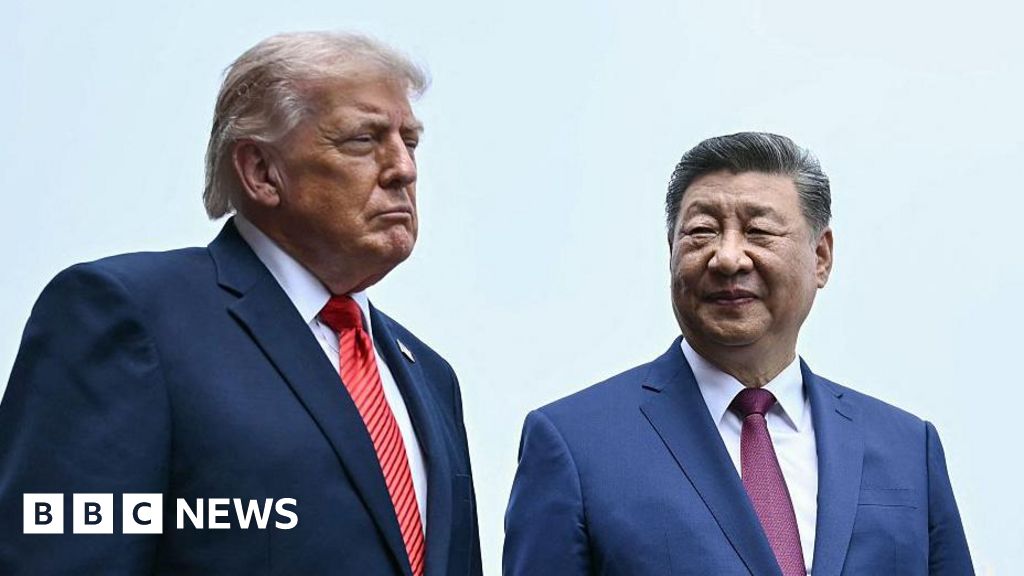
Trump and Xi met for more than two hours but announced no sweeping trade deal, only continued adherence to the October trade truce and a proposed new 'Board of Trade' mechanism. The article highlights ongoing pressure points in AI, semiconductors, EVs and rare earths, while Beijing signaled possible increases in US agricultural and energy purchases and warned that Taiwan remains the most sensitive issue. Markets may see modest sector-level implications, but the overall outcome is more maintenance of the status quo than a clear policy breakthrough.
The main market takeaway is not a breakthrough, but the preservation of a managed-friction regime. That is mildly positive for companies with China exposure because it reduces the odds of an immediate tariff or export-control escalation, but it also keeps valuation ceilings in place for the most China-dependent names. The “Board of Trade” concept matters less as policy and more as a volatility suppressor: it gives both sides a procedural off-ramp that can delay bad news for 1-2 quarters, which is often enough to keep multiples from de-rating further. NVDA is the cleanest second-order beneficiary, but only tactically. If chip restrictions are not tightened in the near term, the market may rotate from “China revenue loss” fear to “AI demand is intact,” which supports the stock at the margin; however, any headline linking Taiwan or AI access to trade concessions would quickly reverse that trade because export controls are still the real binding constraint. TSLA is more nuanced: China remains a production and demand hub, so a stable truce lowers supply-chain risk, but the bigger upside would come from a thaw in regulatory treatment, which is unlikely without concessions on technology and Taiwan. BA and LNG look like the most event-sensitive names. Boeing can still benefit if purchase commitments are used as a symbolic deliverable, because aircraft orders are one of the few visible gestures both sides can announce without structural concessions; that said, order headlines can be pulled forward in time without changing actual delivery cash flows. LNG has a more durable path if China truly expands US energy imports, because it plugs into both diversification and geopolitics, but the medium-term risk is that energy buying becomes a bargaining chip rather than a secular shift. The broader contrarian point is that markets may be underpricing how quickly Taiwan can become the bargaining lever that re-prices every China-exposed asset, especially semis and EVs, within days rather than months.
AI-powered research, real-time alerts, and portfolio analytics for institutional investors.
Request DemoOverall Sentiment
neutral
Sentiment Score
-0.05
Ticker Sentiment
