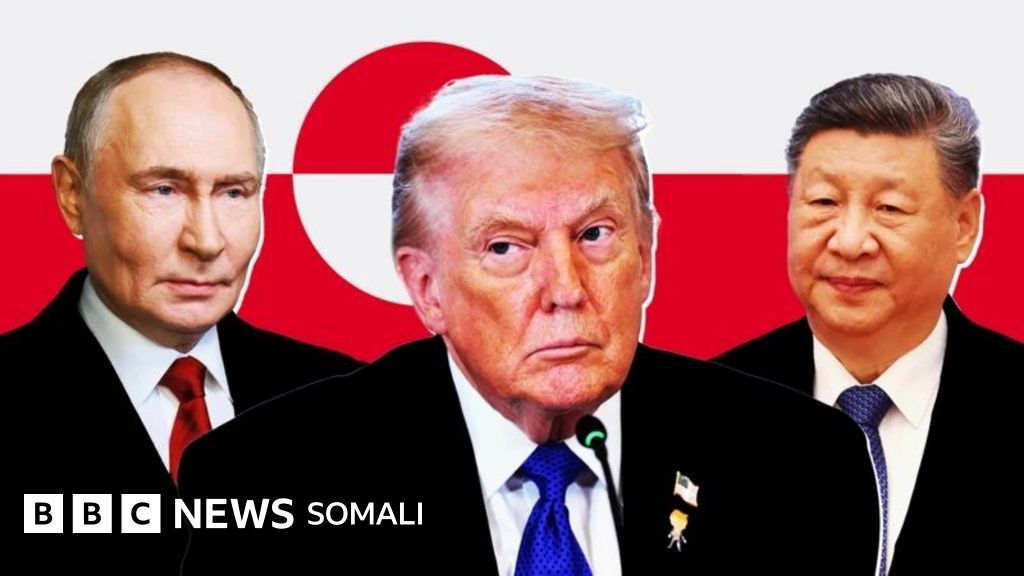
President Trump’s statements about seizing Greenland to block Russian and Chinese influence have prompted cautious Kremlin responses and sharp criticism from Chinese state media, with analysts warning the rhetoric risks dividing NATO and indirectly benefiting Moscow and Beijing. For investors, Greenland’s strategic rare-earth and critical-minerals resources — and prior Chinese interest in infrastructure projects that were later curtailed after U.S. intervention — underscore rising supply‑chain and geopolitical risks for technology and EV supply chains and potential defensive upside for commodities and defense-related exposures if competition intensifies.
Market structure: Immediate winners are strategic-materials and defense exposures — rare-earth/strategic-metals miners and ETFs (e.g., REMX), specialists (MP Materials MP), and large defense primes (LMT, RTX, NOC) — because Greenland rhetoric raises probability of Western onshoring and defense rehabs; losers are short-cycle EM assets and Chinese state-linked miners that face political pushback. Competitive dynamics favor junior/Western developers that can obtain Western capital and permits; pricing power in neodymium/praseodymium-type rare earths could rise 20–50% if Chinese access is disrupted and project sanctioning delays extend beyond 24 months.
Risk assessment: Tail risks include a diplomatic/military escalation that triggers sanctions and a 15–30% spike in strategic-metals prices and a 50–150 bps move in 10y UST yields from safe-haven flows; probability low (<10%) but impact high. Time horizons: days — news-driven volatility in FX (USD up, DKK tied to EUR) and equity vol; weeks–months — policy moves, tender cancellations, foreign bids; years — mine development (3–7 years) and supply re-shoring. Hidden dependencies: Danish sovereignty, indigenous consent, permitting, and Chinese SOE investment appetite; catalysts include Danish/US negotiations, Arctic Council rulings, and EU import restrictions.
Trade implications: Direct plays — establish 2–3% long position in REMX (12–24 months) and 1–2% long in LMT or RTX via 9–12 month call spreads (buy 0.5–1.0 delta, sell 0.75 delta) to capture defense re-rating. Pair trade — long REMX (2%) vs short EEM (1%) for 6–12 months to express strategic-materials premium vs EM sensitivity. Options hedges — buy 3-month 10-delta SPX puts (~0.5–1% notional) as a geopolitical tail hedge; set stop-losses at 20% adverse move.
Contrarian angles: Consensus overstates immediacy — Greenland projects take 3–7 years, so miners are a multi-year, not immediate, play; market may underprice defense and logistics names that can win expedited Arctic contracts (potential 10–25% upside on contract awards). Historical parallels (Alaska sale vs Crimea annexation) show symbolic rhetoric can persist without legal change; unintended consequence: accelerated Western funding and permitting reforms that benefit non-Chinese juniors, tightening supply and creating sharper price moves once projects are shovel-ready.
AI-powered research, real-time alerts, and portfolio analytics for institutional investors.
Request DemoOverall Sentiment
moderately negative
Sentiment Score
-0.30
