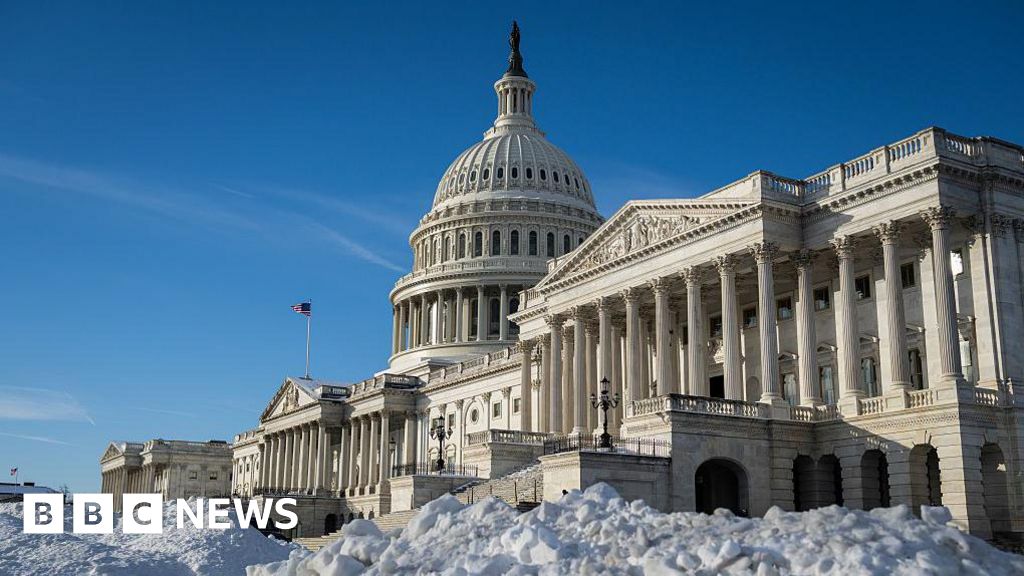
A partial US federal government shutdown began at midnight ET after the Senate approved a short-term funding measure that funds most agencies through September but provides only two weeks of funding for the Department of Homeland Security; the House has not yet approved the bill. The White House instructed agencies including Transportation, Education and Defense to implement shutdown plans while lawmakers use the two-week DHS reprieve to negotiate immigration-policy concessions following a fatal Border Patrol shooting that prompted a Justice Department civil-rights probe.
Market structure: A short, partial federal shutdown creates asymmetric impacts — immediate beneficiaries are safe‑haven instruments (US Treasury bills/notes, gold) and defensive sectors (consumer staples XLP, utilities XLU), while vulnerable names include airlines and airport services (JETS ETF, AAL, DAL) and small federal contractors reliant on discrete awards. Pricing power shifts are temporary: consumer discretionary demand can pull back 1–3% GDP‑sensitive spend in affected pay cycles; federal contract timing risk compresses near‑term revenue visibility for mid‑cap contractors by 1–2 quarters.
Risk assessment: Tail risks include a multi‑week impasse if the House rejects the Senate plan (low probability ~15% but high impact), a run‑on short‑term funding bills market, or a political escalation that triggers rating agency scrutiny. Immediate horizon (days): volatility spike and flight to cash; short (weeks): payment lags for 1–3m of federal wages; long (quarters): policy changes to DHS/ICE could reprice security contractors and surveillance tech. Hidden dependencies: TSA/air traffic staffing and contractor billing cycles — one payroll miss can depress regional air travel volumes ~5–8% in a week.
Trade implications: Tactical defensive allocation: establish 2–4% cash in short‑duration Treasury ETFs (BIL/SHV) and a 1% tail hedge via short‑dated VIX calls or VXX (7–21 day). Short 1–2% position in JETS or buy 5–10% OTM 2‑week puts on AAL/DAL to capture operational disruption risk; pair long XLP (consumer staples) 2% vs short XLY 2% for 2–6 weeks. If 10yr yield drops >10bp intraday, add 3% to IEF/TLT as momentum trade (hold 1–3 months).
Contrarian angles: The market’s fear premium may be overdone if the House reconvenes and passes the deal Monday — a swift resolution would likely squeeze short volatility and produce 5–15% snapbacks in beaten travel and defense names. Historical parallels (2013/2025 shutdowns) show market impact is front‑loaded and mean‑reverting within 1–4 weeks; consider buying call spreads on LMT/NOC expiring 30–60 days out after a 10% drawdown. Watch two triggers: (1) House vote delay >48 hours, (2) DHS funding not extended beyond 14 days — treat either as signal to widen hedges to 2–4% portfolio risk.
AI-powered research, real-time alerts, and portfolio analytics for institutional investors.
Request DemoOverall Sentiment
mildly negative
Sentiment Score
-0.25
