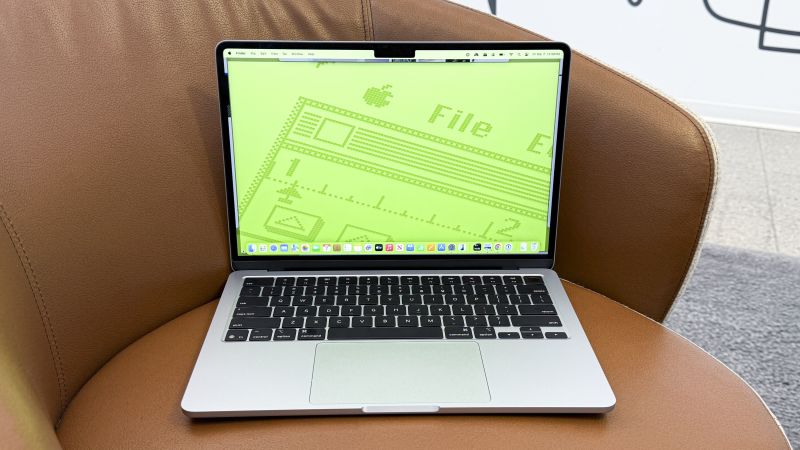
Major holiday promotions are driving steep discounts across consumer PC categories, with CNN Underscored highlighting editor-tested Cyber Monday deals including an older MacBook Air listed under $600 at Walmart, lowest-ever prices on MacBook Air M4 and recent MacBook Pro M5 models, discounted Surface and Dell systems, OLED Chromebooks and gaming rigs, plus reduced prices on webcams, microphones and 4K monitors. The piece signals elevated promotional intensity in consumer electronics during Cyber Monday, which may boost near-term unit sales for hardware makers and retailers but also implies margin pressure from aggressive discounting.
Market structure: Heavy Cyber Monday discounting benefits large-brand hardware vendors with pricing power and tight margins—AAPL (strong brand, high mix of newer models) and WMT (traffic-driven retail scale) are the primary winners, while smaller OEMs/resellers and mid‑tier brands risk share loss and ASP compression of ~3–7% seasonally. Dell (DELL) sits in the middle: good short-term volume uplift for desktops but margin sensitivity in consumer channels. Supply signals are mixed — robust demand cadence for holiday but likely elevated channel inventory as vendors clear older SKUs, implying higher returns and markdown reserves in Jan–Feb.Results will be modestly risk‑on for equities; expect 5–15bp widening in IG spreads if margins disappoint and a small USD softness if retail data boosts growth expectations.
Risk assessment: Tail risks include a larger-than-expected post‑holiday return wave (10–20% of holiday sales in worst cases) that could push Q1 revenue down 1–3% for retailers and force extra provisioning. Operational tails: component re‑tightening or renewed tariffs could raise COGS by 2–5% in 1–3 quarters. Near term (days–weeks) monitor same‑store sales and promotional intensity; short term (1–3 months) watch inventory days and gross margin guides; long term (quarters) brand loyalty and product cycles (M‑series refresh cadence for AAPL) matter most.
Trade implications: Direct long for AAPL to capture stickier demand — consider a 2–3% portfolio long or a 3‑month call spread to limit premium outlay; WMT is a defensive buy (1–2% position) to play traffic and grocery moat but expect muted EPS upside. Buy DELL (1–1.5%) to play enterprise/back‑to‑school residuals and gaming desktop demand; hedge consumer risk with a small long AAPL/short XRT pair (2% vs 1%). Use options (calendar or short‑spread) around Jan earnings and 30–60 day volatility windows.
Contrarian angles: Consensus treats headline discounts as positive demand signal; missing is the probability that discounts are inventory clearance rather than incremental demand — if true, expect margin downgrades in Jan earnings (an underpriced risk). Historical parallels: 2018–2019 heavy promo seasons preceded Feb–Mar margin compression and a buying opportunity for structurally strong names after clearance; trade accordingly by selling small retail cyclicals and buying high‑quality, cash‑rich hardware names post‑January clearance when returns and discounts normalize.
AI-powered research, real-time alerts, and portfolio analytics for institutional investors.
Request DemoOverall Sentiment
mildly positive
Sentiment Score
0.35
Ticker Sentiment
