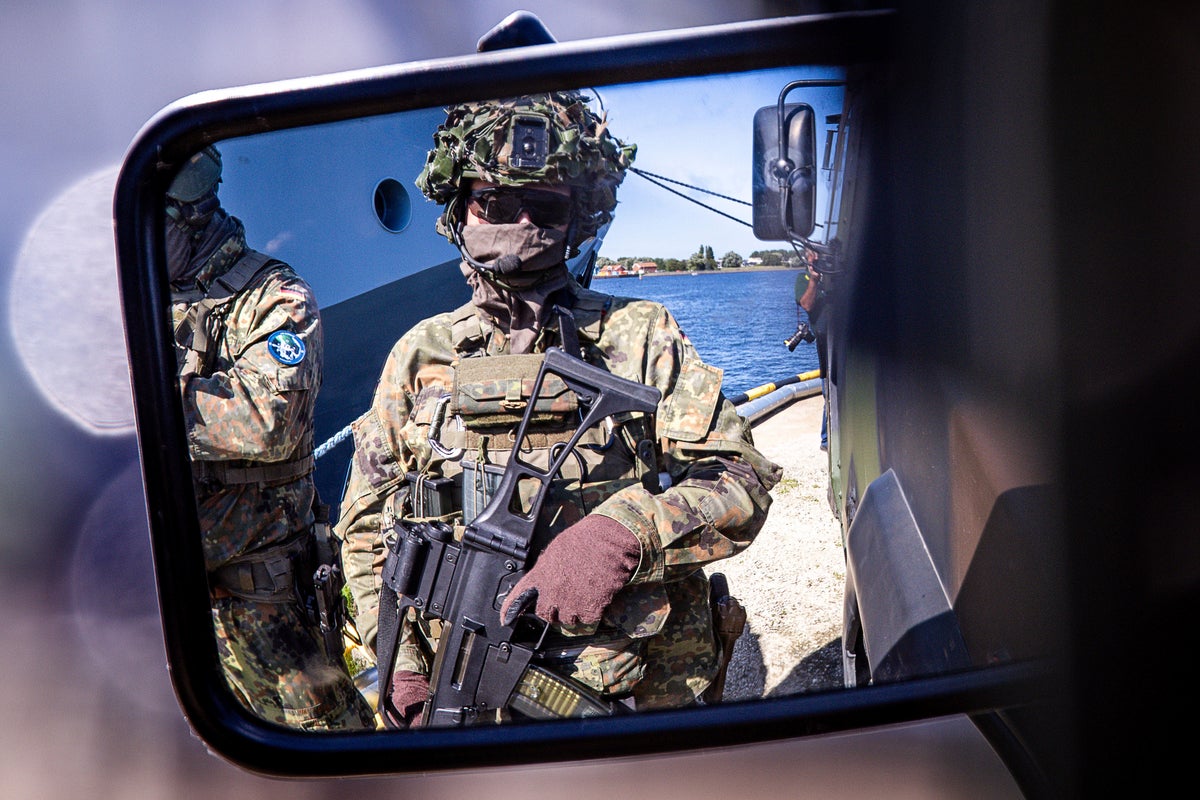
Germany is rapidly rebuilding and expanding its military — planning compulsory medical screening of 18‑year‑olds, growing the Bundeswehr from 182,000 to 260,000 by 2035, boosting reserves from 60,000 to 200,000 and targeting roughly €153bn a year (about 3.5% of GDP) within four years while keeping most procurement in Europe (only ~10% US buys) — moves that the article argues will give Berlin outsized influence in European defence and NATO. Poland and several eastern European states are also raising forces and spending (Poland at 4.7% of GDP and training adult males), whereas the UK is struggling to meet recruitment targets (army ~3% short of 10,000 new recruits toward a 76,000 force; navy 8% short; RAF 13% short) despite a £2.2bn uplift for 2025–26 that would take total defence outlays to just over £62.2bn and fund modernization projects. The piece highlights a strategic and industrial shift in Europe toward larger, domestically procured militaries — a potential rebalancing of procurement opportunities and NATO influence away from the UK and toward Germany and eastern allies.
Germany is executing a rapid and material defence expansion: compulsory medical screening for 18‑year‑olds, Bundeswehr growth from 182,000 to 260,000 by 2035, reserves rising from 60,000 to 200,000, and planned defence spending of about €153bn (~£135bn) or 3.5% of GDP within four years. Berlin intends to keep roughly 90% of procurement in Germany/Europe (only ~10% US buys), positioning German industry to capture large-scale orders and increase influence in NATO.
The UK shows operational and recruitment weakness despite a £2.2bn uplift for 2025–26 that would raise total defence spending to >£62.2bn and fund modernization across ~7,000 weapons systems, submarines and new tech; army recruitment is ~3% below the ~10,000 new‑recruit target, the Royal Navy 8% short and the RAF 13% short. France is projected around €80bn, leaving the UK materially smaller than Germany on planned outlays and industrial capture.
Market signals point to a moderate positive market impact (score 0.4) and favorable sentiment for German and Polish exposure (EWG and EPOL +0.6) and euro exposure (FXE +0.4), while UK equity and sterling exposures show negative sentiment (EWU and FXB -0.5). Investors should view this as a structural procurement and geopolitical pivot that favors continental suppliers; key catalysts to watch are formal procurement schedules, tender awards and recruitment metrics which will drive relative performance.
AI-powered research, real-time alerts, and portfolio analytics for institutional investors.
Request DemoOverall Sentiment
moderately negative
Sentiment Score
-0.50
Ticker Sentiment
