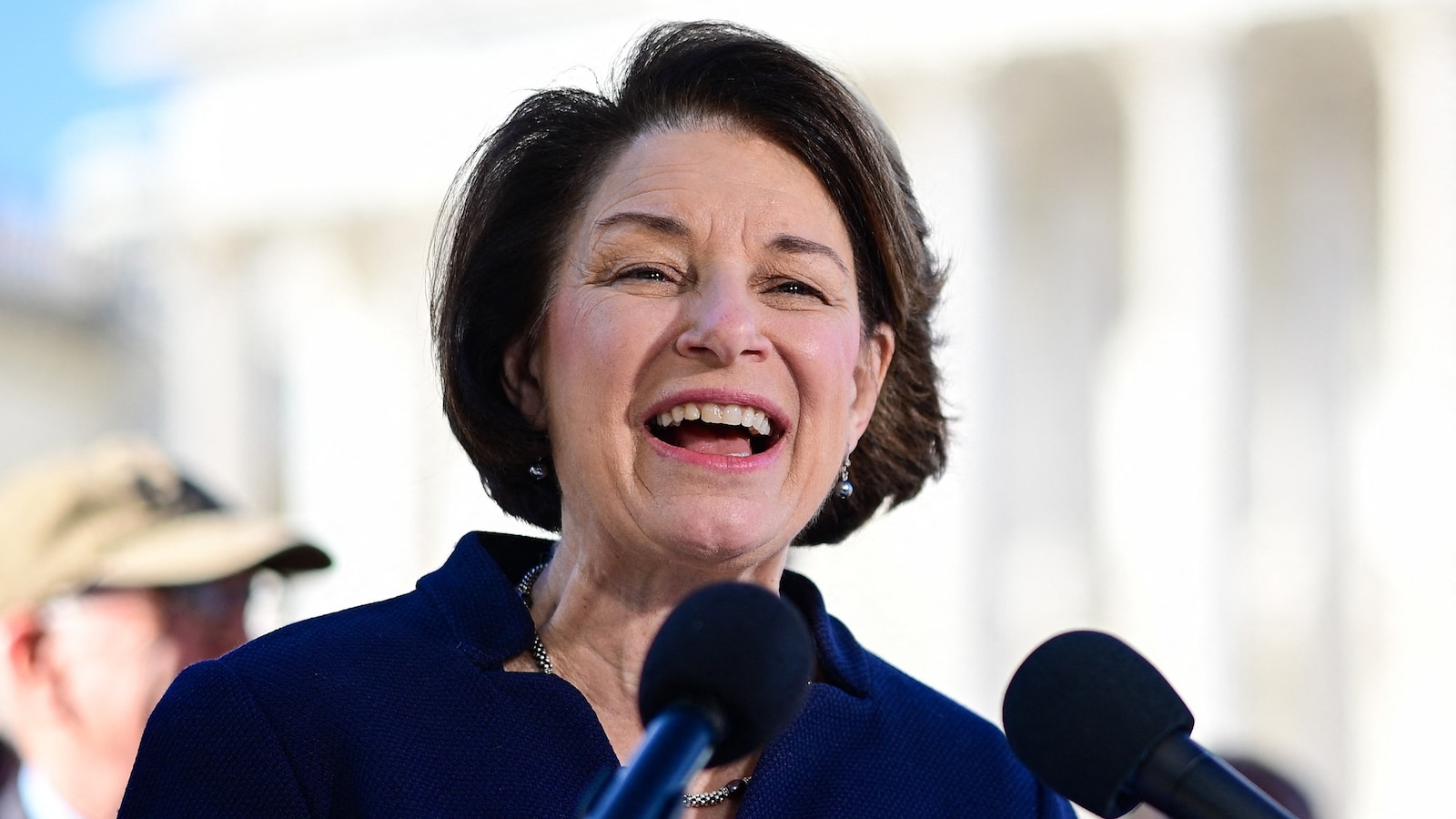
Sen. Amy Klobuchar announced her candidacy for Minnesota governor, filing campaign paperwork following discussions with outgoing Gov. Tim Walz, who ended his reelection bid on Jan. 5. Her campaign launch comes amid federal immigration enforcement (Operation Metro Surge), recent fatal shootings of protesters by federal agents in Minneapolis, and a Jan. 12 federal lawsuit by Minnesota officials seeking to end the surge—developments that heighten state-federal tensions and could shape policy and political risk in Minnesota ahead of the Nov. 3 election.
Market structure: The Klobuchar gubernatorial run and Minnesota federal-state confrontation create localized winners/losers: Minneapolis-headquartered consumer names (TGT, BBY) face short-term foot-traffic and operations risk while state-level legal fights raise municipal spending and potential credit pressure on Minnesota GO paper. National detention/immigration services providers (GEO, CXW) see asymmetric political risk—federal demand remains but state resistance can disrupt facility access or contracts; expect 5–20% idiosyncratic volatility for these names over 1–6 months.
Risk assessment: Tail risks include an escalatory federal-state standoff that causes sustained civil disruption (low probability, high impact) or a state budget hit from legal/defense costs leading to a modest ratings action (AAA → AA range unlikely but possible within 12–24 months). Immediate (days) risk is headline-driven equity volatility; short-term (weeks–months) is campaign-driven policy uncertainty; long-term (years) is policy direction if Klobuchar wins and influences national debates ahead of 2028. Watch federal lawsuit milestones (next 30–90 days) as key catalysts.
Trade implications: Favor tactical defensive positions: buy downside protection on Minneapolis-exposed retailers and selectively short detention-operator equities. Use options to limit funding cost—60-day puts on BBY/TGT for event risk; 3–6 month put positions or small short exposure in GEO/CXW sized to 0.5–1.5% portfolio risk. Reduce concentrated Minnesota muni exposure by 25–50% if legal costs escalate over the next 90 days.
Contrarian angles: Consensus underprices that a Klobuchar win would likely reduce state-federal friction and benefit local consumer and bank stocks (USB, TGT) within 6–12 months — a meaningful mean-reversion trade if headlines calm. Conversely, GEO/CXW may be priced for national policy tailwinds; a state-level operational squeeze is under-appreciated. Historical parallel: localized political unrest (e.g., 2016–2017 protests) caused 5–15% temporary drawdowns then rebounded within 3–9 months; position sizing should reflect that mean-reversion profile.
AI-powered research, real-time alerts, and portfolio analytics for institutional investors.
Request DemoOverall Sentiment
neutral
Sentiment Score
0.00
