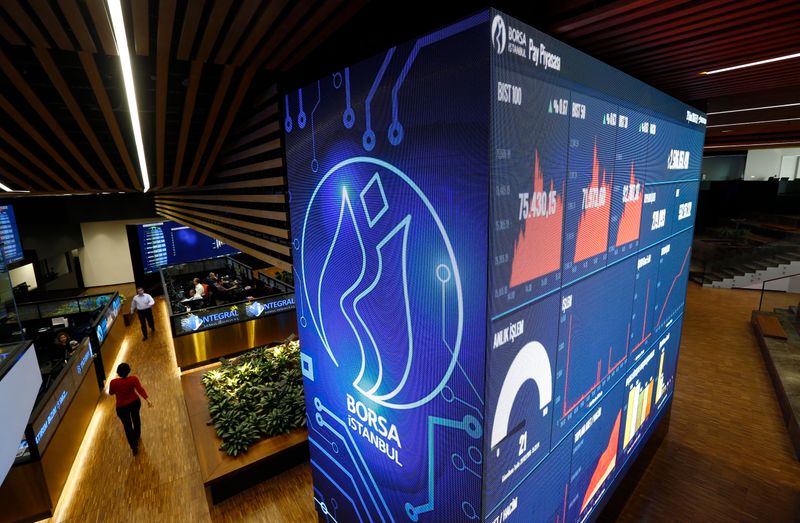
BIST 100 closed down 1.45% as decliners outnumbered advancers 505 to 107, with Efor (IS:EFOR) plunging 9.22% to 6.50 (52-week low) and Europen Endustri (IS:EUREN) jumping 9.93% to 4.98. Petkim (IS:PETKM) hit a 52-week high, rising 5.08% to 21.92; Ral Yatirim (IS:RALYH) +5.18% to 211.00. Commodities saw WTI May crude +3.32% to $116.14/bbl, Brent June +0.75% to $110.59/bbl, and June gold futures -0.09% to $4,680.30/oz. FX moves included USD/TRY +0.10% to 44.61, EUR/TRY +0.35% to 51.68, while the US Dollar Index Futures was down 0.09% at 99.71.
A geopolitical shock that lifts energy-premia and pushes investors into risk-off assets amplifies second-order stress in EM countries with large short-term FX needs. Turkey sits high on that list: a combination of higher import bills for energy, a likely rise in inflation expectations, and real-rate tensions creates a near-term squeeze on corporates with FX-levered liabilities and on local-currency credit spreads. This mechanism plays out over days-to-weeks as portfolio outflows and margin calls force local selling, and over months as pass-through into wages/prices forces policy choices.
The commodity channel is the accelerant. Higher oil and commodity volatility transmits immediate margin pressure to energy-intensive industrials and logistics chains, while benefiting producers and parts of the services chain that can flex output quickly. Expect cashflow divergence: US and global upstream producers capture most incremental margin within a quarter, while importers and consumer-facing sectors see margins compress and demand elasticity start to bite over 2–6 months. Inventory buffers and spare producer capacity are the big swing factors that can reverse prices within weeks if diplomatic or supply responses materialize.
Technically, EM local assets look vulnerable to a volatility-forces-exit dynamic: weak flows create steeper local yield curves and larger FX hedging costs, which in turn can force additional liquidations in local equity and bond markets. That creates a tactical arbitrage opportunity to isolate FX exposure while playing energy and gold as asymmetric hedges. The contrarian lever is that commodity-driven risk premia are often front-loaded; a credible de-escalation or supply release can compress premia quickly, so position sizing and explicit stop/triggers are essential in the current regime.
AI-powered research, real-time alerts, and portfolio analytics for institutional investors.
Request DemoOverall Sentiment
mildly negative
Sentiment Score
-0.20
