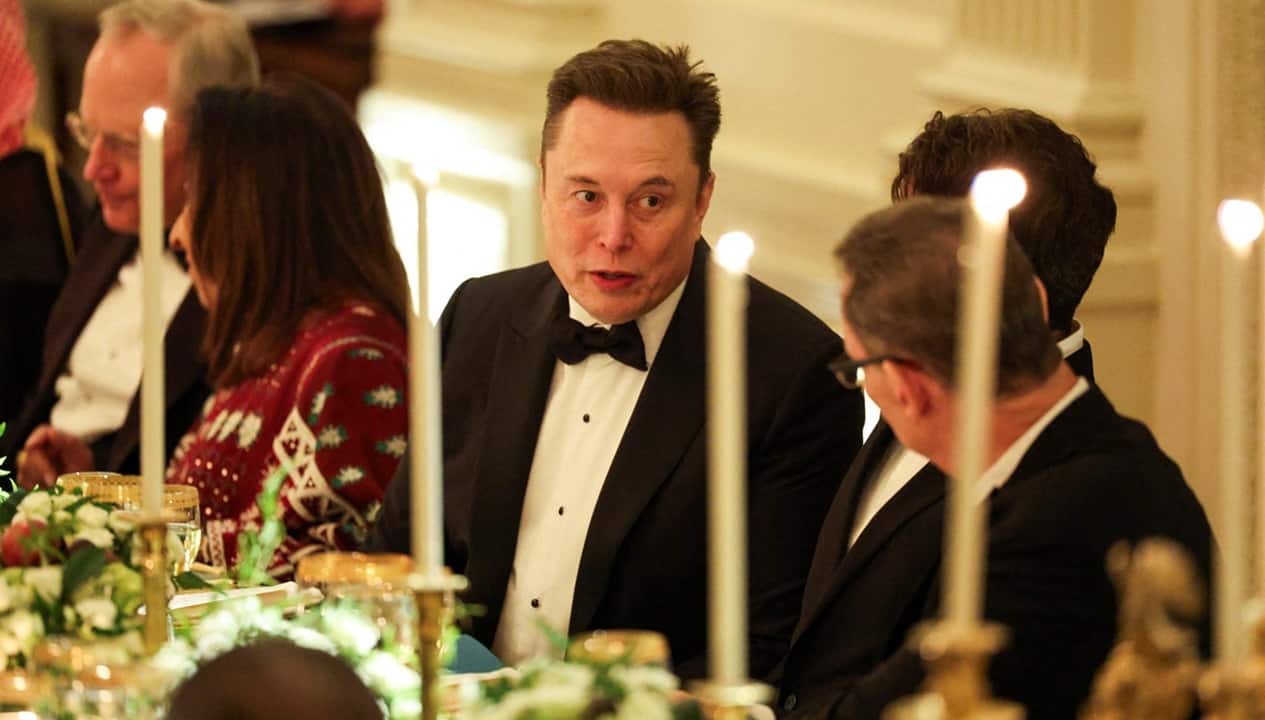
Forbes named Elon Musk the No. 1 innovator on its annual 'Forbes 250' list, citing his unique role in founding or scaling five multibillion-dollar companies—Tesla, SpaceX, Neuralink, xAI and The Boring Company—across EVs, private space, brain‑computer interfaces, AI and infrastructure. The profile notes Musk remains the world’s richest person with an estimated $684 billion net worth (Bloomberg) and places him ahead of Jeff Bezos (credited for transforming the $7.4 trillion U.S. retail market via Amazon), Bill Gates and Nvidia CEO Jensen Huang. The piece underscores cross‑sector leadership and the renewed private space competition (SpaceX moon-base priority; Blue Origin pausing tourism to focus on a lunar lander) but contains no new financial results that would directly move markets.
Market structure: Forbes’ Musk narrative reinforces capital flows into AI, EVs, private space and semiconductors — a concentrated winner-take-most market. Immediate beneficiaries are NVDA (GPU scarcity/pricing power) and cloud leaders (AMZN, MSFT) funding AI capex; physical-commodity demand (lithium, copper) remains structurally higher for 12–36 months as EV and datacenter builds continue.
Risk assessment: Tail risks include US/China export controls on advanced nodes or GPUs, heightened antitrust scrutiny of AI platforms, and idiosyncratic governance/PR shocks around Musk that can produce >15% intraday moves in TSLA/X-linked equities. Time zero impact: days–weeks from sentiment; fundamental re-rating: 3–24 months; structural outcomes: 2–5 years. Hidden dependency: AI adoption is contingent on sustained enterprise capex and wafer-supply, not just software enthusiasm.
Trade implications: Favor overweight semiconductors (NVDA) and cloud (AMZN, MSFT) while underweight legacy CPU incumbents and cyclical retail. Use defined-risk option buys around near-term earnings/catalyst windows (3–12 week calls on NVDA, protective puts on TSLA). Rebalance if implied volatility compresses >30% or if cloud capex guidance misses by >200 bps consecutive quarters.
Contrarian angles: The market may be overpaying for Musk-linked narrative exposure while neglecting concentrated governance and operational risk; public equities won’t capture private upside from SpaceX/xAI directly. Historical parallels: 2013–2016 tech concentration then rotation suggests staging entries (scale-in) and owning real cash-flow engines (AWS, Azure) rather than narrative-themed single names alone.
AI-powered research, real-time alerts, and portfolio analytics for institutional investors.
Request DemoOverall Sentiment
mildly positive
Sentiment Score
0.30
Ticker Sentiment
