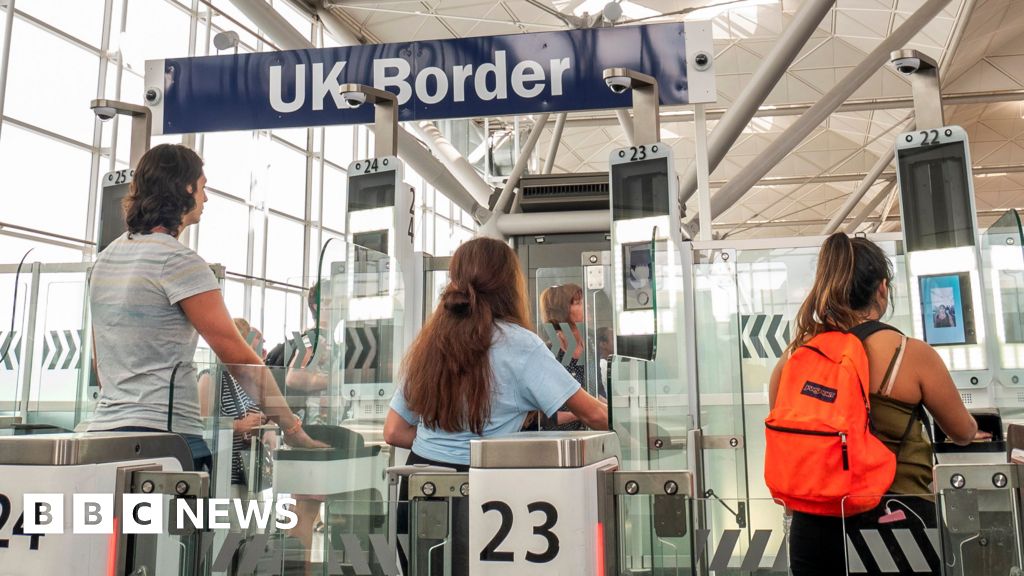
From 25 February the UK requires electronic travel authorisation (ETA) for visitors from 85 visa‑free countries, allowing multiple six‑month visits and valid for two years (or until passport expiry); the app‑based ETA costs £16 (planned to rise to £20) and is digitally linked to passports for automated checks by airlines and carriers. The policy has prompted issues for dual nationals who cannot obtain ETAs and must instead use a British passport (≈£100) or a certificate of entitlement (≈£589), both of which take weeks to secure, creating potential travel disruption and administrative cost burdens for affected travelers and transport operators.
Market structure: The ETA introduces persistent compliance friction that benefits identity/verification and travel-tech vendors (e.g., Amadeus AMS.MC, Thales HO.PA) as airlines and ports pay for integration and liability management; estimate incremental annual contract TAM for these vendors of €50–200m in the UK/EU over 12–24 months. Airlines, low-cost carriers and some regional airports (IAG.L, EZJ.L, LHR.L) face small short-term demand hit (low single-digit % passenger flow decline risk for affected origin markets) and higher ops/headcount costs for manual exception handling.
Risk assessment: Tail risks include a systemic ETA IT outage or data breach causing mass denied boardings and regulatory fines (GDPR exposure, potential >€100m fines for large vendors) within days; politically, litigation from stranded dual nationals could force provisional remedies within weeks. Immediate impact (days–weeks) is operational disruption at check-in; short-term (1–6 months) is booking volatility and higher pre-travel support costs; long-term (6–24 months) is contract revenue shift to tech/security providers and normalization of traveler behavior.
Trade implications: Favor long positions in identity/security and travel-tech (HO.PA, AMS.MC) with 3–12 month horizons; hedge by shorting exposed carriers (IAG.L, EZJ.L) or buying short-dated puts sized to 0.5–1% portfolio risk. Options: buy 3-month OTM puts on IAG/EZJ to protect downside; buy 6–12 month calls on HO.PA or AMS.MC to play contract wins. Rotate into cybersecurity/ID over next 4–12 weeks as uptake and procurement cycles accelerate.
Contrarian angles: The market will underprice vendor upside — governments historically outsource check-in/screening tech after embarrassment; comparable precedent (US ESTA rollout) saw ID vendors capture multi-year contracts while airline revenue normalized. The common overreaction would be to overweight airline doom; instead, asymmetric payoff is on specialist security/identity names and payment for exception-handling services. Monitor ETA rejection/boarding denial stats as early alpha.
AI-powered research, real-time alerts, and portfolio analytics for institutional investors.
Request DemoOverall Sentiment
mildly negative
Sentiment Score
-0.25
