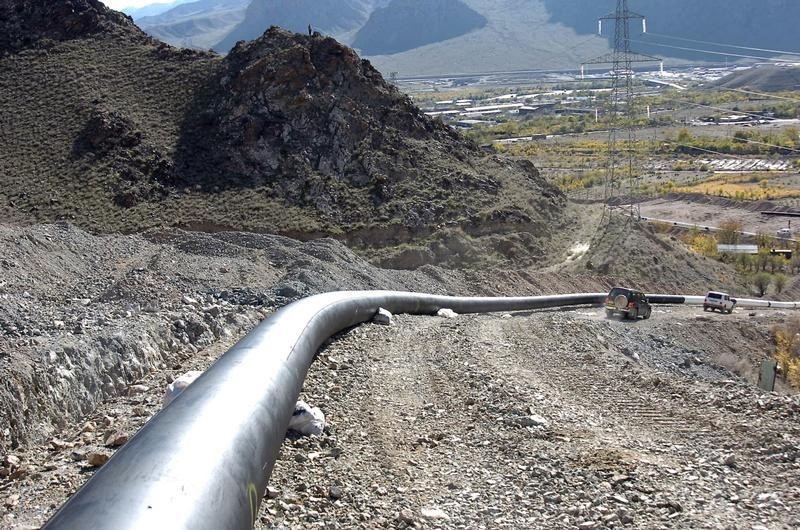
Poland and Ukraine plan to double the transmission capacity of their gas interconnector to 12.4 million cubic meters per day, up from the current 6.4 million. Ukraine's Energy Ministry highlighted the strategic importance of the Polish route, as it provides access to diversified natural gas sources, including liquefied gas from global suppliers.
Poland and Ukraine are set to significantly enhance their energy cooperation by nearly doubling the transmission capacity of their shared gas interconnector from the current 6.4 million cubic meters (mcm) per day to 12.4 mcm per day. Ukraine's Energy Ministry has underscored the strategic dimension of this expansion, emphasizing that the Polish route is a critical channel for its gas imports. This upgraded interconnector will improve Ukraine's access to diversified natural gas sources, notably including liquefied natural gas (LNG) procured from global suppliers via Poland's gas transmission system. This development is particularly salient given the ongoing geopolitical context, bolstering Ukraine's energy security and reducing its reliance on potentially less stable supply routes. The increased capacity points to a strengthening of regional energy infrastructure and energy trade relationships, reflecting a moderately positive outlook for Ukraine's energy supply resilience.
AI-powered research, real-time alerts, and portfolio analytics for institutional investors.
Request DemoOverall Sentiment
moderately positive
Sentiment Score
0.50
