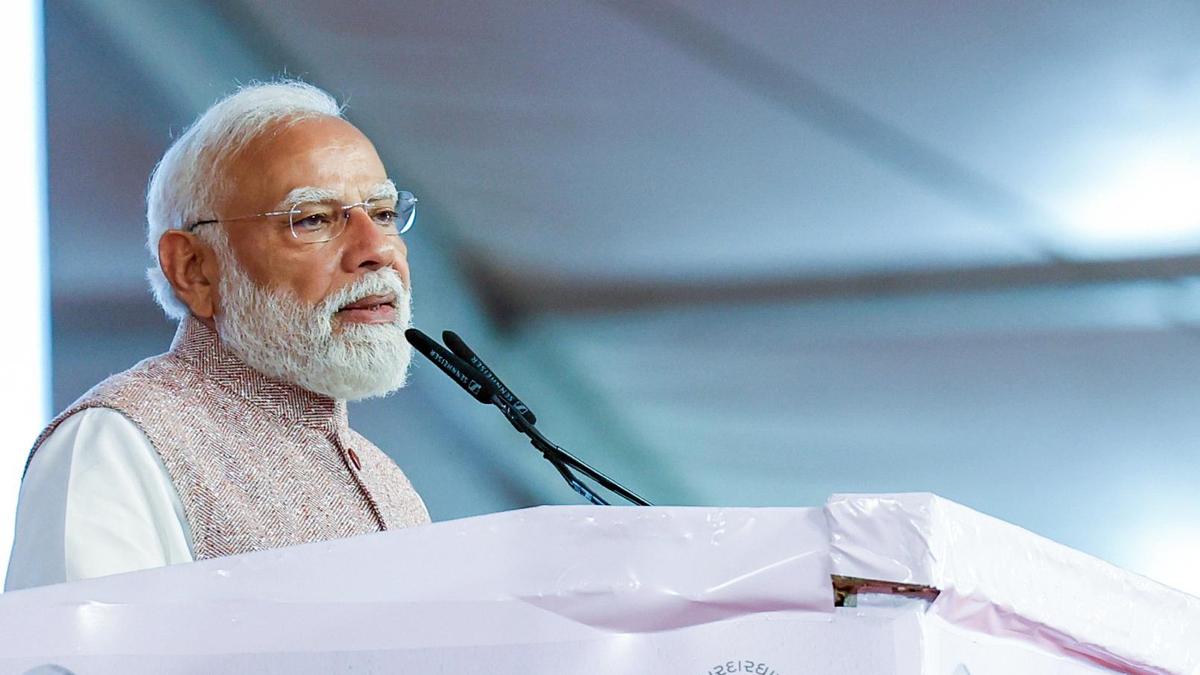
PM Modi urged citizens to cut fuel use, shift to public transport or electric vehicles, defer gold purchases, reduce foreign travel, and avoid unnecessary spending of foreign currency amid the West Asia crisis. The message underscores concern over disruptions to India's crude oil and LPG imports from West Asia and potential pressure on fuel, FX, and commodity demand. While not a direct policy move, the remarks highlight elevated geopolitical and energy-supply risk for markets.
This is less a demand shock than a policy-backed nudge toward substitution. The immediate market effect should be stronger in import-linked discretionary categories than in broad consumption: gold retailers, outbound travel, and premium autos are the first-order losers, while public transit operators, EV two-wheelers, domestic leisure, and UPI-linked local spending see incremental support. The second-order impact is on FX: even a small behavioral shift away from gold and foreign travel matters because those are high leakages to the current account, which can stabilize INR on the margin if West Asia risk keeps crude elevated.
The energy message is structurally supportive for India’s EV ecosystem, but not linearly so. Near term, higher fuel prices and policy rhetoric can lift EV adoption optics, yet the real constraint is financing and charging density; that means the strongest beneficiaries are lower-ticket urban mobility names rather than four-wheel passenger EVs. For autos, any mix shift away from ICE is a margin problem for legacy OEMs if they are forced into incentives, but a volume problem only if fuel pain persists for multiple quarters.
The gold deferral call is the most important second-order signal: when households postpone purchases, they often do not cancel them, they time-shift them. That creates a near-term air pocket in jewelry demand followed by a catch-up burst later, so the cleanest expression is a tactical short on retailers into festival/holiday buying windows, not a structural short on gold demand itself. The macro risk is that if West Asia disruption broadens into a sustained oil shock, the resulting inflation will overwhelm the modest demand suppression from conservation messaging, forcing policy support for transport and consumer subsidies.
Contrarianly, the consensus may be underestimating how quickly behavioral nudges can change short-horizon ordering patterns in India’s organized retail and travel segments. But it may also be overestimating their durability: without a sustained price shock, consumers revert quickly, and the biggest beneficiary over 3-6 months could simply be domestic-facing substitution rather than true demand destruction. The clean trade is therefore to position for temporary dislocations, not a permanent regime shift.
AI-powered research, real-time alerts, and portfolio analytics for institutional investors.
Request DemoOverall Sentiment
mildly negative
Sentiment Score
-0.18
