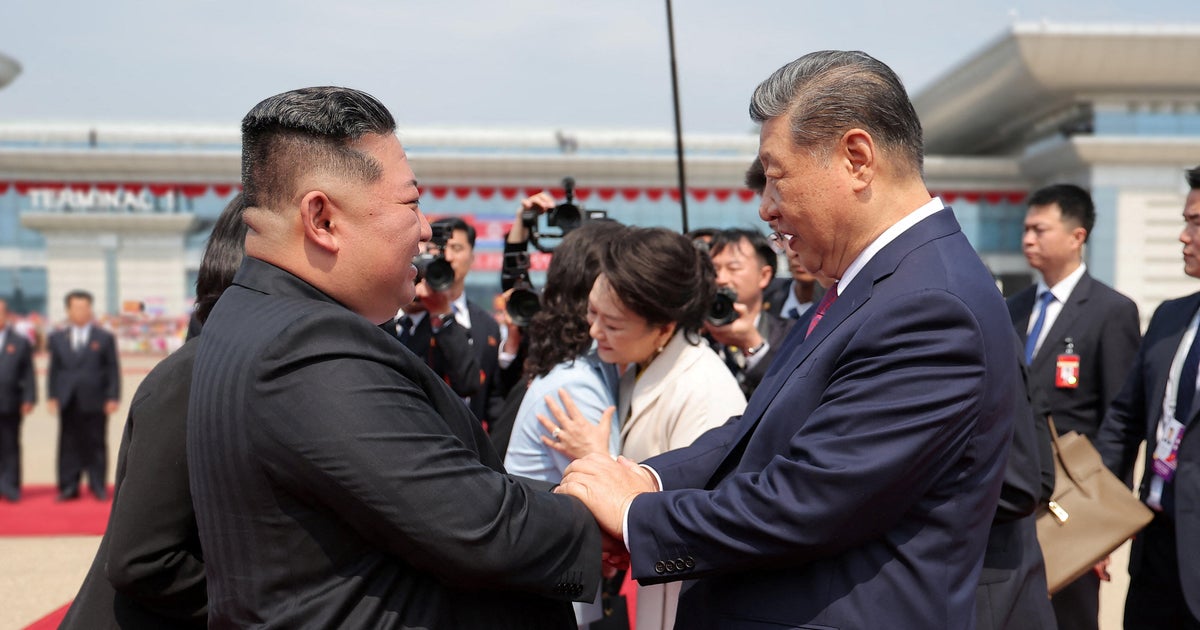
Xi Jinping completed a two-day visit to North Korea, pledging deeper ties as experts said Beijing is trying to monitor and contain an emboldened Kim Jong Un. The article highlights rising risks from North Korea's expanded nuclear and missile program, possible China-North Korea military cooperation, and growing Russian influence through weapons and troop exchanges. With tensions centered on U.S.-China-North Korea dynamics and regional security, the geopolitical significance is high even without an immediate market-moving policy announcement.
This is less about a diplomatic photo op and more about Beijing reasserting control over an increasingly autonomous, nuclear-capable frontier state. The market implication is a modest but non-trivial rise in Northeast Asia tail risk: even a small increase in perceived probability of military miscalculation tends to widen risk premia first in Korean equities, then in regional cyclicals tied to semiconductor, shipping, and industrial supply chains. The near-term effect is not an immediate earnings shock; it is a higher geopolitical discount rate that can persist for months if military cooperation headlines keep escalating. The second-order issue is that North Korea’s closer alignment with Russia reduces China’s leverage while creating a new sanctions-enforcement blind spot. If Beijing is seen tolerating military coordination or dual-use transfers, Western export-control pressure can broaden from the obvious defense targets into Chinese logistics, port, and financial intermediaries that touch the corridor. That is the more tradable angle: not missiles themselves, but higher compliance friction, slower cross-border settlement, and occasional disruptions in North Asia trade finance. The contrarian point is that the headline could actually be stabilizing in the very short run because China has incentives to contain Kim rather than empower him uncontrollably. In other words, the risk premium can spike on rhetoric, but the probability of a deliberately managed escalation remains lower than the market fear function suggests. The best risk/reward is therefore to express this as a hedge or relative-value trade, not a naked macro bearish bet on Asia. Catalyst watch: any announcement around the defense treaty anniversary, especially military hardware, air-defense cooperation, or joint naval activity, would be the first meaningful confirmation that this is moving from symbolism to operational coordination. That would raise the odds of additional sanctions over the next 1-3 months and likely pressure Korean and Japan-exposed industrial names before it affects broad indices.
AI-powered research, real-time alerts, and portfolio analytics for institutional investors.
Request DemoOverall Sentiment
mildly negative
Sentiment Score
-0.15
