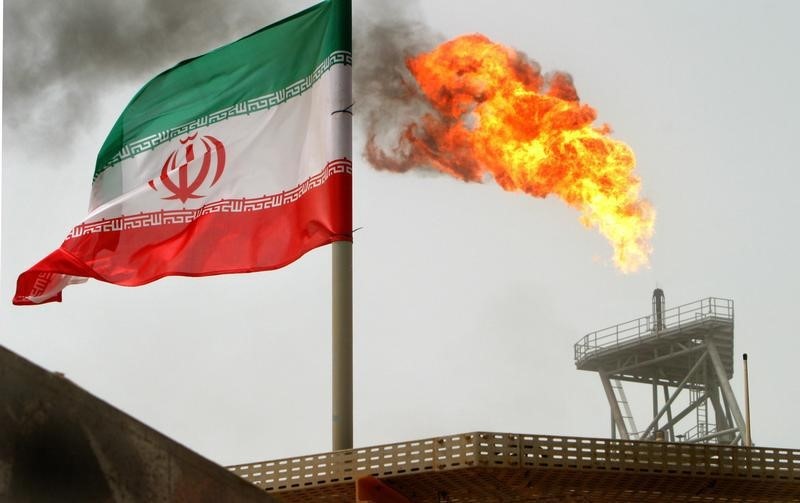
Death of Maj. Gen. Majid Khademi, head of IRGC intelligence, was reported amid multiple airstrikes around Tehran; Iran launched four rounds toward Israel and UAE/Saudi/Kuwait air defenses intercepted incoming strikes. U.S. President Trump warned Iran to reopen the Strait of Hormuz by Tuesday 8 p.m. ET or face severe consequences; U.S. Central Command said operations continue after rescuing an American aviator who was trapped for more than 36 hours. A Pakistan–Egypt–Turkey ceasefire framework, proposing an immediate ceasefire and negotiations to reopen the Strait, was shared with both sides and could take effect as early as Monday; escalation materially raises oil and shipping disruption risk and should drive risk-off flows across markets.
Iran leveraging linkage between the two chokepoints creates a binary shock that concentrates damage into shipping, insurance and select commodity price spreads. If commercial traffic diverts around the Cape, expect voyage distances to lengthen by ~3,000–7,000 nm for Asia–Europe and Gulf–Asia routes, adding roughly 7–10 incremental sailing days and 8–15% extra bunker burn; that mechanically increases delivered crude/LNG costs by low-single-digit $/bbl equivalents and pushes time-charter rates for VLCCs and LNG carriers materially higher in days-to-weeks.
Insurance and reinsurance are the immediate, under-appreciated transmission mechanism: war-risk premiums typically jump to add ~$20k–$50k/day for large tankers and can flip P&I cover terms inside 48–72 hours, forcing either charters to accept higher voyage costs or cargoes to be left ashore — a liquidity squeeze for refiners that rely on timely cargoes, which will widen crude differentials and refinery margins regionally over months. Beyond energy, expect container schedule reliability to deteriorate, spot container freight to spike (squeezing consumer goods margins), and fertilizer/ammonia flows to become episodic, elevating food-price risk in importing emerging markets.
Timing and catalysts are binary: a negotiated ceasefire can compress most effects within 48–72 hours (shipping reinsurance and spot freight revert quickly), while kinetic escalation against infrastructure would entrench rerouting for months and invite strategic inventory re-stocking that sustains a multi-month oil spike. Market reversals hinge on credible diplomatic containment or immediate military de-escalation; absent that, volatility and risk premia across oil, freight and defense should remain elevated for 1–6 months.
AI-powered research, real-time alerts, and portfolio analytics for institutional investors.
Request DemoOverall Sentiment
strongly negative
Sentiment Score
-0.70
