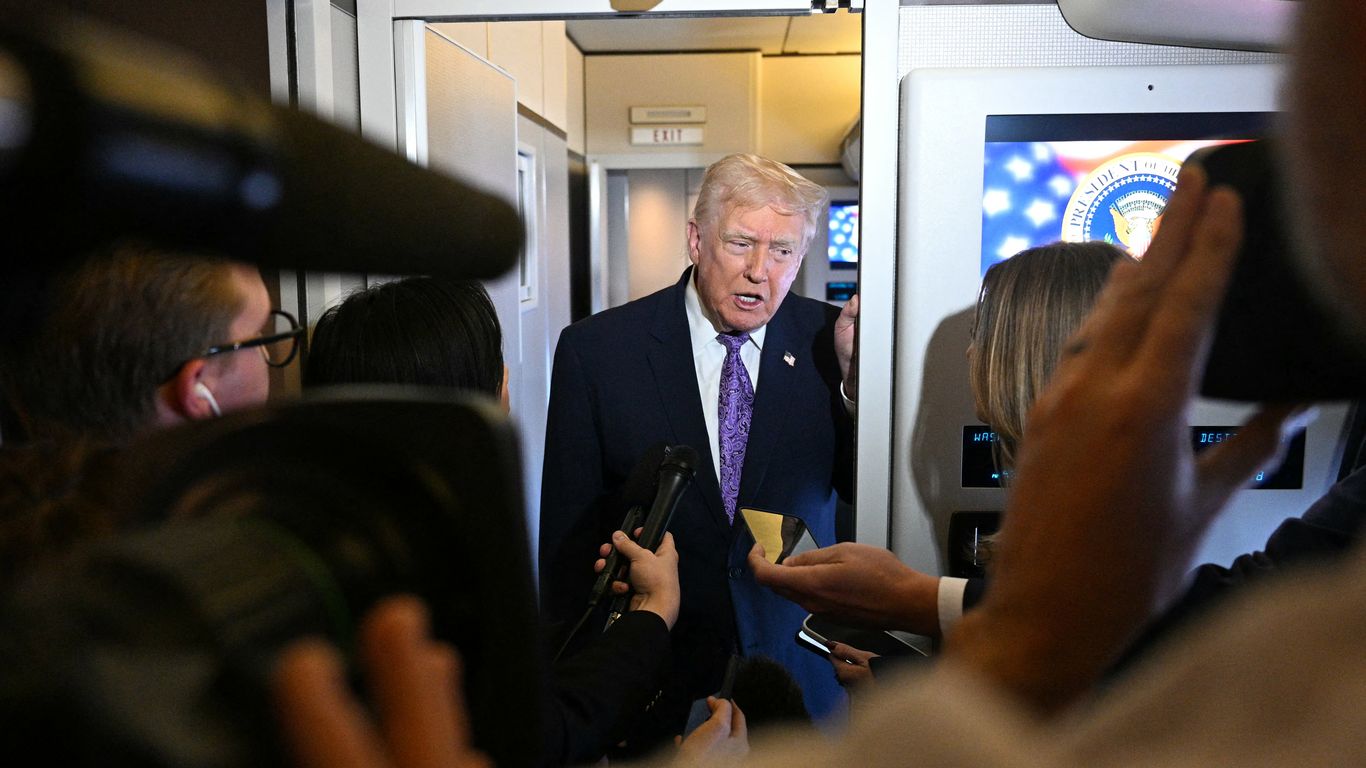
President Trump said he has decided who he will nominate to be the next Federal Reserve chair but declined to confirm reports naming National Economic Council director Kevin Hassett; current Chair Jerome Powell’s term expires in May. Markets have reacted favorably to signs a replacement decision is imminent, pushing interest rates down and coinciding with a strong Treasury auction, while Hassett publicly downplayed front‑runner reports but said he would be willing to serve. The potential leadership change at the Fed is being priced as more dovish policy risk, making this a high‑priority development for rates and fixed‑income positioning.
Market structure: The market is pricing a higher probability of a dovish Fed nominee which compresses short-term rate expectations and supports longer-duration assets; a 20–50bp fall in 10y yields over weeks would plausibly lift long-duration Treasury ETFs (TLT) by ~6–15% given ~12–18yr effective duration. Banks, insurers and other positive-yielding financials (XLF, KRE) are immediate losers via NIM compression, while growth/tech and rate-sensitive REITs/Utilities should outperform on lower discount rates. Credit spreads may tighten modestly (10–30bp) as accommodation lowers near-term default risk.
Risk assessment: Tail risks include a surprise pick who is hawkish or a drawn-out confirmation fight that restores Powell-like hawkish credibility — that could spike 2s/10s by 30–70bp in days and trigger a sharp rotation out of long-duration positions. Near-term (days) volatility will cluster around the nomination and Senate calendar; medium-term (1–6 months) risks hinge on incoming CPI/PCE prints and Treasury auction reception; long-term (years) depends on committee composition and fiscal policy. Hidden dependencies: market already front-ran the move — positioning is crowded (levered long TLT/GLD, short banks), so liquidity squeezes could amplify reversals.
Trade implications: Primary plays: go long long-duration Treasuries (TLT or 10y futures) and GLD; short financials (XLF) or regional banks (KRE) as hedge and relative value. Options: use defined-risk call spreads on TLT (6–12 month expiries) and buy puts on XLF (3–6 months) to limit capital at risk while exploiting event-driven volatility. Sector rotation: reduce cyclical financial exposure by 2–4% and reallocate to 2–5% long-duration and 1–3% commodity/gold exposure; rebalance on confirmation or if 10y yield trades above +40bp from today.
Contrarian angles: Consensus dovish read may be overstated — a nominee lacking Fed credibility could produce a fade in rate cuts expectations and a violent repricing; crowded long-duration positioning is a vulnerability. Historical parallel: transition periods (Volcker→Greenspan, Bernanke→Yellen) show chair change can take months to alter policy trajectory; immediate rally may be partially mean-reverting. Unintended consequence: sustained dollar weakness could lift import-driven inflation, compressing real bond returns and ultimately hurting nominal bond holders over 12–24 months.
AI-powered research, real-time alerts, and portfolio analytics for institutional investors.
Request DemoOverall Sentiment
mildly positive
Sentiment Score
0.25
