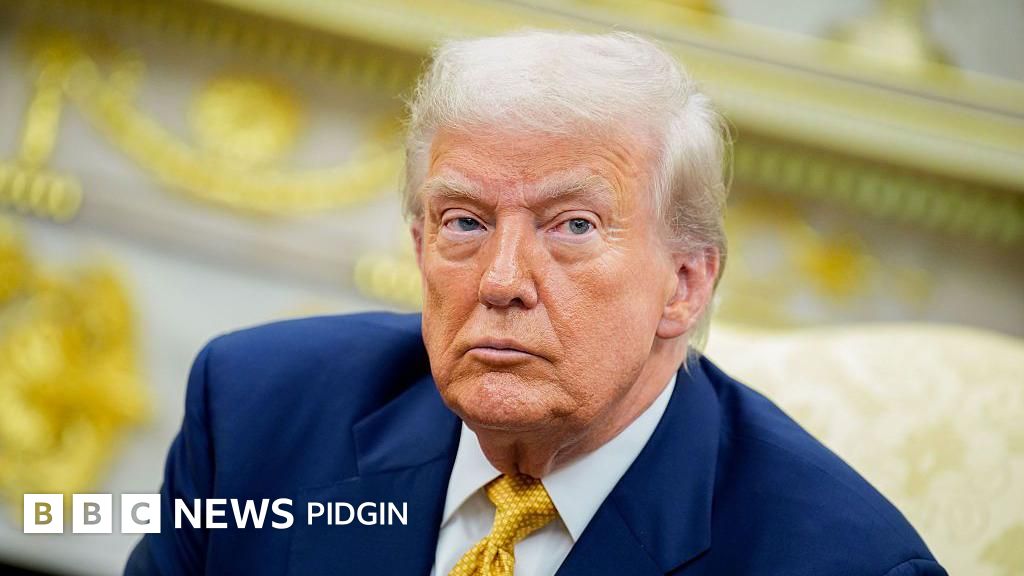
A US appeals court has ruled that most of former President Trump's 'reciprocal' tariffs, including those on China, Mexico, and Canada, are illegal. The court, in a 7-4 decision, found that the tariffs, imposed under the International Emergency Economic Powers Act (IEEPA), were 'invalid as contrary to law,' asserting that tariff imposition is a core Congressional power not granted to the President under IEEPA. This ruling, which does not apply to steel and aluminum tariffs and takes effect October 14, sets the stage for a potential Supreme Court appeal and raises significant questions regarding the validity of existing trade deals and the scope of presidential authority in trade policy.
A U.S. Court of Appeals has declared a significant portion of former President Trump's global tariffs illegal, creating substantial uncertainty for U.S. trade policy. The 7-4 ruling specifically invalidates the 'reciprocal' tariffs on most countries and those targeting China, Mexico, and Canada, concluding they were imposed 'contrary to law' as the International Emergency Economic Powers Act (IEEPA) does not grant the President unilateral tariff-setting authority, a power the court affirmed belongs to Congress. The decision, however, does not impact tariffs on steel and aluminum, which were enacted under a different legal authority. The ruling is stayed until October 14 to allow for an appeal to the Supreme Court, setting the stage for a high-stakes legal battle. The high market impact score of 0.65 underscores the potential for economic disruption, as the administration had previously warned that revoking the tariffs could have severe consequences for national security and the economy. This legal challenge introduces questions about the validity of bilateral deals struck to reduce these tariffs and signals a potential rebalancing of trade authority from the executive to the legislative branch.
AI-powered research, real-time alerts, and portfolio analytics for institutional investors.
Overall Sentiment
Neutral
Sentiment Score
0.00
