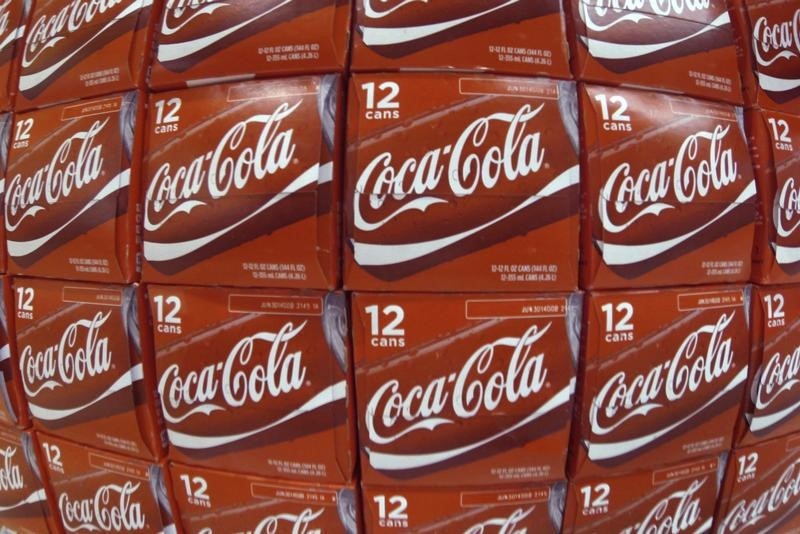
Representative Lloyd Doggett disclosed a new Coca-Cola purchase of $1,001 to $15,000 on April 1, 2026, reported May 5, 2026, via automatic dividend reinvestment. The filing is a routine STOCK Act disclosure and does not signal a major change in fundamentals, though it is mildly supportive given the long-term dividend reinvestment context and Coca-Cola's 55-year dividend growth streak. The article also notes KO is viewed as overvalued relative to fair value, tempering any positive takeaway.
The market takeaway is not the tiny size of the purchase; it’s the signaling function around defensive, bond-proxy consumption names when headline risk rises. In a stress environment, investors rotate toward businesses with pricing power, stable volumes, and visible capital return, so the marginal flow can matter more than the notional amount. KO also tends to benefit from a slower-growth macro mix because dividend reinvestment creates a persistent bid that cushions drawdowns and reduces realized volatility versus the broader staples basket.
The contrarian angle is that this kind of flow often arrives late in a move, not early. If KO is screening expensive on earnings and cash-flow multiples, the setup is less about multiple expansion and more about duration-like behavior: investors pay for certainty until rates fall or risk appetite returns, at which point the stock can lag sharply while still looking “safe.” That makes the asymmetry unattractive for fresh outright longs unless the position is part of a broader defensive rotation or a hedge against geopolitical shocks.
Second-order winners are not just KO but other high-quality dividend compounders with less obvious saturation risk and better operating leverage to incremental volume. Losers are cyclicals and lower-quality consumer names that rely on promotional activity, because a flight to quality tends to compress the valuation spread within staples and punish weaker balance sheets. Any escalation in Middle East risk would likely strengthen the relative bid for staples for days to weeks, but that catalyst is headline-driven and can reverse quickly if tensions de-escalate or Treasury yields back up.
The best read here is to treat KO as a volatility hedge, not a bargain. The preferred expression is relative value versus less defensible consumer names or via options that monetize calm: if geopolitical risk spikes, KO should hold up better than the market; if not, valuation gives back slowly but steadily over the next several months.
AI-powered research, real-time alerts, and portfolio analytics for institutional investors.
Request DemoOverall Sentiment
neutral
Sentiment Score
0.10
Ticker Sentiment
