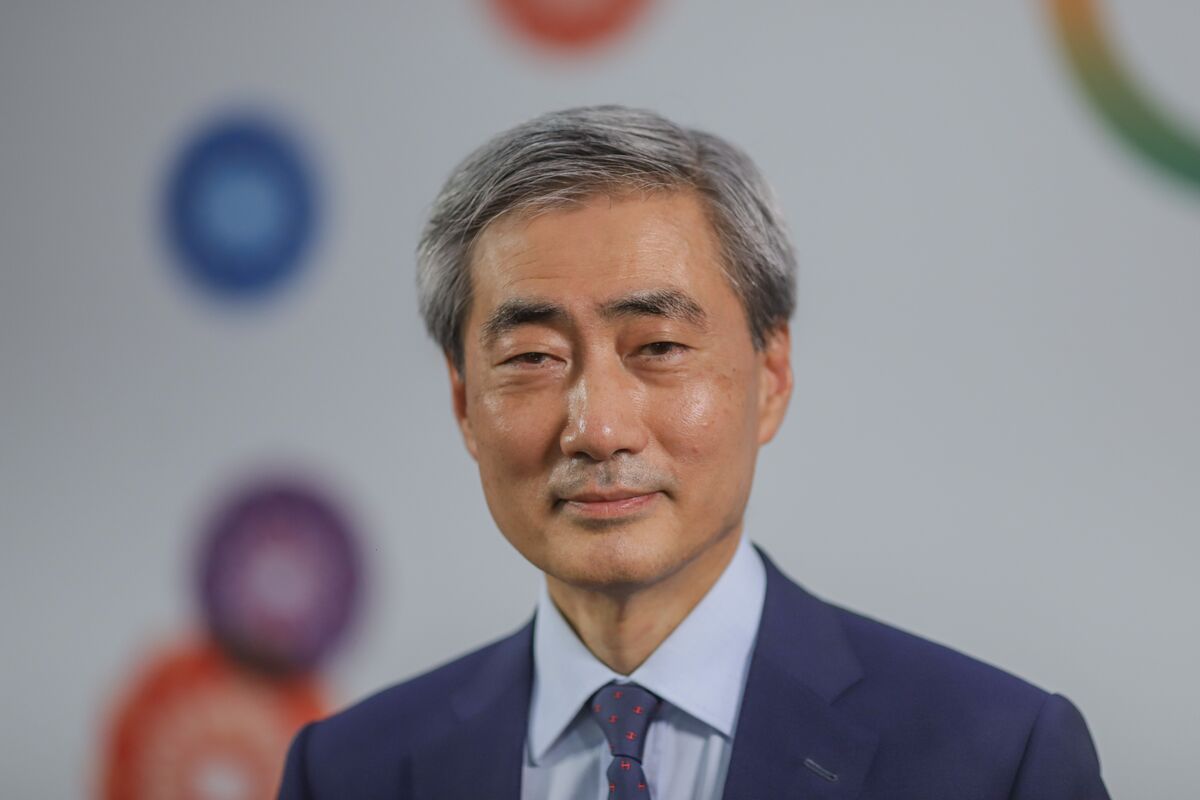
President Lee nominated Shin Hyun Song, head of the monetary and economic department at the Bank for International Settlements, as the next Bank of Korea governor; Governor Rhee Chang Yong's term ends April 20. Shin will chair the May monetary policy board meeting and could shape BOK policy through 2030, a development that may influence domestic interest-rate expectations, bond yields and the won ahead of confirmation.
A leadership change with a technocratic, internationally-networked policy maker tilts the marginal probabilities toward prioritizing financial-stability tools and coordination with global central banks rather than discretionary domestic stimulus. That subtle shift tends to raise the probability that authorities will tolerate more exchange-rate flexibility and rely on macroprudential levers (LTV/DTI, GLS adjustments) to cool credit, which transmits to rates and credit conditions through bank balance-sheet channels over 3–12 months.
For markets, the most important second-order effect is on the interplay between FX and domestic rates: less willingness to defend the currency mechanically increases tail risk of KRW depreciation during USD upmoves, which benefits large exporters while compressing real incomes and consumption-sensitive sectors. At the same time, a macroprudential-first stance typically means slower loan growth and higher cost of marginal credit for developers and consumer credit, pressuring regional banks’ fee and NIM outlook over 6–18 months.
Near-term catalysts that will reveal the policy tilt are not only the minutes and forward-guidance language in the next policy meeting but also FX reserve movements, swap-line communications with other central banks, and incoming household credit/real-estate flows data. Tail risks: political pressure to re-prioritize growth (reversed stance within months), or an abrupt external shock (US rates shock or China growth collapse) that forces emergency rate moves and negates any planned macroprudential path.
AI-powered research, real-time alerts, and portfolio analytics for institutional investors.
Overall Sentiment
neutral
Sentiment Score
0.00
