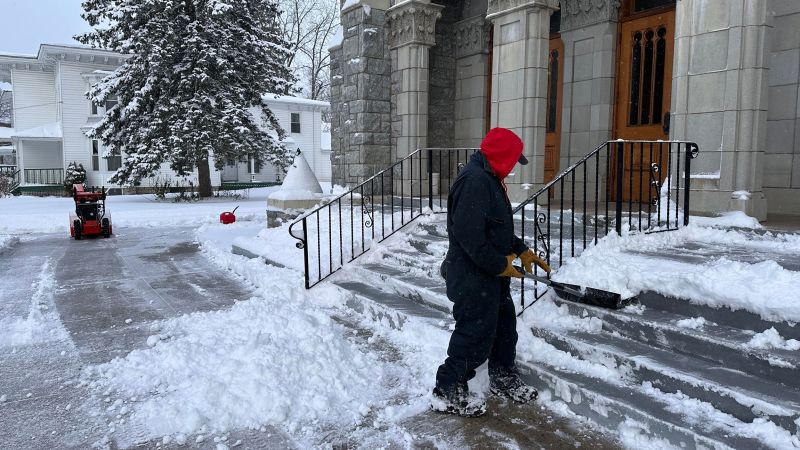
A strong storm moving from the Rockies this weekend will track eastward across more than 1,000 miles, bringing heavy rain, an icy mix and widespread accumulating snow from the Rockies through the Midwest into Appalachia and the East while ushering in an Arctic blast that drives temperatures into the single digits or below zero in parts of the Upper Midwest by Dec. 1. Key impacts include 6+ inch snowfall across significant portions of Iowa, Wisconsin, Illinois and Michigan (with potential 8+ inches in Chicago and isolated one-foot totals in eastern Iowa), localized flash flooding risk in eastern Texas and western Louisiana, and major travel disruption risks at hubs such as O'Hare and Midway. Market-relevant exposures are concentrated in regional transportation and travel operations, localized emergency/insurance claims and short-term demand shifts for heating/energy in affected regions.
Market structure: The immediate winners are winter-energy and utility suppliers (natural gas, pipeline operators, power generators) and equipment/salt suppliers; losers are short-haul, regional transportation (airlines AAL/UAL/DAL/LUV), airport-dependent parking/retail and parcel carriers (UPS/FDX) in affected corridors. Mechanically, canceled flights and slowed road networks reduce airline revenue per day by a typical 20–40% in severe storms; Chicago ≥8" historically cuts daily throughput ~30–50% for 48 hours.
Competitive dynamics & supply/demand: Logistics capacity tightness will be acute for 3–10 days — parcel carriers face overtime and reroute costs that can compress quarterly margins by ~1–3 percentage points in affected markets. Natural gas demand should rise materially: a 15–20°F swing and broad freeze can raise short-term heating demand (HDDs) 10–25%, supporting NG spot upside of +10–30% intra-month under constrained storage.
Risk assessment: Tail risks include multi-day airport closures cascading into Q4 earnings misses for airlines, a concentrated insured-loss episode (> $500m–$1bn) for regional P&C insurers, and grid strain/localized outages raising political/regulatory scrutiny on utilities. Time horizons: immediate travel disruptions (0–7 days), claims/operational costs realized (2–12 weeks), and reserve/regulatory effects (quarters).
Trade implications & contrarian view: Market may overpay near-term volatility in airlines while underpricing gas and pipeline optionality; airlines often rebound fast once operations normalize. Favor tactical longs in winter-energy and defensive utilities, short-duration tail hedges on airlines and parcel carriers, and consider pair trades that capture divergence between energy upside and transport weakness over 2–12 weeks.
AI-powered research, real-time alerts, and portfolio analytics for institutional investors.
Request DemoOverall Sentiment
moderately negative
Sentiment Score
-0.30
