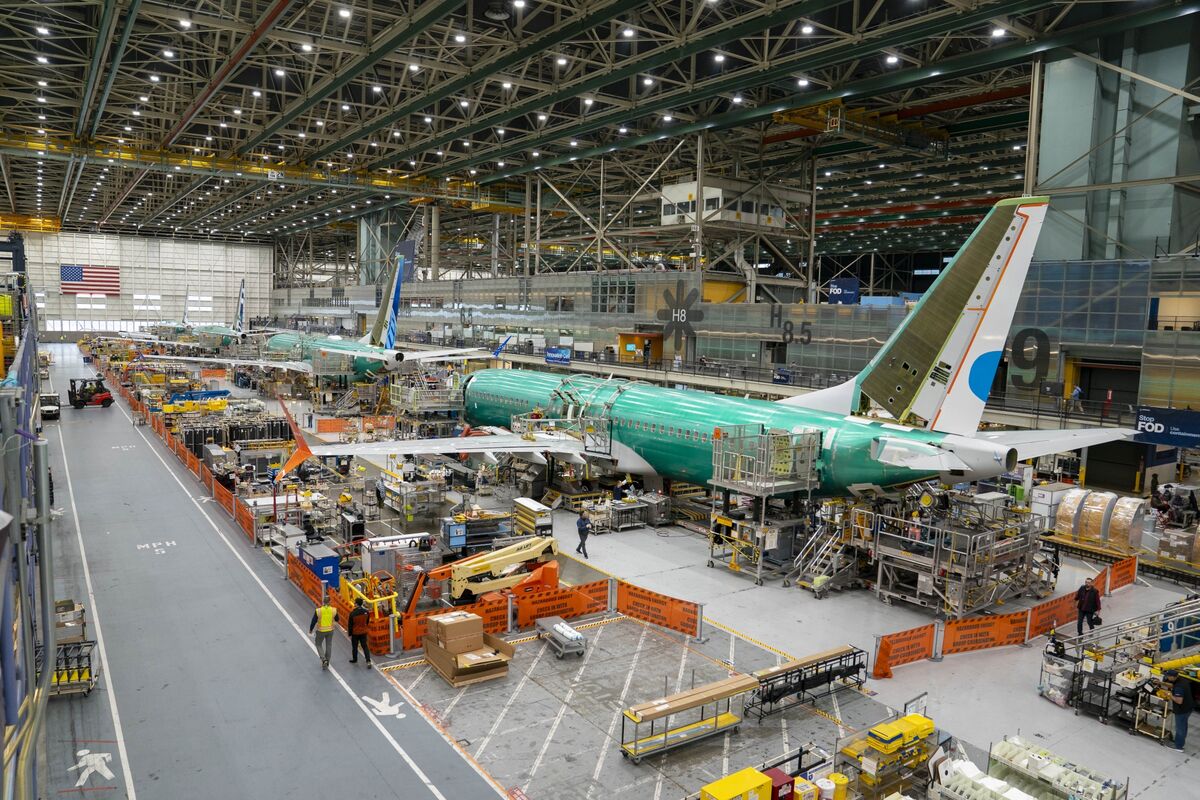
Boeing is addressing quality lapses at its 737 Max factory outside Seattle by instituting operational fixes such as a weekly, hour-long pause (10:30 a.m. Wednesdays) for mechanics to surface and resolve on-the-job impediments. Employees report incremental progress but persistent supplier-related problems — for example, a key supplier repeatedly drilling a hole in the wrong location — that continue to threaten production quality and could influence delivery timing and reputational risk. The initiative signals management attention to manufacturing controls, but ongoing supplier and quality issues leave execution and near-term production outlook uncertain for investors.
Winners and losers are clear: Boeing (BA) stands to regain margin and order momentum if shop-floor fixes reduce rework and supplier errors, while concentrated suppliers (e.g., Spirit AeroSystems/SPR) and airlines expecting timely deliveries are the immediate losers if defects persist. Airbus (EADSY) and alternative narrowbody suppliers gain optionality to capture displaced orders, pressuring Boeing’s pricing power and potentially forcing concessions; expect transitory share erosion measured in single-digit percentage points over 6–18 months if deliveries slip.
Tail risks include an FAA-ordered inspection/partial grounding or a major in-service failure — low probability but high impact (stock gap >30%, credit spreads widening >100bps) within 0–6 months; medium-term risks (3–12 months) are supplier litigation, worker turnover, and margin erosion from compensation to customers. Hidden dependencies: production cadence relies on supplier nonconformance rates, skilled labor retention and quality culture; a 2%+ persistent defect rate would likely force a public guidance cut. Key catalysts in the next 30–90 days are weekly/monthly production cadence reports, quarterly results and any FAA findings.
For trades, favor conditional, size-limited positions that exploit mean reversion in operational KPIs: size longs at 2–3% if cadence/quality metrics improve for four consecutive weeks; alternatively, put/volatility purchases for 3–6 months protect against headline shocks. Relative-value: long Airbus exposure vs short BA captures order reallocation; sector rotation into defense primes (RTX, LMT) hedges aerospace exposure if commercial execution falters.
Contrarian view: market may underprice Boeing’s residual pricing power given a multi-year narrowbody supply shortfall — if supplier remediation reduces defects within 6 months, BA upside could be >25% from current levels; conversely, overconfident fixes could slow output and worsen backlog turnover. Historical parallel: 787 supplier disruptions took 12–24 months to normalize, so expect volatile delivery-driven guidance swings rather than a steady recovery.
AI-powered research, real-time alerts, and portfolio analytics for institutional investors.
Request DemoOverall Sentiment
mixed
Sentiment Score
0.05
Ticker Sentiment
