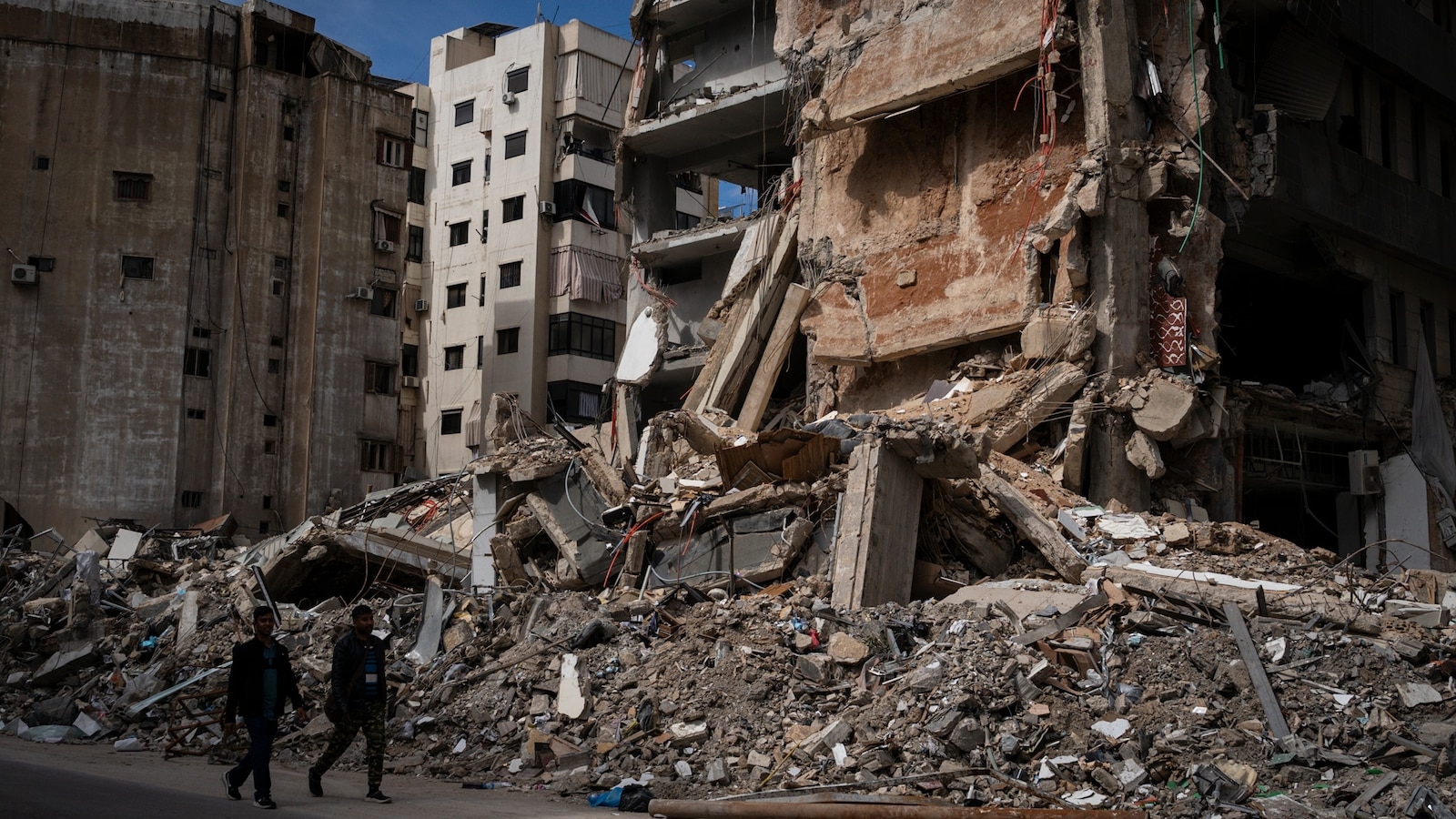
More than 1 million people (nearly 20% of Lebanon) have been displaced and over 1,000 killed as Israeli forces push to the Litani River and destroy key bridges, signaling a likely prolonged campaign. A sustained military operation and potential long-term occupation risk collapsing state authority, damaging infrastructure, undermining sovereign credit and investor confidence in Lebanese and regional EM assets, and prompting further capital flight and geopolitical risk premia.
The fighting and Israeli intent to seize and hold territory up to the Litani materially increases the probability of a protracted low-intensity occupation that lasts years rather than weeks. That outcome mechanically destroys fiscal capacity (tax base and port revenues) and accelerates sovereign distress — expect Lebanese 5y CDS to move from stressed to crisis levels within 3–12 months absent an external bailout, driven by mass displacement, tax base collapse and frozen banking flows.
Second-order winners are capital goods and defense suppliers rather than frontline commodity plays: sustained destruction of bridges, ports and power infrastructure creates a multi-year reconstruction cycle (heavy civils, materials, mobile power) while ongoing asymmetric exchanges raise demand for ISR, air defenses and precision munitions. Conversely, frontier/EM credit funds, Lebanese/regionally exposed banks and regional travel/tourism will see outsized balance-sheet and outflow pressure; political assassinations and sectarian spillovers raise operational risk for on‑the‑ground contractors.
Near-term catalysts are binary and clustered: IDF ground operations, Hezbollah reprisal capabilities (rocket/drone barrages), and any U.S. escalation with Iran will move markets within days-weeks; medium-term (3–12 months) catalysts include international peacekeeping offers, a major sovereign default/restructuring, or a tranche of reconstruction funding that could re-rate parts of the risk curve. A diplomatic breakthrough or credible international force to secure supply lines could sharply reverse spreads, but that requires concerted multilateral political capital that looks unlikely in the next 6–12 months.
AI-powered research, real-time alerts, and portfolio analytics for institutional investors.
Overall Sentiment
strongly negative
Sentiment Score
-0.85
