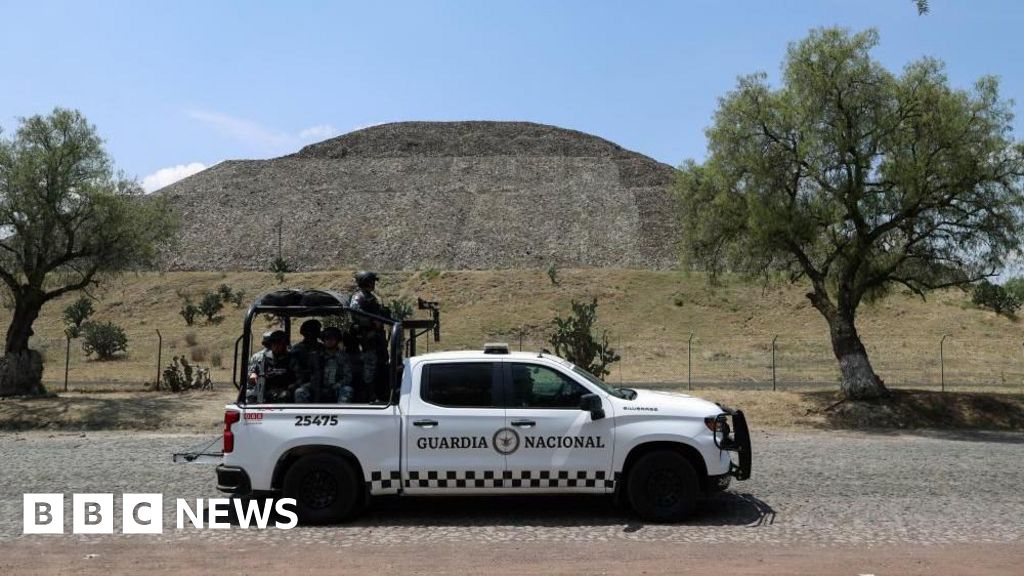
A lone gunman killed a 32-year-old Canadian tourist and injured visitors from multiple countries in a shooting at Teotihuacán, just weeks before Mexico co-hosts the FIFA World Cup. Mexican authorities say the attacker acted alone and was not tied to cartel violence, but the incident has heightened safety concerns for foreign visitors and could pressure travel sentiment ahead of the tournament. The government is trying to reassure tourists, yet the attack underscores persistent security risks in Mexico.
The market read-through is not Mexico’s broad security backdrop so much as the repricing of event risk for inbound leisure, especially around the World Cup window. A lone-actor attack at a marquee heritage site is precisely the kind of low-frequency, high-salience event that can depress traveler willingness disproportionately versus its direct economic damage, because it increases perceived randomness rather than just crime intensity. That creates a near-term air-pocket for operators with Mexico exposure, while the broader macro hit is likely limited unless there is a second incident inside the next 4-8 weeks.
The second-order issue is insurance and security spend. Hotels, tour operators, and venue operators may face higher premiums, more guards, and more restrictive protocols into the tournament, which compresses margins even if occupancy recovers. The bigger beneficiary is not obvious: regional competitors in safer Latin American leisure destinations may see some traffic diversion if the narrative hardens that Mexico is “unsafe for foreigners,” especially from higher-yield North American tourists who can switch within a single booking cycle.
The contrarian point is that the move may be overdone if investors extrapolate this into a cartel-driven collapse in tourism. A single isolated attack rarely changes destination demand for long unless it is followed by copycat events; the true catalyst is not the incident itself but whether there is a pattern over the next 30-60 days. If authorities visibly harden security around transit corridors, airports, and World Cup venues, the fear premium should unwind quickly, though the footage will leave a lingering reputational scar in the premium leisure segment.
From a political lens, this is also a credibility test for the administration’s narrative on public safety. If visitor safety becomes a campaign issue ahead of the tournament, the government may prioritize visible policing over structural reforms, which helps optics but not underlying risk. That means the trade is best expressed tactically, not structurally: fade immediate tourism optimism, but avoid assuming a multi-quarter deterioration unless violence repeats in a tourist-facing context.
AI-powered research, real-time alerts, and portfolio analytics for institutional investors.
Request TrialOverall Sentiment
strongly negative
Sentiment Score
-0.55
