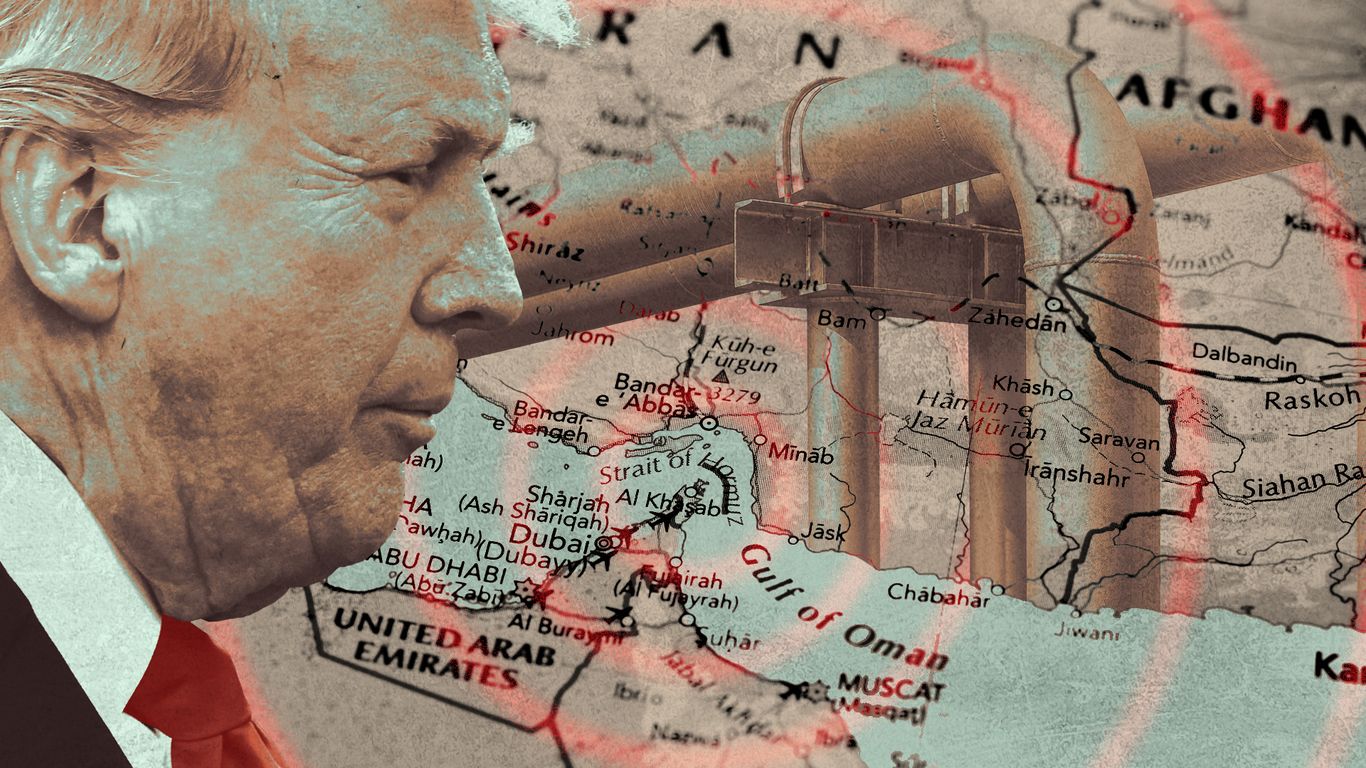
65% of U.S. adults in a Reuters‑Ipsos poll (Mar 17-19, n=1,545, ±2.5pp) say it is at least somewhat likely the U.S. will deploy troops to Iran; just 7% support a large-scale ground deployment while 34% back a small special‑forces presence. The administration is preparing options to reopen the Strait of Hormuz — including consideration of occupying or blockading Kharg Island to restore oil exports — even as lawmakers and roughly six-in-ten respondents in AP‑NORC and Pew polls say recent U.S. actions have gone too far. Implication: heightened upside risk to oil prices and risk‑off pressure on markets, with sector-level impact to energy and defense assets if escalation occurs.
Domestic political pushback materially raises the probability that U.S. action will be calibrated toward short, high-impact moves (targeted strikes, blockades or sanctions) rather than a sustained ground campaign. That calibration produces a ‘shock-and-stutter’ dynamic for energy and transport markets: price/freight spikes on headlines followed by partial mean reversion once diplomatic channels or tactical adjustments restore limited flows. Insurance and charter markets will lead the transmission mechanism — war-risk premiums and voyage detours flow to tanker earnings within days, while upstream capex decisions and production responses operate on quarters-to-years timelines. Defence names will see headline-driven re-ratings, but procurement lag means earnings realization is back-loaded; the cleaner near-term cashflow response will be in assets that monetize transit friction immediately (VLCC owners, storage plays, war-risk underwriters). Conversely, US onshore producers are exposed to the shape of the oil move: a brief spike helps margins for hedged producers less than it does for unhedged tanker owners or storage providers. The biggest non-obvious vulnerability is exporters with concentrated export hubs — single-node disruption amplifies freight and reroute costs for buyers and raises credit risk for commodity traders holding inventory against those facilities. Key catalysts and time horizons: watch for (1) sharp headline events in the next 0–14 days driving volatility; (2) diplomatic de-escalation or coordinated SPR releases over 2–8 weeks that would collapse the risk premium; and (3) capex/insurance repricing over 3–12 months that determines who captures sustained upside. A prudent portfolio response is asymmetric: buy short-dated convexity to capture headline spikes, and selectively take longer-dated, idiosyncratic exposure where barriers to entry (storage, ships, insurance contracts) create multi-month optionality.
AI-powered research, real-time alerts, and portfolio analytics for institutional investors.
Request DemoOverall Sentiment
mildly negative
Sentiment Score
-0.35
