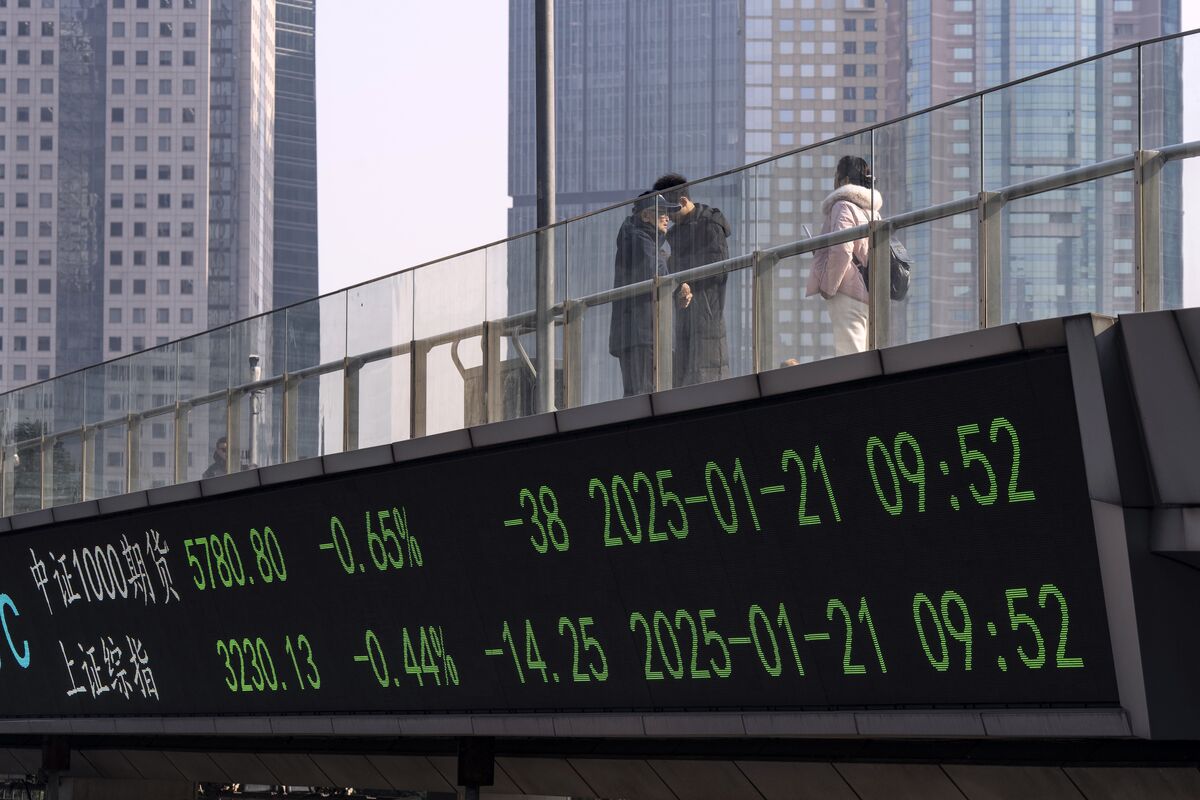
China's stock market has seen a significant $1.2 trillion rally, pushing the Shanghai Composite to a decade high and the CSI 300 up over 20% from its lows. This retail-driven surge, marked by near-record trading volumes and margin transactions, has prompted Beijing regulators to weigh measures like easing short-selling curbs and cracking down on speculative trading. Officials are wary of a repeat of the 2015 boom-and-bust, fearing a market collapse could undermine efforts to shore up consumer sentiment, and have already initiated actions to curb credit-fueled trades and speculative hype.
A significant $1.2 trillion rally in China's stock market since August has pushed the Shanghai Composite to a decade high and the CSI 300 up over 20% from its lows, but this surge is now facing considerable headwinds from regulatory intervention. The rally is characterized by signs of froth, including near-record trading volumes, high margin transaction levels, and a rapid influx of retail investors, raising concerns among Beijing officials about a potential repeat of the 2015 market collapse. Policymakers fear that a retail-driven bloodbath could undermine broader efforts to support consumer sentiment. In response, regulators are actively considering measures to cool the market, such as easing short-selling restrictions and cracking down on speculative trades. Preliminary actions are already underway, with authorities pressuring banks to limit credit-fueled trading, urging social media platforms to temper speculative hype, and directly halting or capping inflows into mutual fund products to prevent excessive volatility.
AI-powered research, real-time alerts, and portfolio analytics for institutional investors.
Request DemoOverall Sentiment
mixed
Sentiment Score
-0.35
